Basic Approach
All living things are intricately connected in various relationships and live in balance. We benefit from this biodiversity in our lives.
The automotive industry both directly and indirectly impacts on biodiversity due to land use (including the construction of plants), the release of chemical substances from plants, and the greenhouse gas emitted from the use of our products and business activities. Meanwhile, climate change is transforming regional environments, which has a major direct impact on ecosystems. MITSUBISHI MOTORS Group believes it is a priority to enact climate change countermeasures, protecting biodiversity so that we can continue to enjoy its blessings.
The Group formulated the “MITSUBISHI MOTORS Group Guidelines for the Preservation of Biodiversity” in August 2010 and promotes conservation activities.
Promoting Preservation Activities
Ecosystem Surveys at Business Sites in Japan
Production of vehicles requires large-scale plants. MITSUBISHI MOTORS Group believes that assessing the impact that the use of land in company business has on local biosystems is important to our biodiversity protection initiatives.
Our business sites in Japan are not located in or adjacent to protected areas as defined by the Nature Conservation Act or prefectural ordinances. However, in keeping with the spirit of these laws, we conducted ecosystem surveys at domestic sites that use large plots of land, such as plants, with the support of biodiversity-related research firms.
Locations Where Ecosystem Surveys Were Conducted
| Fiscal Year | Location |
|---|---|
| 2013 | Kyoto Plant-Shiga |
| 2015 | Okazaki Plant |
| 2017 | Mizushima Plant/Kyoto Plant-Shiga(*) |
| 2018 | Tokachi Research & Development Center |
| 2019 | Kyoto Plant-Kyoto |
| 2021~2023 | Kyoto Plant-Kyoto(*) |
- A monitoring survey was conducted to confirm the preservation effects of the measures.
Biodiversity Protection Initiatives
Based on the results of ecosystem surveys conducted at our domestic business sites, we are engaged in biodiversity conservation activities. To protect water sources and foster environmental awareness among our employees, we are engaged in forest preservation activities both in Japan and overseas.
Kyoto Plant-Kyoto
Cultivating Rare Plants in Cooperation with the Local Community
Based on an ecosystem survey conducted, we learned that the Kyoto Plant, which is located in urban Kyoto, serves as a refuge where certain plants and insects can survive locally, and we found that this area was an important environment in terms of preserving regional diversity. To create a habitat for dragonflies and other insects, we built a biotope in the “Plaza of Relaxation,” a green space on the campus. The pond in the square nurtures water lilies and oval-leafed pondweed. in addition, the square nurtures species such as the Blackberry lily, Eupatorium japonicum, and Asarum caulescens, that are native to the city of Kyoto.
-
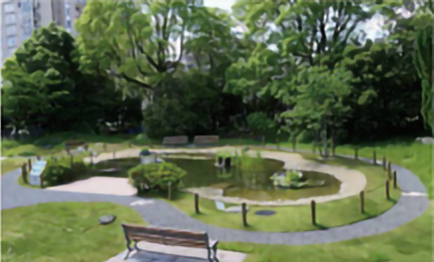
The biotope pond at the Kyoto Plant -Kyoto
-
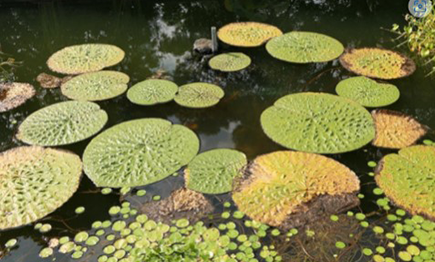
Water lilies
Kyoto Plant-Shiga
Preservation of Wetlands Where White Egret Flowers Bloom
We are working to protect the rare white egret flower by preserving wetlands located within the plant. Employees regularly remove invasive herbaceous plants such as broomsedge bluestem and maintain the wetland environment, which gives the white egret flower room to bloom every summer.
-
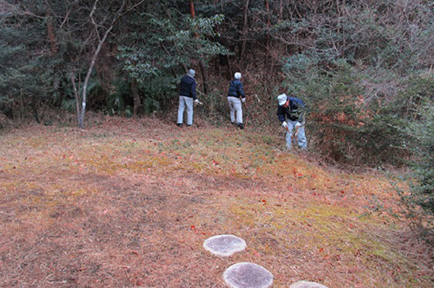
Employees clearing away invasive herbaceous plants
-
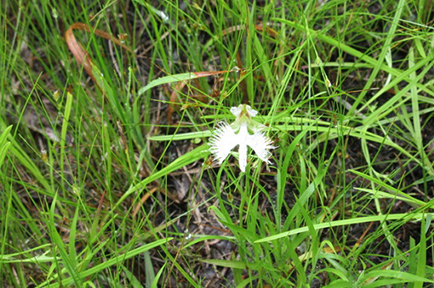
White egret flower blooming
Forest Preservation Activities in Japan and Overseas
In Japan, We are engaged in forest preservation initiatives at two sites: “Pajero Forest” (approximately 7.23 hectaresin Hayakawa-cho, Yamanashi Prefecture, and “Okazaki Outlander Forest” (approximately 50.7 hectares) in Okazaki City, Aichi Prefecture. We have entered into formal agreements with local partners—since 2006 with Hayakawa Town and the OISCA JAPAN for Pajero Forest, and since 2023 with Okazaki City for Outlander Forest—to collaboratively promote sustainable forest management.
In FY2024, in addition to forest thinning and other maintenance activities carried out by our local partners, approximately 300 employees from our company and group companies, along with their family members, participated in four volunteer events. These activities included undergrowth clearing, trail maintenance, and tree planting, contributing to the preservation and revitalization of local forest ecosystems.
In March 2024, Mitsubishi Motors (Thailand) Co., Ltd. (MMTh) carried out a mangrove planting initiative in Khlung District, Chanthaburi Province, Thailand. In collaboration with the Department of Marine and Coastal Resources , under the Ministry of Natural Resources and Environment of Thailand , MMTh planted over 12,000 mangrove trees across an area of 16.57 rai (approximately 3 hectares).
-
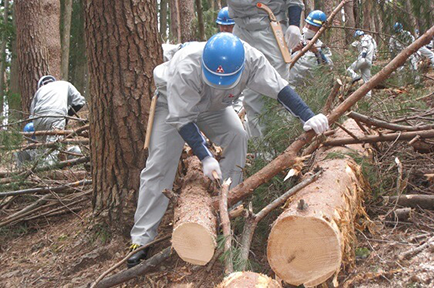
Trail maintenance in the Pajero Forest
-

MMTh’s Mangrove Planting Initiatives
Support for External Initiatives
We expressed our support for the intent of the “Keidanren Declaration for Biodiversity and Guideline” formulated by Keidanren and joined the Keidanren Initiative for Biodiversity Conservation in 2010.