The Pajero Philosophy and Its Next Chapter
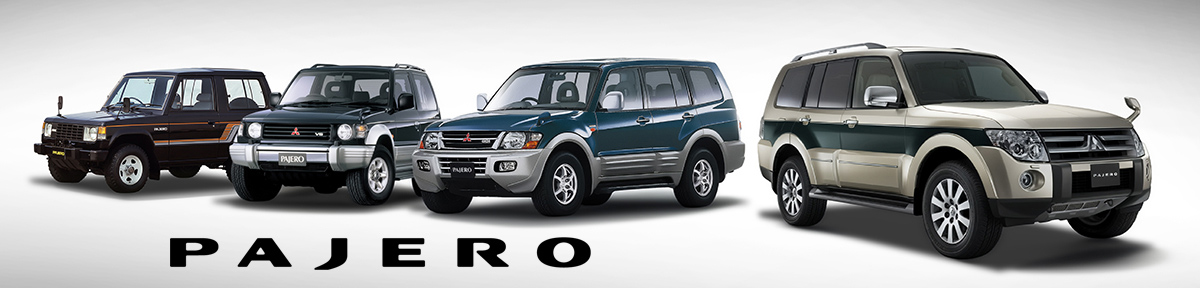
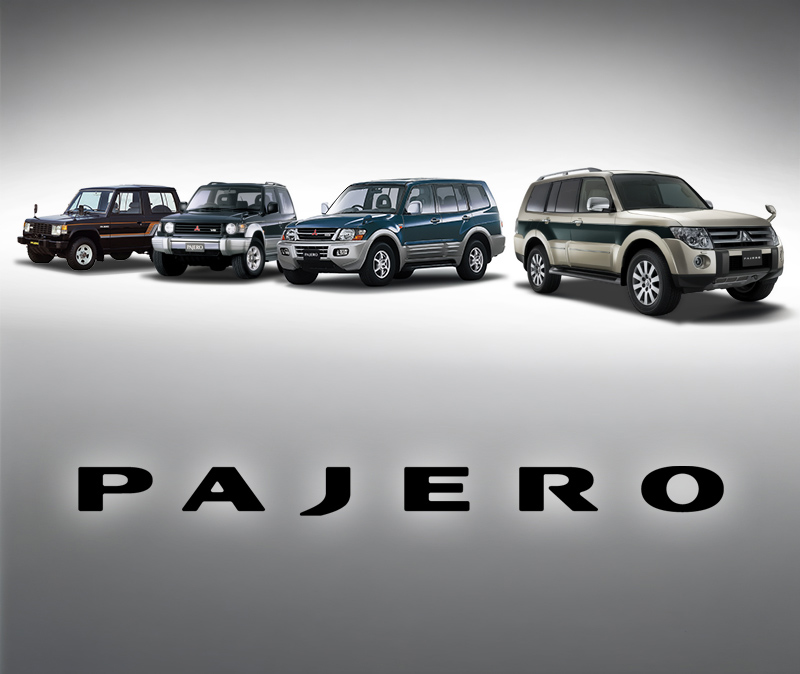
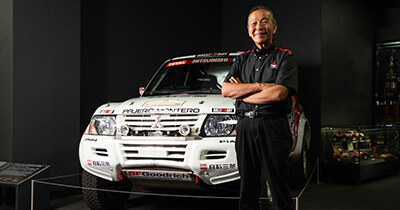
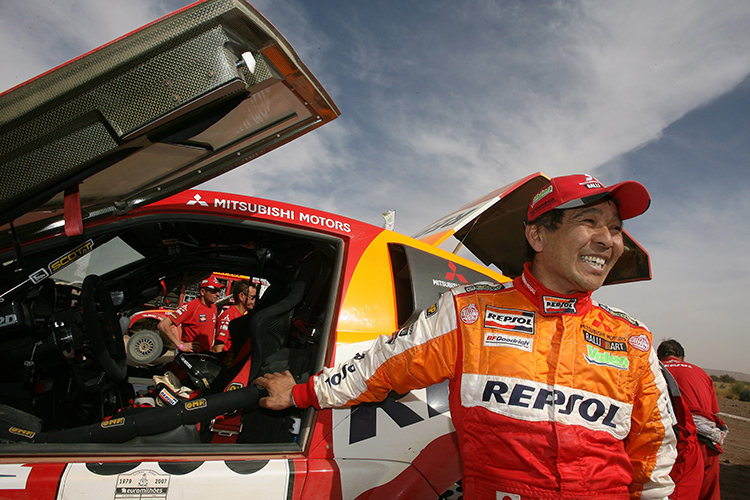
When Hiroshi Masuoka speaks about the Pajero, his words come from three overlapping perspectives - as a driver who has crossed deserts at 200 km/h, as a developer who refined details alongside engineers on Mitsubishi’s test courses in Okazaki, and as a private owner who has personally driven every generation of the Pajero. That convergence gives his reflections weight beyond competition.
"I like all Mitsubishi vehicles, but the Pajero is special. It’s the one I feel closest to."
There was no exaggeration in his words - only the depth that comes from years spent together alongside the Pajero.
The “Around-the-World Rally” Analogy
When Hiroshi Masuoka speaks about the essence of the Pajero, he often turns to an analogy.
"If there were a rally around the world, the Pajero might be the fastest," he says. "Because it doesn’t choose roads. Desert, highways, snow, rain - wherever it goes, it performs in the same way. This was the ideal."
In the world of rallying, vehicles designed to excel under specific conditions can hold a clear advantage. But what the Pajero set out to achieve was something different - consistent capability across all surfaces. Rather than excelling only under specific conditions, the Pajero was designed to perform consistently everywhere without failure. This idea extends well beyond competition.
In recent years, sudden torrential rains and record-breaking snowfall have become increasingly common. Familiar commuting routes can abruptly turn into flooded corridors. Extraordinary conditions, once limited to rallies far from everyday life, can unexpectedly emerge within ordinary environments.
"Nature isn’t forgiving," Masuoka says. "In rallies, you’re prepared. In daily life, you’re not. That’s exactly why we need a vehicle that can keep moving, whatever the situation."
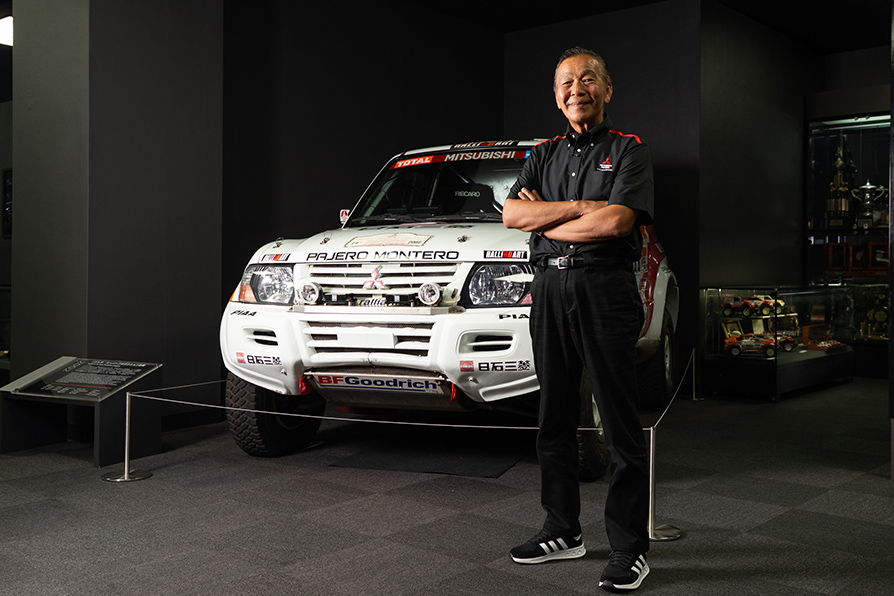
At the Mitsubishi Auto Gallery, alongside the third-generation Pajero that achieved its first victory in the Dakar Rally.
Three Perspectives: Driver, Developer, User
Masuoka views the Pajero through three distinct lenses - each posing a different question.
As a driver, the question Masuoka pursued was reliability at the limit. What must a vehicle withstand when crossing the desert at speeds exceeding 200 km/h? What forces must the body absorb when landing after a major jump? The answers he discovered in competition were not kept on the rally stage - they were carried directly into development.
As a developer, that same question was turned in the opposite direction. Could the strength felt by professionals at the limit be translated into a level of safety and reassurance that even a beginner could handle with confidence?
"It would be meaningless if only professionals were satisfied. What mattered was whether beginners could also feel at ease. That balance is what we kept searching for."
Good visibility, ease of maneuvering, seats that fight fatigue. Not headline grabbing performance, but layers of accumulated consideration. These are what ultimately create trust in a production vehicle.
"Which vehicle can you entrust with the lives of people you care about? This is what’s always on my mind."
The user’s perspective puts the other two to the test in everyday terms. Is the vehicle’s size easy to judge on ordinary roads? Are the meters easy to read? Do the switches operate intuitively? Masuoka says he always carries a tow rope in his own car, so that if someone is in trouble, he can help.
Stripped of competition and development contexts, the final question is simple. Can a vehicle exert its strength for ordinary people, on ordinary roads? It is this rigorous examination from three perspectives - driver, developer, and user - that is ultimately distilled into the Pajero.
Changing Times, Unchanging Principles
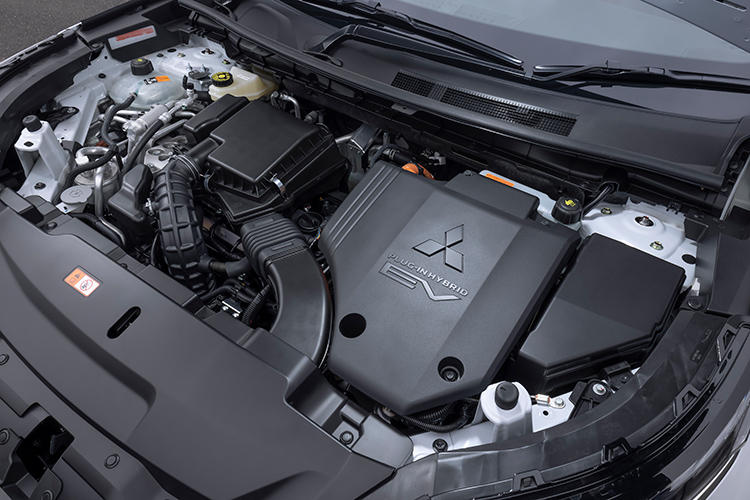
The times have changed. Some form of electrification to improve environmental performance is now an unavoidable requirement.
"If the Pajero were to become a plug-in hybrid electrified vehicle (PHEV), it could cruise quietly and gracefully, even with its large body," Masuoka says. "That, too, would be one form of evolution."
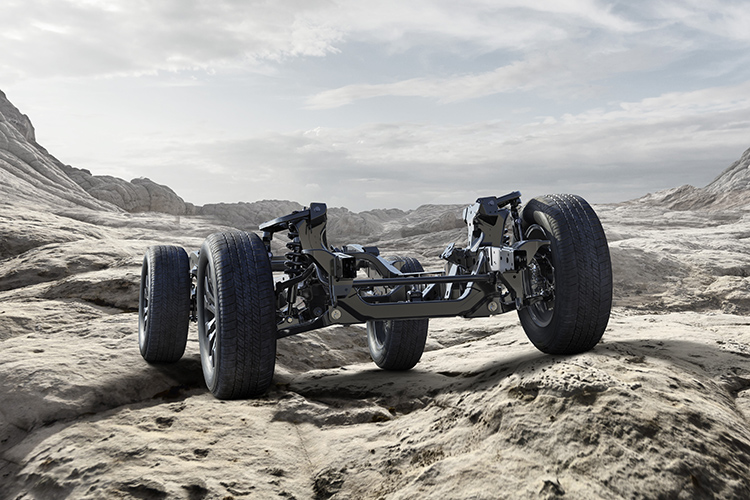
Debate over vehicle structure also continues.
"Ladder frame or monocoque. This is not a question of which is superior," he explains. "What matters is what you are aiming for. Today’s ladder frames are fundamentally different from those of the past. Materials and manufacturing precision have advanced significantly."
Yet in Masuoka’s view, none of these choices represent a shift in the core concept. What matters is not the form itself, but whether the underlying philosophy is carried forward.
"No matter the surface, the vehicle must be able to reach its destination with a peace of mind and return home safe and sound at the end," he says. "Without that philosophy, it isn’t a Pajero."
Toward the Future Pajero
Hiroshi Masuoka, who once drove the Pajero at the sharpest edge of rally competition, now envisions a quieter, more measured scene.
"If there were a new Pajero, I’d like to travel across Africa in a slow pace," he says. "With air conditioning, taking my time through the Sahara. Not as a race, but as a journey."
Not speed, but margin. Not victory, but reassurance. Masuoka speaks of the Pajero as a champion - not one that boasts its strength, but one that earns trust.
If there were a race around the world, it might win. Yet the question that has always mattered more is whether it can be a vehicle whose strength anyone can use - wherever they go, whatever the conditions - and one that safely protects the people they care about as a trusted partner.
The strength of the Pajero exists not to be displayed, but to be entrusted.
-
-
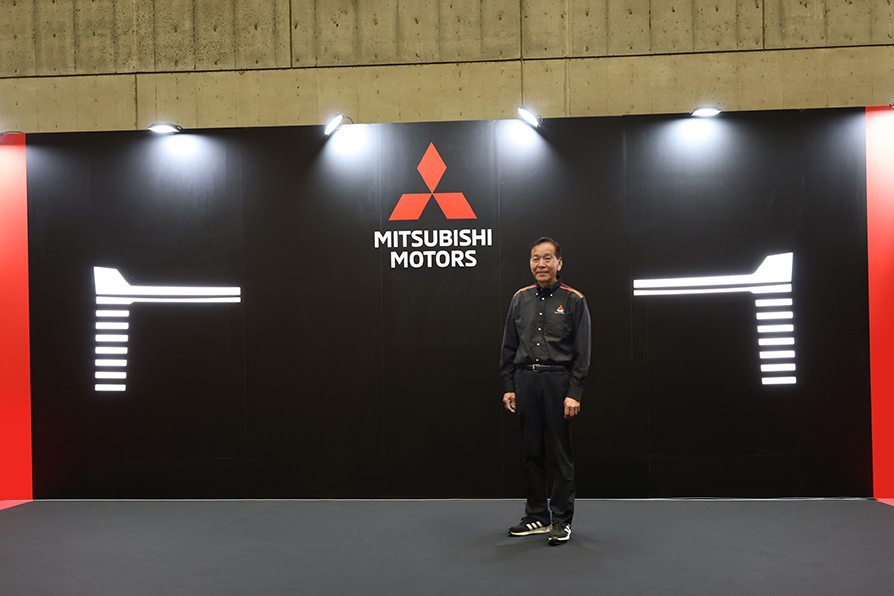
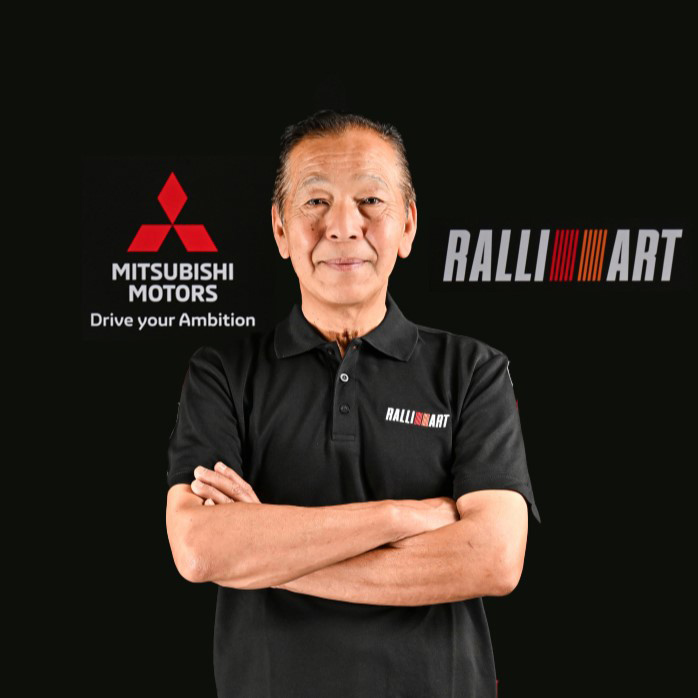
Hiroshi Masuoka
Team Director, Team Mitsubishi RalliartAs a works driver for Mitsubishi Motors, Hiroshi Masuoka competed in the world’s most demanding rally - the Dakar Rally – with the Pajero. In 2002 and 2003, he claimed overall victory in consecutive years, becoming the first Japanese driver to achieve a back-to-back overall win. Today, he applies his hard-earned experience to new vehicle development and comprehensive evaluation, while also focusing on training test drivers. As team director of Team Mitsubishi Ralliart, he has also led the team to overall victories at the Asia Cross Country Rally - considered the toughest in the ASEAN region - in 2022 and 2025.
Related Content
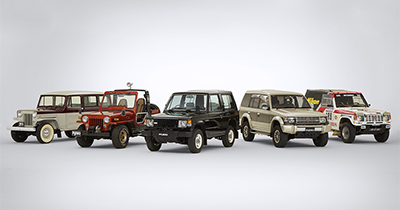
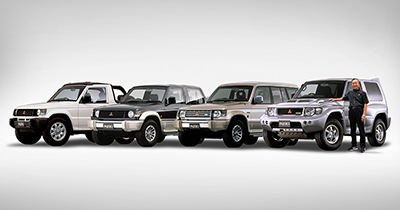
Looking Back on the History of the Pajero with Hiroshi Masuoka
May 2026

