The Third and Fourth Generations――Structural Transformation and the Deepening of Philosophy
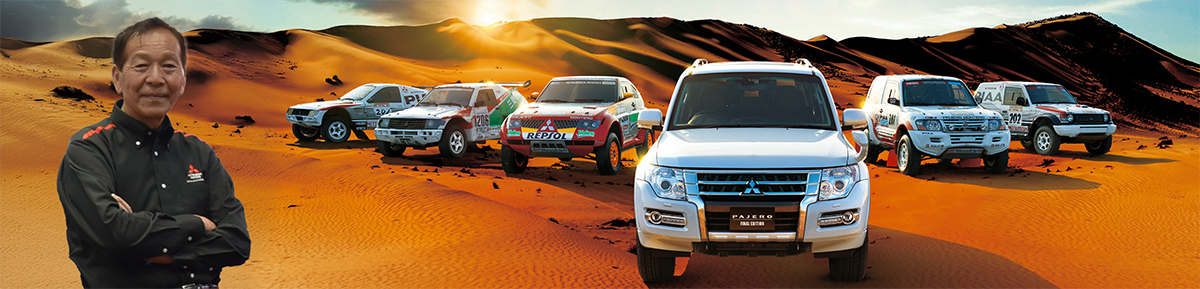
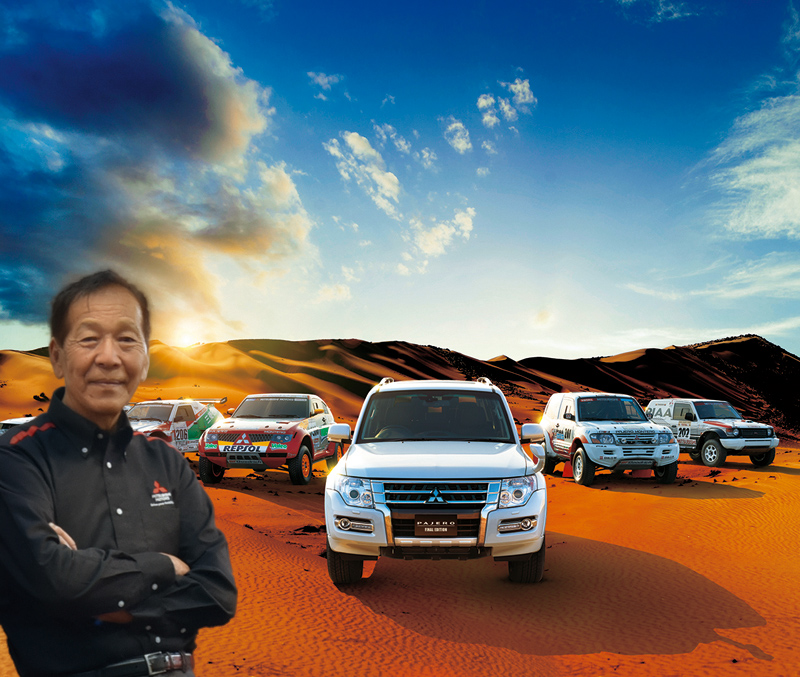
The Pajero’s evolution has always been defined by strength. But with the third generation, the challenge was neither power nor equipment.
Should the basic structure itself change for greater stability and safety? Or should the ladder frame be preserved?
For the first time in its history, the Pajero faced a fundamental question – one that placed its very architecture at the center of debate.
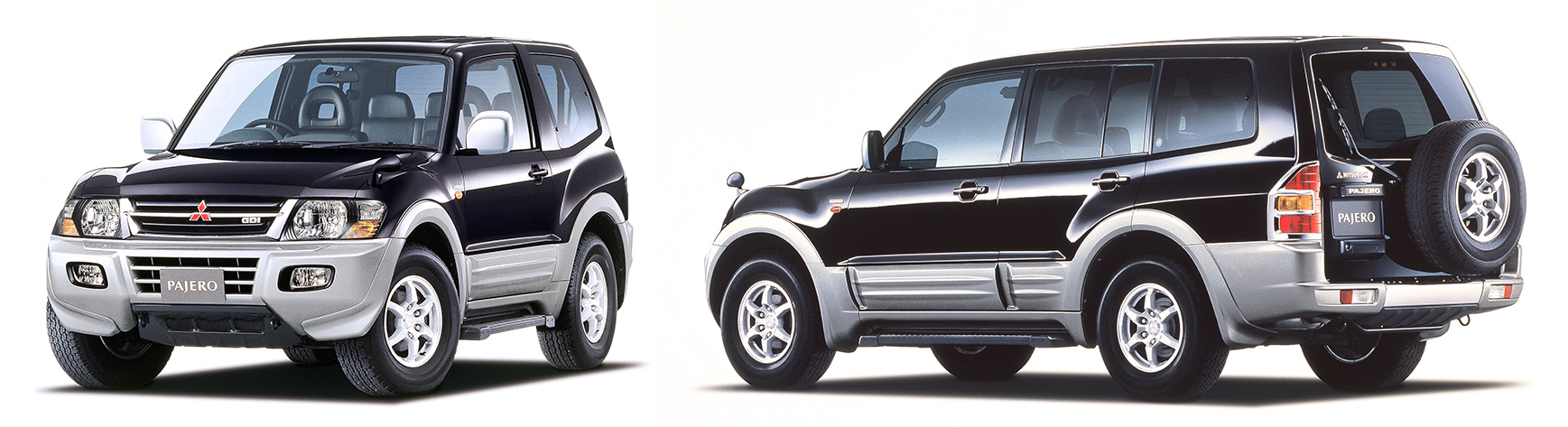
The third-generation Pajero, the first to adopt a monocoque body
Bringing Prototype-Level Rigidity to a Production Vehicle
Until then, the Pajero had remained committed to a ladder frame construction - a symbol of off-road durability. Reconsidering that structure meant challenging the very identity the Pajero had built over time.
"The debate over whether to adopt a monocoque structure was intense, so much so that the company split in two."
Masuoka stood at the center of those discussions. A monocoque promised improved rigidity, a lower center of gravity, better high-speed stability, and enhanced crash safety. At the same time, concerns remained. Would repairs be possible in demanding environments? How would equipment such as winches be accommodated? Could durability in rocky terrain be assured? These were factors deeply understood by those who raced.
Masuoka himself believed the challenge was worth attempting. As driving demands evolved, greater stability at higher speeds became essential. Also from a rally perspective, the monocoque concept held clear potential.
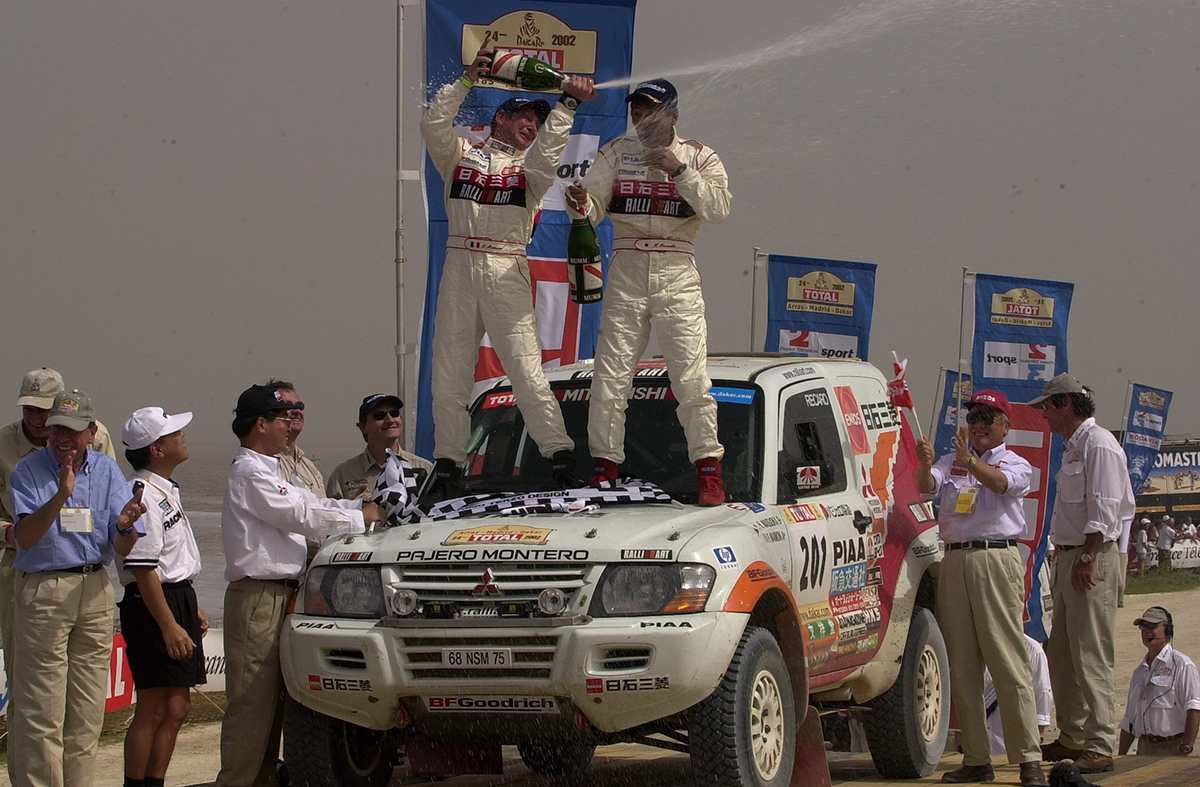
Masuoka’s first Dakar Rally victory came with the third-generation Pajero
The third-generation Pajero marked a turning point, adopting a monocoque body with a built-in frame. This structure dramatically increased torsional rigidity while improving crash safety and handling stability. Four-wheel independent suspension further enhanced high-speed stability.
"You can feel the difference immediately. The sense of confidence is on another level."
The goal was to bring production-vehicle rigidity closer to that of Dakar prototypes, which employed tube-frame structures.
"If it could withstand Dakar, it would hold up anywhere. But it was pushing the limits for a production car."
The result was proven in competition. The third-generation Pajero demonstrated outstanding performance in the Dakar Rally, where Masuoka secured his first overall victory behind the wheel.
"It was fast and easy to drive. There were initial concerns about the monocoque structure, but once it was tested in real conditions, the answer became clear. The validation meant a great deal."
Electronic Control and the Finishing Touches
Building on its structural innovation, the third generation also ushered in a new phase of electronic control technologies. Super Select 4WD evolved into Super Select 4WD-II (SS4-II), featuring electric actuation and a revised front-to-rear torque split from 50:50 to 33:67, improving cornering performance. Through extensive testing in snow-covered conditions and on test courses in Hokkaido, integration with stability control was further advanced in pursuit of an optimal balance.
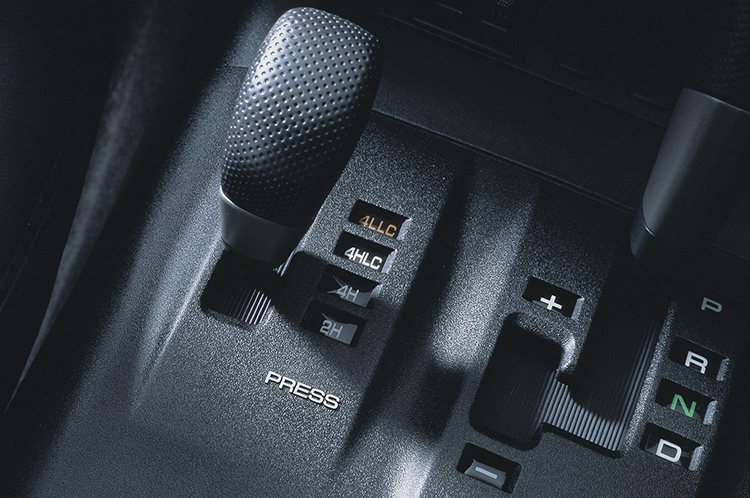
Equipped with Super Select 4WD-II and an optimized INVECS-II Sport Mode automatic transmission
Production vehicles must meet the needs of a wide range of drivers, from first-time users to experienced drivers. Masuoka helped define acceptable limits based on a combination of physical driving feel and visual assessment.
"Production cars are driven by all kinds of people. Everyone must be able to reach their destination, and make it home safely."
Building Trust Through Experience: 4WD Land
A defining initiative of this era was "4WD Land" – the artificial off-road courses built at key dealerships nationwide, where customers could experience Mitsubishi’s 4WD capability firsthand. Masuoka was directly involved in designing these courses, visiting sites and developing layouts.
"When people drive the vehicles themselves, the sense of confidence comes through. Experience speaks faster than words."
With the third generation, the Pajero evolved from a symbol of strength into a vehicle anyone could drive with confidence on any surface. Structural design, suspension, and electronic controls worked together to achieve a high level of both off-road performance and high-speed stability. This was not simply an advancement in capability. It represented a deepening of the Pajero’s underlying philosophy.
"Some may call it excessive engineering. But a Mitsubishi 4WD must never leave the driver stranded and cause anxiety. It must provide the confidence to reach their destination. This principle hasn’t changed."
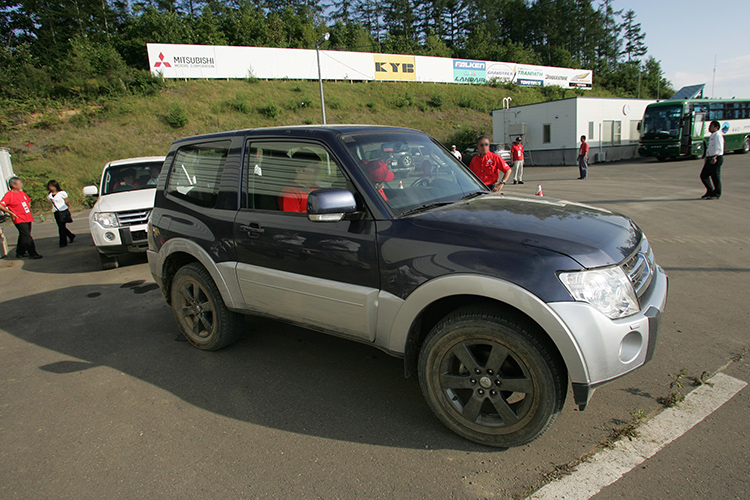
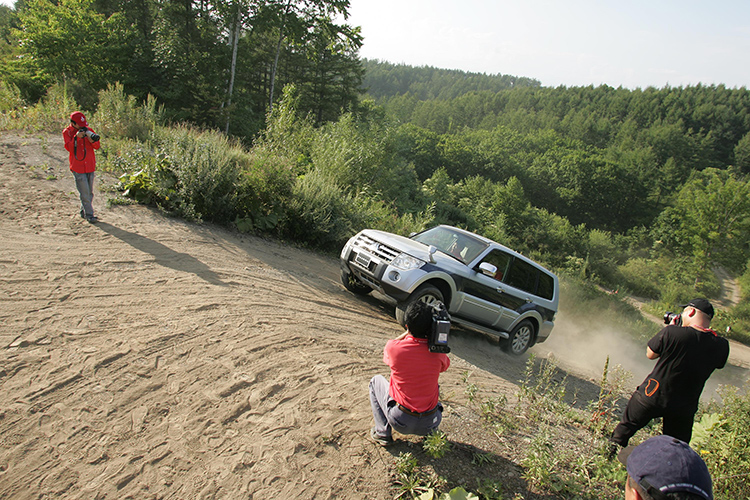
Test-drive event for a new Pajero at Tokachi 4WD Land
The Fourth Generation: A Near-Final Form, Reworked at Its Core
Launched in 2006, the fourth-generation Pajero retained its visual continuity with its predecessor but was in reality a comprehensive redesign - about 70 percent of its structure was revised. From suspension mounting points and rear geometry to welding methods, component shapes, and materials, each element was carefully reviewed and refined.
"The suspension was essentially rebuilt - especially at the rear, which plays a key role in overall stability."
Balancing on-road comfort with off-road capability is inherently difficult for SUVs due to their long suspension travel. Prioritizing comfort on paved roads can compromise off-road margin, while emphasizing off-road performance can affect everyday usability. Within that tension, the fourth generation refined its balance relentlessly.
"It wasn’t simply about increasing stiffness, but about reducing fatigue and improving stability. This was the focus."
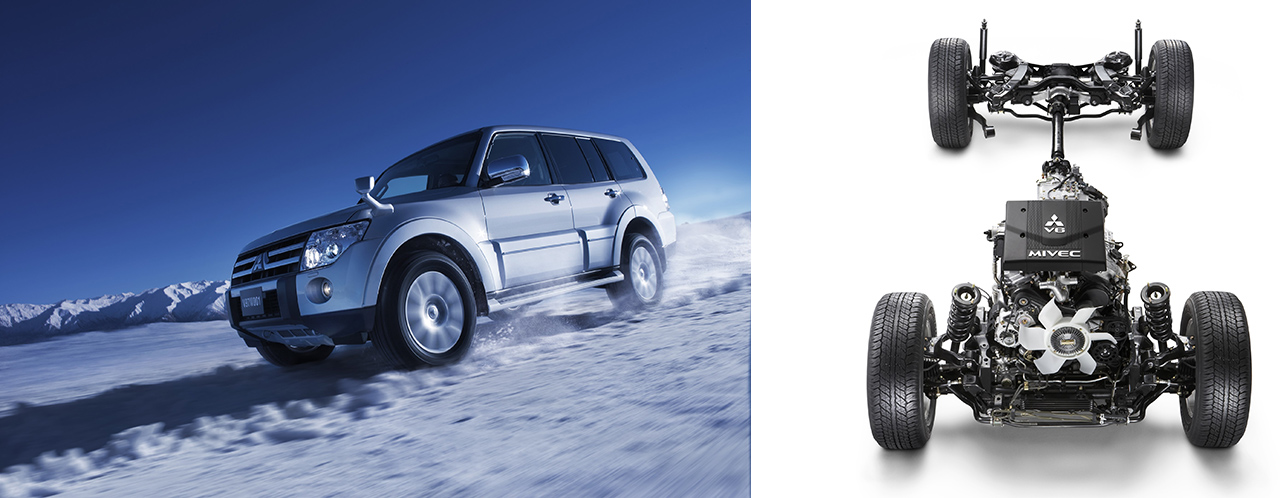
The fourth-generation Pajero
Super Select 4WD-II continued to evolve in the fourth generation. Electronic control systems became more discreet, supporting vehicle stability without interfering with the driver’s inputs.
"When control becomes too intrusive, it feels unnatural," Masuoka says. "What we were aiming for was something seamless - something that simply felt natural."
The fourth-generation Pajero did not emphasize its performance. Instead, it focused on improving what lies beneath - raising overall quality through careful, incremental refinement toward a near-complete form.
"It may not be obvious from the outside. But beneath the surface, it changed dramatically. This is an approach Mitsubishi Motors often takes."
Strength in challenging terrain. Stability at higher speeds. Comfort over long distances. The fourth-generation Pajero brought these elements together into a single, coherent form.
"By this point, it felt close to a near-final form. But reaching that point doesn’t mean the end. As times change, what is required of the vehicle also changes."
From establishing a 4WD with "go-anywhere" capability in its first generation, to becoming a 4WD you can control in its second, integrating structure and control systems in its third, and refining those elements into a cohesive whole in its fourth, the Pajero steadily shaped its identity across generations.
At its core was a consistent belief that strength should be accessible – never exceptional. Refined over time and across generations, that belief defines the Pajero’s evolution - and continues to guide where it goes next.
-
-
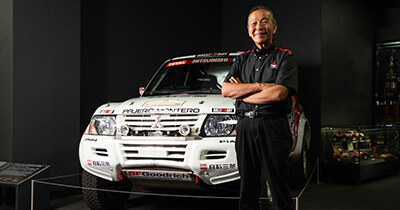
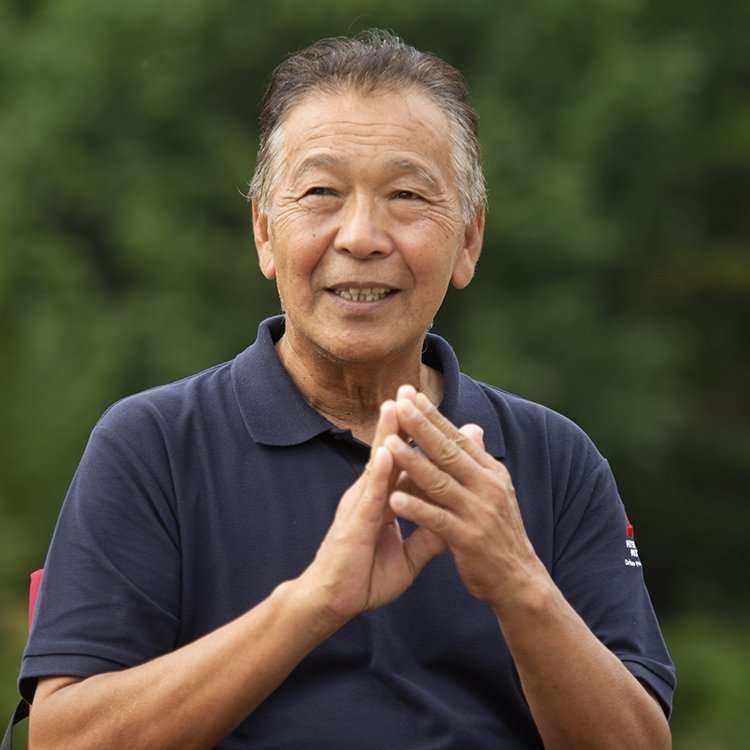
Hiroshi Masuoka
Team Director, Team Mitsubishi RalliartAs a works driver for Mitsubishi Motors, Hiroshi Masuoka competed in the world’s most demanding rally - the Dakar Rally – with the Pajero. In 2002 and 2003, he claimed overall victory in consecutive years, becoming the first Japanese driver to achieve a back-to-back overall win. Today, he applies his hard-earned experience to new vehicle development and comprehensive evaluation, while also focusing on training test drivers. As team director of Team Mitsubishi Ralliart, he has also led the team to overall victories at the Asia Cross Country Rally - considered the toughest in the ASEAN region - in 2022 and 2025.
Related Content
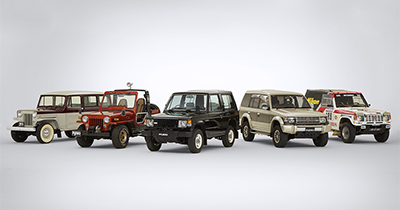
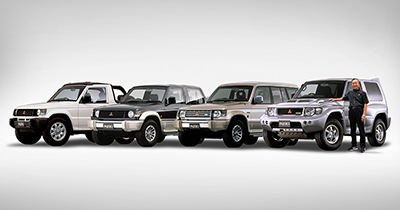
Looking Back on the History of the Pajero with Hiroshi Masuoka
May 2026

