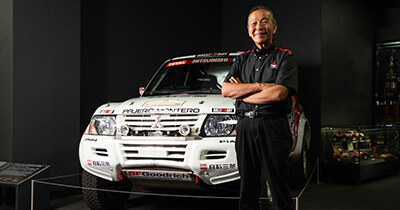
The Second-Generation Pajero-- The Transition to a "4WD That Can Turn"
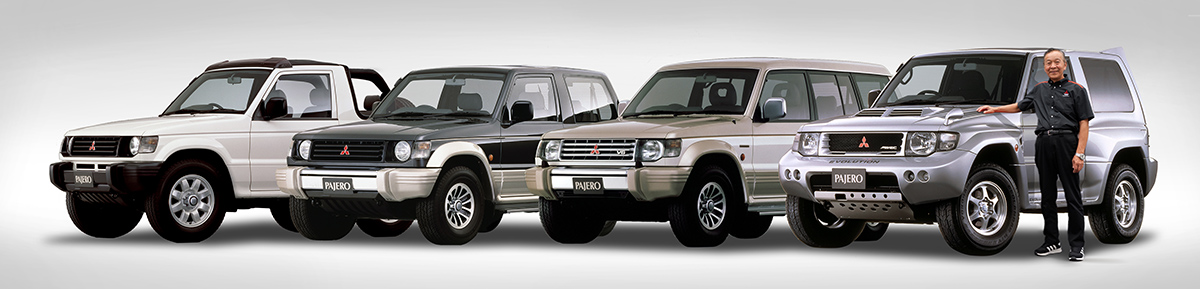
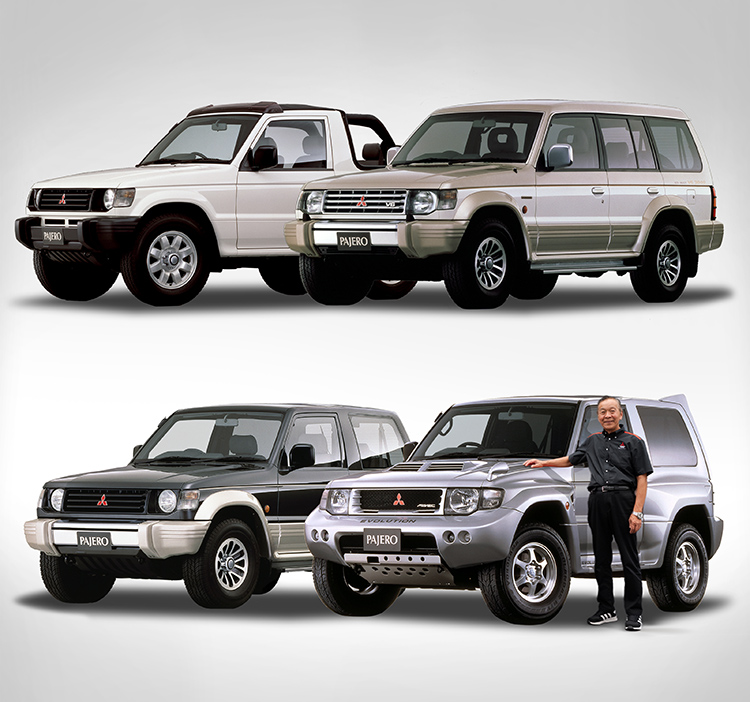
The first-generation Pajero delivered four-wheel-drive (4WD) performance for everyday drivers, bringing safety and peace of mind to daily life.
Then came the second-generation Pajero. Introduced with the "Grip the Ground" tagline and shaped by all-wheel-control philosophy, the second-generation Pajero overturned conventional ideas about 4WD handling.
Passenger-Car Handling Meets 4WD Capability
The evolution that shaped the first-generation Pajero also made the next challenge unmistakably clear. At the time, 4WD systems offered essentially two choices: two-wheel drive (2WD) or locked 4WD . While reliable on rough terrain, these systems imposed handling limitations on paved roads and icy surfaces.
"When you engage locked 4WD, the car doesn’t want to turn - especially on ice. It really doesn’t turn at all," Masuoka recalls. "The development team was determined to overcome that."
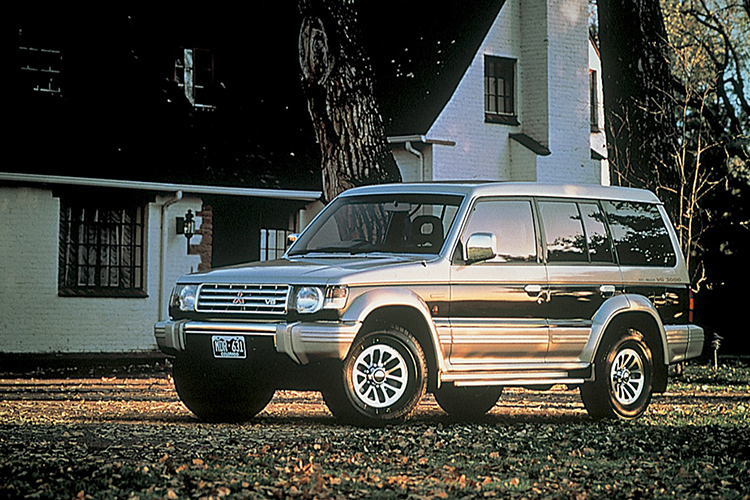
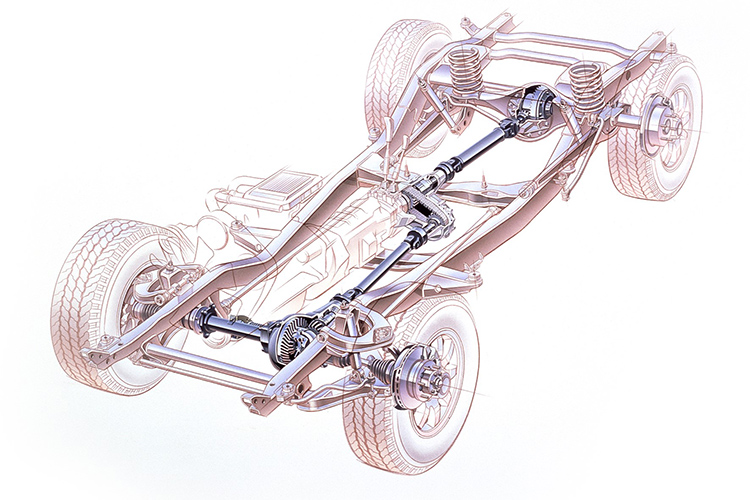
The second-generation Pajero, equipped with Super Select 4WD, a system combining the strengths of full-time and part-time 4WD
This challenge was addressed head-on with the second-generation Pajero, introduced in 1991. It featured the world’s first Super Select 4WD system, allowing drivers to choose among 2WD, full-time 4WD, locked 4WD, and low range depending on conditions. By incorporating full-time 4WD technology used in passenger cars, Pajero aimed to raise both driving performance and handling stability.
"The idea was to place greater importance on handling. To create a 4WD that could turn without compromising its off-road performance. That was a major shift."
The suspension system also evolved. Building on the rear three-link coil spring setup introduced in the later phase of the first generation, detailed refinements improved compliance over rough terrain. The tendency for the rear wheels to bounce was reduced, resulting in more composed behavior on uneven surfaces and greater stability at higher speeds. This marked an important step in preserving off-road performance while noticeably elevating ride comfort and handling stability.
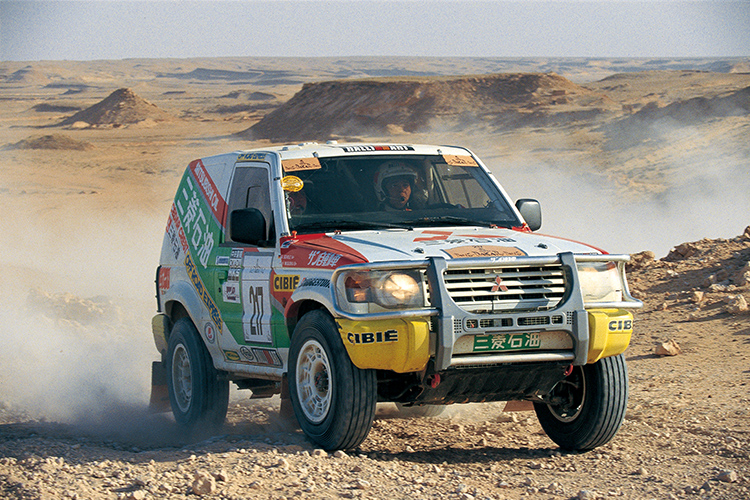
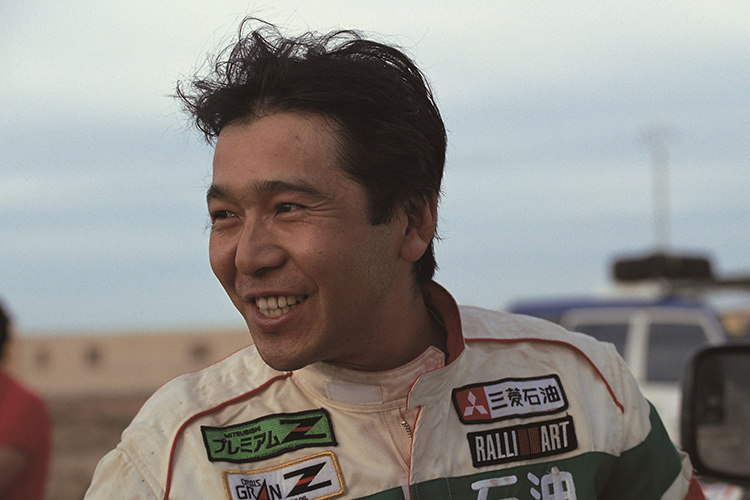
The second-generation Pajero and Hiroshi Masuoka after winning the production-based class at the 1994 Dakar Rally.
Powertrain enhancements further reinforced this evolution. A minor update in 1993 increased gasoline engine displacement from 3.0 to 3.5 liters, and diesel from 2.5 to 2.8 liters. With added torque and smoother acceleration, the Pajero became not only more capable on rough terrainoff-road , but also more comfortable and reliable for long-distance travel and high-speed cruising.
Ease of use improved as well. Earlier 4WD vehicles required drivers to exit the vehicle and manually lock the front hubs when switching to 4WD. In the second-generation Pajero, the change from 2WD to 4WD could be made simply by operating a lever from inside the cabin.
"Looking back now, the first-generation Pajero was not exactly an easy vehicle to drive," Masuoka says. "At launch, it didn’t even have power steering. On rough terrain, the steering would kick back sharply. The strain on my hands was significant. During rallies, my fingers would blister and even bleed. So the improvements for the second generation made a real difference in reducing fatigue, even in competition."
The Second-Generation Pajero’s Maturity, Proven at Dakar
During this period, the Dakar Rally was contested by prototypes, but a sudden regulation change in 1996 banned manufacturer-entered prototypes. As a result, the 1997 rally shifted its focus to the T2 class for production-based vehicles, where the performance of mass-production models played a decisive role. Mitsubishi Motors entered with a vehicle based on the second-generation Pajero and went on to claim the overall victory, outperforming privately entered prototypes.
The following year, in 1998, Mitsubishi returned with a Pajero Evolution–based vehicle, further refined in its fundamental performance, and claimed overall victory once again. Together, these victories validated the inherent capabilities of the second-generation Pajero platform.
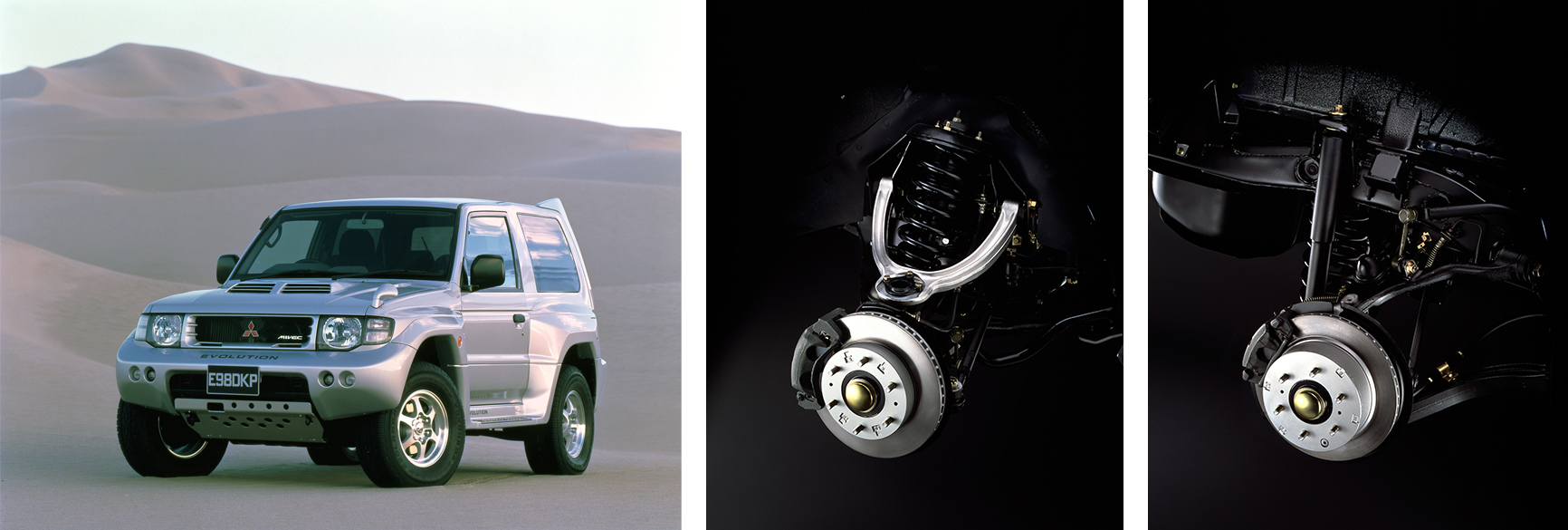
The Pajero Evolution featuring independent suspension system on all four wheels.
The Pajero Evolution was equipped with a dedicated 3.5-liter engine and featured extensive weight reduction, including the use of aluminum for the hood. In the early 1990s, domestic monthly sales of the Pajero reached 7,000 to 8,000 units. The company’s business performance was strong, allowing significant investment to be directed toward development.
"But numbers alone don’t tell the full story," Masuoka reflects. "There was a sense that if we had the chance, we should go all the way. To pursue speed, we adopted a dedicated engine and body parts. It felt like an era when finishing what we started mattered more than cost."
By prioritizing aspiration over constraint, the Pajero Evolution became a tangible expression of that era’s intensity and commitment.
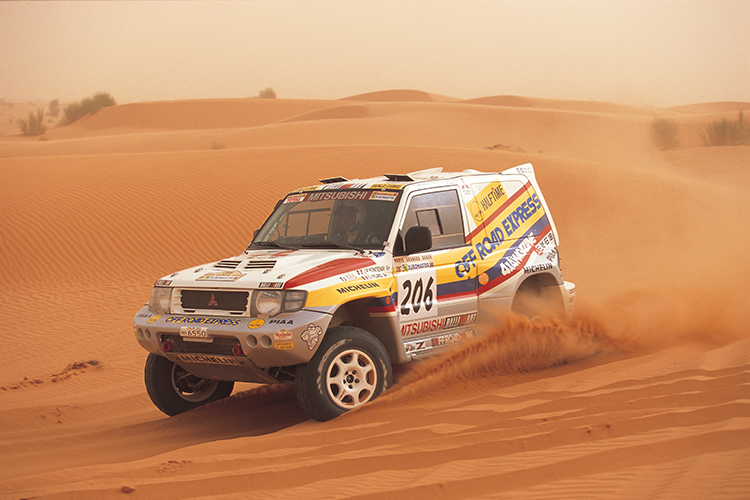
Pajero Evolution, winner of the 1998 Dakar Rally
The trust established by the first generation as a 4WD that can "go-anywhere" evolved in the second generation into a 4WD you can control. It achieved a balance between the ability to tackle demanding terrain and the ease with which any driver could control - further defining the identity of the Pajero.
That philosophy would soon confront the next generation with an even more fundamental question: whether to change the vehicle’s structure itself - the debate over, and challenge of moving to a monocoque body.
-
-
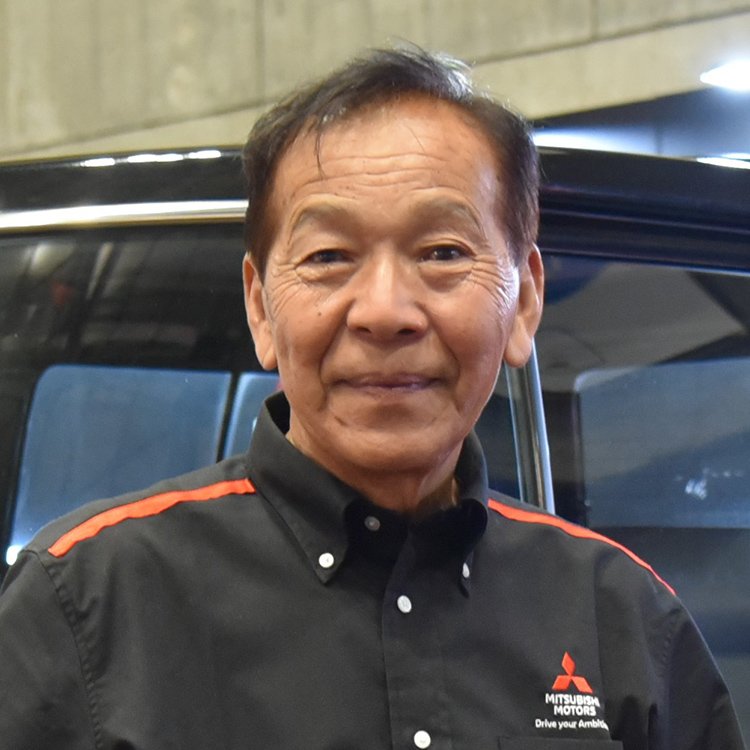
Hiroshi Masuoka
Team Director, Team Mitsubishi RalliartAs a works driver for Mitsubishi Motors, Hiroshi Masuoka competed in the world’s most demanding rally - the Dakar Rally – with the Pajero. In 2002 and 2003, he claimed overall victory in consecutive years, becoming the first Japanese driver to achieve a back-to-back overall win. Today, he applies his hard-earned experience to new vehicle development and comprehensive evaluation, while also focusing on training test drivers. As team director of Team Mitsubishi Ralliart, he has also led the team to overall victories at the Asia Cross Country Rally - considered the toughest in the ASEAN region - in 2022 and 2025.
Related Content
Looking Back on the History of the Pajero with Hiroshi Masuoka
May 2026

