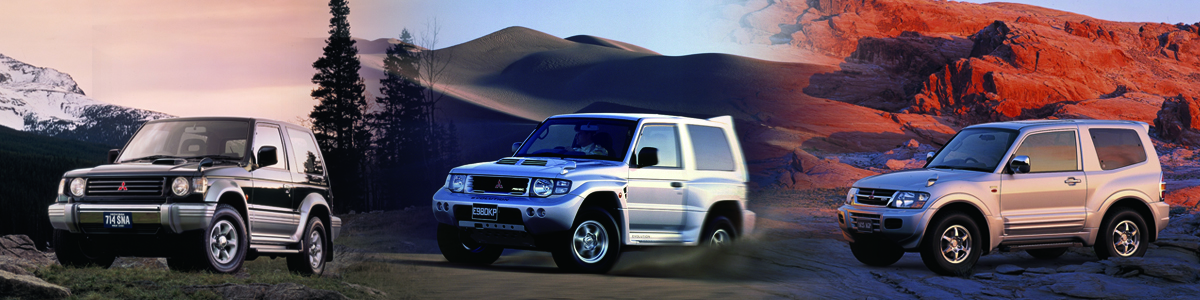
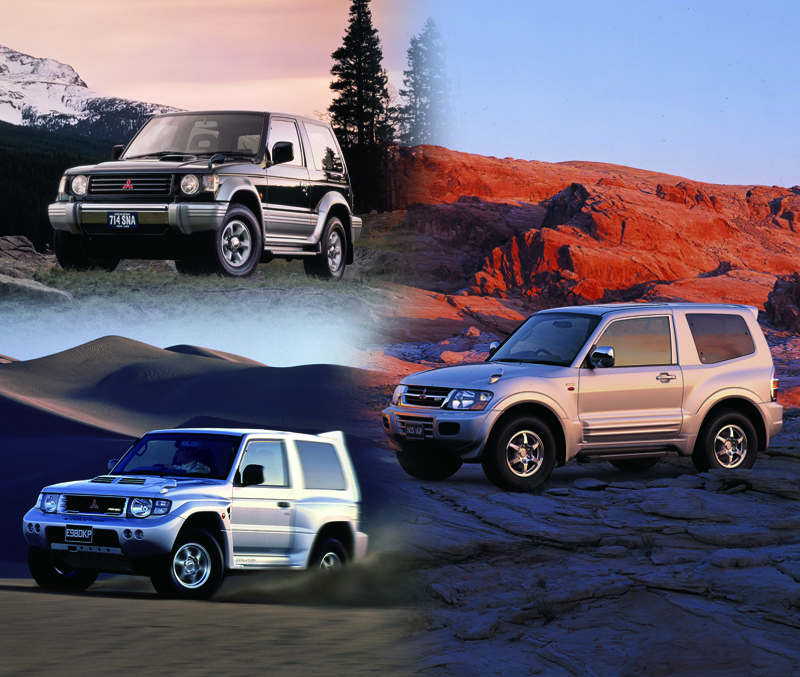
Having pioneered the concept of a four-wheel-drive vehicle that anyone could drive with confidence in its first generation, and further refining its ability to tackle virtually any road surface with the introduction of Super Select 4WD in the second generation, the Pajero faced a new set of challenges as it entered a new era.
The third-generation model appeared to mark a dramatic departure from its predecessors. In reality, however, it was a natural evolution, seamlessly connected to everything that had come before it and shaped by the same enduring philosophy.
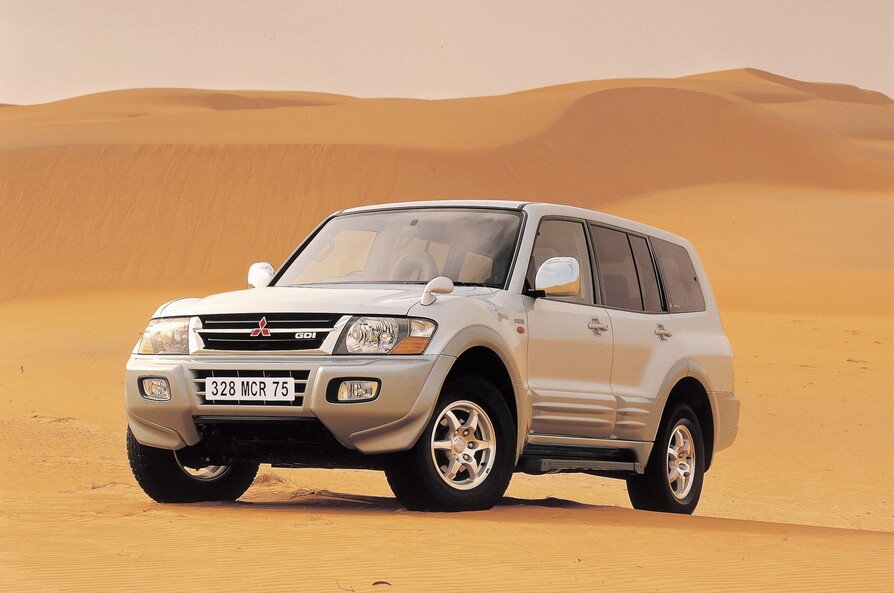
Changing to Preserve What Matters
The Third-Generation Pajero: Not a Radical Break, but an Inevitable Evolution
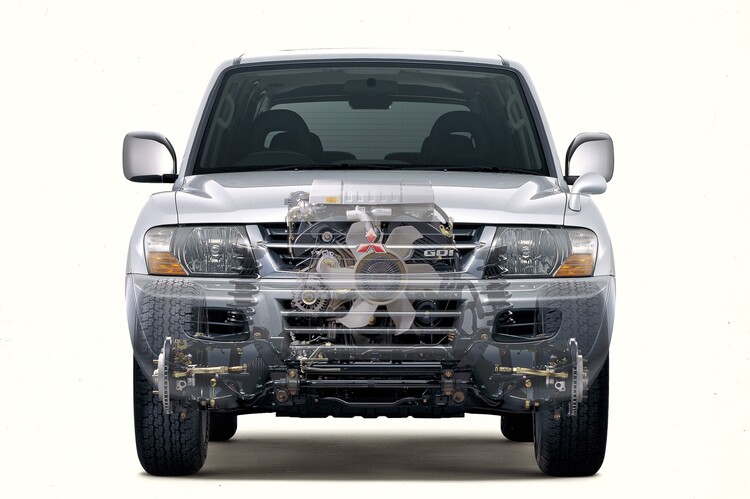
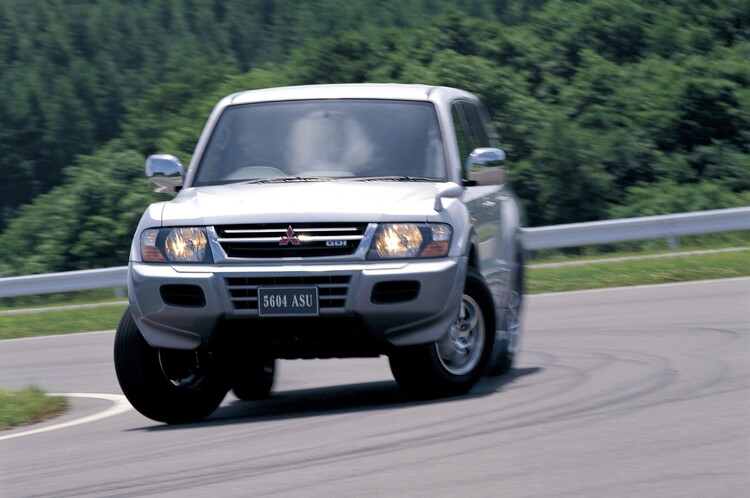
As demands for environmental performance and crash safety continued to rise around the world, SUVs were increasingly required to deliver greater driving stability. Introduced in 1999, the third-generation Pajero underwent a major transformation. The traditional ladder-frame chassis gave way to a monocoque body with an integrated ladder frame, and its suspension—which had previously featured front independent suspension and a rear rigid axle—was replaced with a four-wheel independent system.
Yet the Pajero’s core mission had not changed. The objective remained the same: preserve genuine off-road capability while making the vehicle safer, more comfortable, and more stable. What changed was the technology used to achieve it.
One key turning point came before the third generation itself, with the development of the Pajero Evolution.
Created as a homologation model for the Dakar Rally, the Pajero Evolution retained a frame structure while adopting four-wheel independent suspension. It was an ambitious project, but the first prototype exposed an important problem. When the handling and stability engineers evaluated it, their feedback was blunt.
“They told us that the independent suspension simply couldn’t perform properly with that frame. No matter how precisely the suspension worked, if the structure underneath it was flexing, you could never fully realize its potential.”
The development team responded by thoroughly reinforcing the frame itself.
“We added tens of kilograms of reinforcement. But additional weight means worse fuel economy and ultimately reduces the vehicle’s overall value. So we had to find another solution. We needed something both stiffer and lighter. That led us to the conclusion that a monocoque body with a built-in frame was the only answer.”
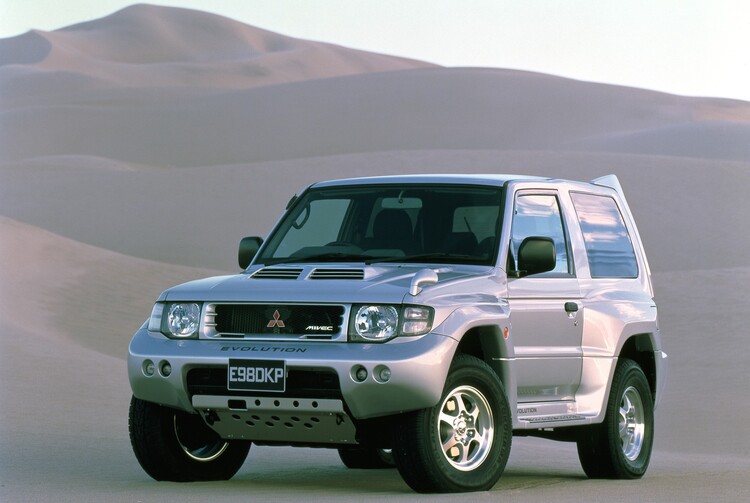
The Pajero Evolution adopted a four-wheel independent suspension system on a ladder-frame chassis.
To unlock the full potential of four-wheel independent suspension, the vehicle needed greater body rigidity. But simply reinforcing a frame increased weight. The challenge became how to achieve both high rigidity and weight reduction at the same time. The answer was a built-in frame monocoque body.
That decision was driven by more than suspension performance alone.
At the time, concern over SUV safety was growing worldwide. In the United States in particular, rollover accidents had become a major social concern, creating pressure to lower SUVs’ center of gravity.
“SUV rollover accidents were receiving significant attention in the U.S., so we knew we needed to lower the center of gravity. But if we simply lowered the body, we would sacrifice off-road performance. So we looked at it differently. Instead of mounting the body on top of the frame, why not integrate them? That would allow us to lower not only the body but also the occupants and the engine. We could reduce the center of gravity while maintaining ground clearance.”
Off-road performance demanded generous ground clearance. Safety and driving stability demanded a lower center of gravity. Rather than choosing one at the expense of the other, the engineers searched for a way to achieve both.
Crash safety requirements were also becoming increasingly important.
“At the time, monocoque structures made it easier to control deformation during a collision than conventional frame structures did. When you considered handling stability, rollover resistance, and crash safety together, the built-in frame monocoque became the clear solution.”
Body rigidity, weight reduction, a lower center of gravity, crash safety, and maximizing the benefits of four-wheel independent suspension may have seemed like separate challenges. Yet when engineers pursued each problem to its logical conclusion, they all pointed toward the same answer.
Hiroshi Funo, who evaluated prototype vehicles equipped with the new built-in frame monocoque body, remembers the transition well.
“The first prototypes still had issues to solve, to be honest. But the handling was already very impressive. By the later years of the second-generation model, there was a growing sense that the Pajero needed another leap forward in performance. Because of that, changing the structure itself didn’t seem like a particularly strange idea.”
To outside observers, the third-generation Pajero appeared revolutionary. For the engineers developing it, however, it was part of a seamless evolution, not a rejection of the models that came before.
When independent front suspension was introduced on the first-generation model, there were those who warned that off-road performance would suffer. Instead, engineers found ways to maintain suspension travel and durability while improving handling and stability. The transition to a built-in frame monocoque body followed exactly the same logic.
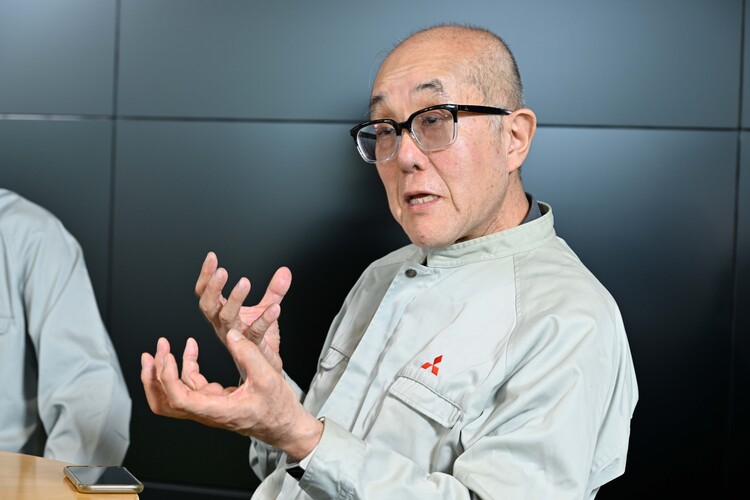
Nishioka summarizes the philosophy in a single sentence:
“What matters isn’t what technologies you adopt. What matters is what you achieve.”
Frame or monocoque, rigid axle or independent suspension. These were never goals in themselves, just different means to an end. The real objective was always to build a vehicle that could preserve authentic off-road performance while becoming safer, more stable, and more comfortable. If achieving that required rethinking even the fundamental structure of the vehicle, the Pajero team was prepared to do so.
Forged through Rallying
How Extreme Environments Made Production Vehicles Stronger
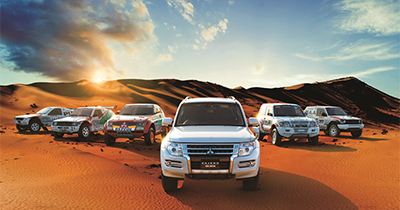
No account of Pajero development would be complete without mentioning the challenges it faced in motorsports, particularly the Dakar Rally, then known as the Paris-Dakar Rally.
Widely regarded as one of the most demanding motorsport events in the world, the Dakar Rally became a proving ground where the Pajero built an extraordinary competitive record.
Vehicles were subjected to some of the harshest conditions imaginable, weaknesses were exposed, and the lessons learned were fed directly back into the next generation of production vehicles.
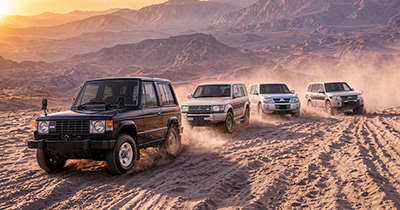
“Many people imagine the Dakar Rally as simply driving straight across the desert, but it’s nothing like that. You cross rivers. You encounter rocky terrain. There are sand dunes with drops of ten meters or more. It contains every type of off-road challenge imaginable. If a vehicle can successfully complete Dakar, it can handle harsh environments virtually anywhere in the world.” (Nishioka)
The Dakar Rally, which involves driving long distances over terrain that changes constantly, is not a race that can be completed by excelling in just one area alone.
Not only is the vehicle’s ability to navigate rough terrain put to the test, but so too are the durability of the body and suspension, as well as its handling stability—in short, the vehicle’s overall capabilities are thoroughly challenged. It was also a stage where the approach of “making sure it can always take you home” was constantly put to the test in extreme conditions.
Taking production cars as a base, the development team tested them in extreme conditions, addressed the weaknesses revealed there, and then applied those lessons to future production models. The development of production cars and rally cars did not proceed in isolation; rather, the Pajero evolved through mutual influence. This cycle of testing in rallies and incorporating the findings into production cars elevated the vehicle’s technical capabilities one step at a time. This approach of pushing a car to its absolute limits to identify its weaknesses also carried over into production vehicle testing.
“Even when it comes to durability testing, the Pajero undergoes extremely demanding evaluations. Because the vehicle is used in so many countries, the engineers accumulate enormous amounts of data about the conditions that cause failures and, more importantly, how to prevent them.” (Funo)
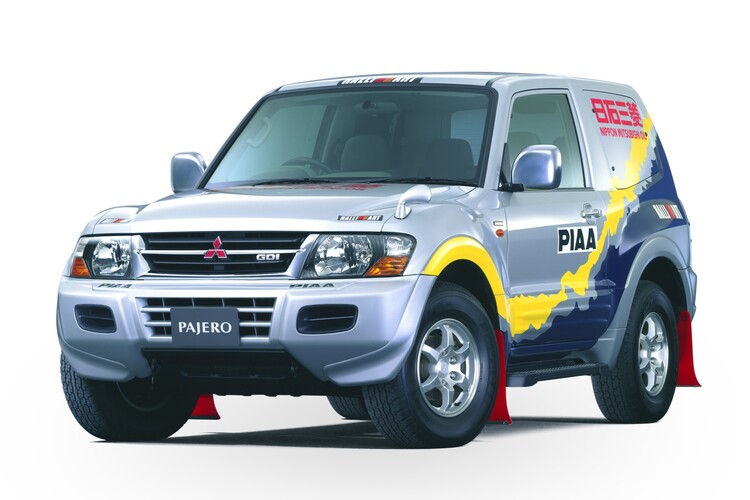
The third-generation Pajero's body was so rigid that it could be transformed into a rally car simply by adding a roll cage.
As a vehicle used all over the world, there is no one single environment the Pajero is designed for. As such, the vehicle is put through real-world testing and pushed to the point of failure, with the data gathered from these tests feeding into the next phase of development. This cumulative process has forged the Pajero, honing its off-road capabilities and durability, translating the development philosophy of “No Matter the Road , You’ll Always Make It Back” into actual performance.
-

-
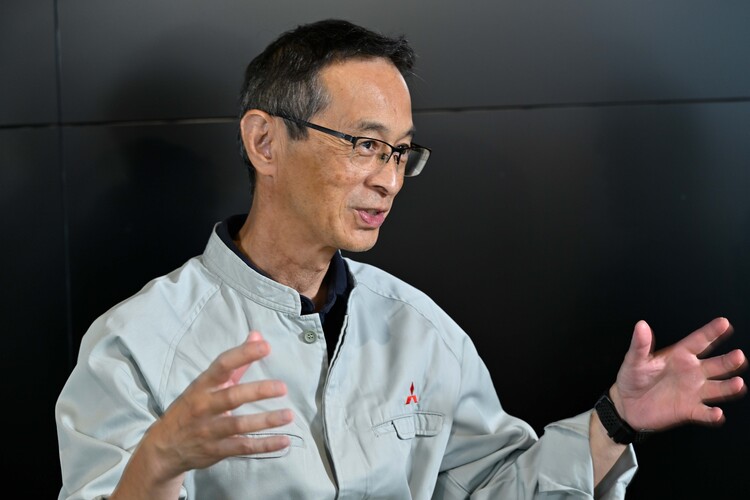
Yoshiki Nishioka
A veteran engineer who was continuously involved in Pajero development from the updated second-generation model through to the fourth generation. His career also includes development of drivetrain systems for rally vehicles, the launch of the first-generation Pajero Sport, the diesel program for the Delica D:5, and leadership of that model’s major design update.
-

-
Hiroshi Funo
A product evaluation specialist responsible for assessing the overall competitiveness and customer appeal of Mitsubishi vehicles. He was involved in product evaluations for the third- and fourth-generation Pajero and is currently engaged in motorsports vehicle development.
Oct. 2026

