The Pajero Story: Product Planning (Part 2)
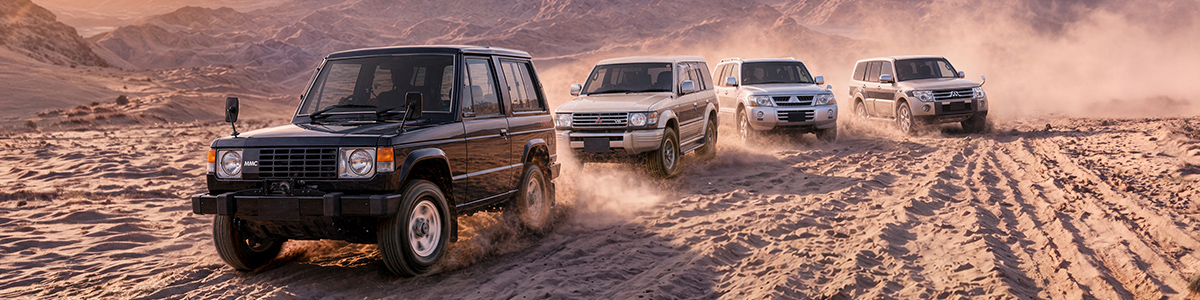
The story of the Pajero did not end in Japan. The philosophy that took shape there crossed oceans and evolved in different ways around the world, giving rise to different value in different regions. In Europe, the Pajero became an SUV that could cruise confidently on highways. In the United States, it became a trusted companion for adventure and exploration. In Southeast Asia, it became a dependable partner for supporting everyday life.
However, while the Pajero’s applications varied between each market and culture, one thing remained unchanged: that was the idea of a genuine four-wheel-drive vehicle that anyone could use with confidence.
Even after the Pajero name disappeared from the global market, that philosophy lived on, shaping Mitsubishi Motors’ approach to vehicle development and leaving a lasting mark on the career of one member of the product planning team.(Read Part 1 here.)
The Pajero's Evolving Needs Through the Times
Defining the Pajero Identity in an Increasingly Diverse SUV Market
The market that Pajero helped create continued to expand. As more manufacturers entered the SUV market, consumers began to demand a wider variety of features. With SUVs becoming a mainstream vehicle category, consumer values and preferences also began to fragment.
”Following the success of the Pajero, automakers introduced a wide variety of SUVs. While some focused on luxury and status, others responded to customers who felt that such high levels of capability were unnecessary, leading to the emergence of lighter SUVs that were closer to passenger cars."
As markets evolve, products inevitably change. Yet throughout these shifts, Mitsubishi Motors continued asking a fundamental question: What defines the “Pajero” identity?
There were significant changes in the business environment, with demand for large SUVs temporarily declining in some markets, while premium SUVs gained popularity overseas. However, the direction that Pajero pursued never wavered.

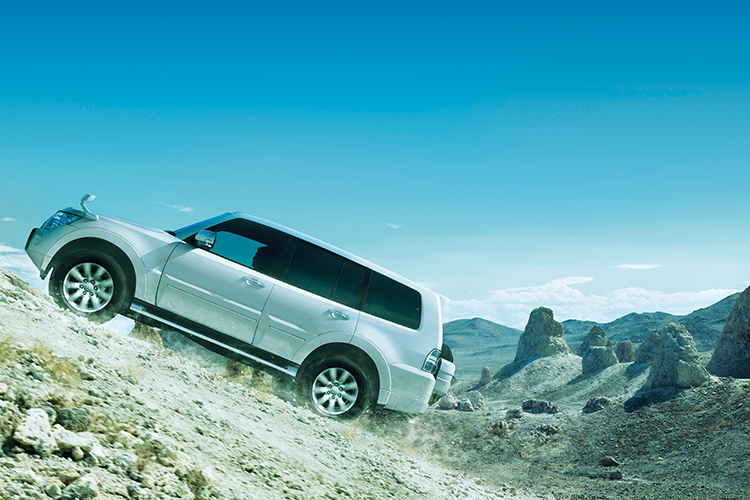
Since its first generation, the Pajero has remained committed to being a user-friendly 4WD for everyone.
There was one defining theme of Pajero product planning throughout its history: to combine authentic off-road capability with refinement and comfort, while ensuring that anyone could drive the vehicle with confidence.
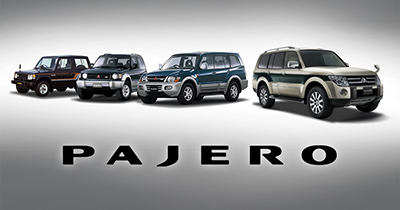
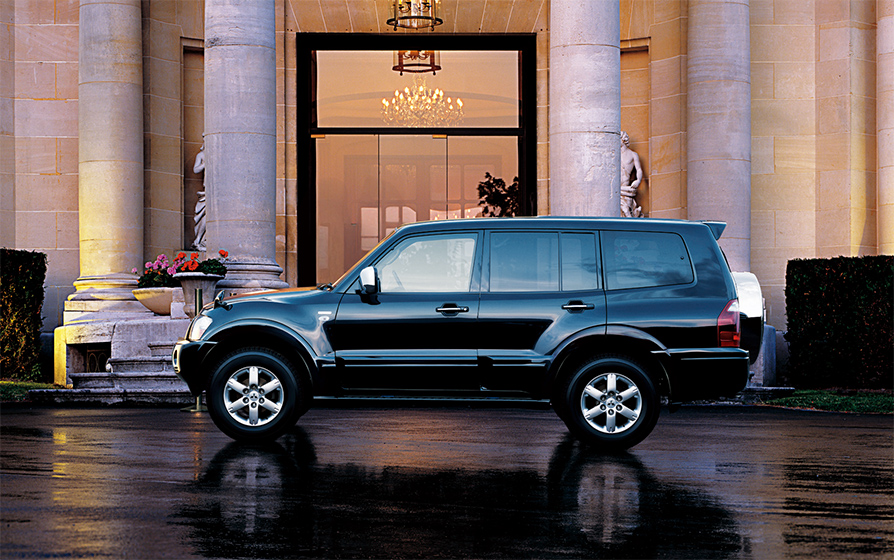
Uehara explains the concept behind the third-generation Pajero:
“There was a phrase we used: ‘Dynamic Prestige.’ ‘Prestige’ referred to refinement and luxury, while ‘Dynamic’ represented off-road capability and driving performance. Conventional off-road vehicles tended to prioritize straight-line stability, but the Pajero was engineered to respond naturally to steering inputs and deliver a more engaging driving experience.”
The phrase “respond naturally” was about more than vehicle dynamics. When a vehicle behaves exactly as the driver expects, it creates a sense of trust and confidence. The philosophy established with the first-generation model, that of making a vehicle that anyone could drive, remained firmly intact.
Seeing the Vehicle Through the Eyes of the User
Where did this way of thinking come from? Looking back, Uehara remembers there were many people at the company who, while dedicating themselves wholeheartedly to their work, were “enthusiasts” in their personal lives.
“When I first joined the company, I noticed there were many people who were deeply committed to their personal interests, whether skiing, fishing, camping, or something else.”
After being assigned to the Product Planning Department, Uehara received an unexpected instruction. “One day I was told, ‘Take the Pajero and go camping.’ At the time, I wondered why. But the underlying belief was that if you want to create something that makes people happy, you first need to understand it yourself.”
A truly user-friendly vehicle cannot be created solely behind a desk. Rather, you have to use it and experience it personally. Those real-world experiences came to form the foundation of the Pajero’s product planning.
“You cannot understand how something feels in actual use unless you experience it yourself. As such, the Pajero incorporated countless small ideas born from real-life use. Every piece of equipment was designed with a specific situation in mind. The onboard tools were positioned for easy access, and even the flashlight was equipped with a magnet so it could be attached to the body of the vehicle and used at night. Those are the kinds of details you only discover through firsthand experience.”
In this way, the Pajero’s value was shaped not simply by pursuing performance, but by seeing the vehicle from the user’s perspective. That way of thinking would eventually reach far beyond Japan, taking on new meaning around the world.
-
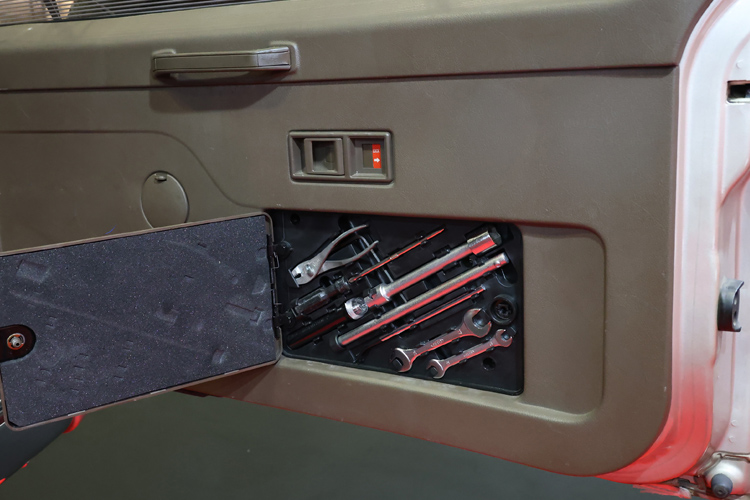
On-board tools built into the back door
-

The Pajero Crosses Oceans: Value That Continued to Evolve Around the World
Born in Japan as a four-wheel-drive vehicle that anyone could drive with confidence, the Pajero took on new meaning as it expanded overseas. From the second generation onward, Europe became one of its primary export markets. At the time, the SUV segment was still relatively new, and choices were limited.
“Back then in Europe, we often heard that affluent customers drove European luxury cars, particularly German brands, as their primary vehicles, while the Pajero was their vehicle for leisure.”
The reason the Pajero became so popular with so many people was that it served as a bridge between everyday life and special occasions, offering a stable ride on the highway, easy handling in the city, and the chance to enjoy the great outdoors on weekends, all in a single vehicle. In the United States, however, the Pajero came to represent something different.
While stationed there between 2008 and 2011, Uehara sought out a used Pajero and continued driving one himself. Although the Pajero was no longer sold in the country, he still wanted to own one. This is where Uehara encountered an outdoor culture unlike anything in Japan.
“The United States is a country where people are encouraged to take responsibility for themselves. Even on relatively minor mountain trails, signs at the entrance indicate the level of difficulty ahead. The attitude is essentially: evaluate your vehicle and your skills, and make your own decision. When I tried those trails for myself, there was a real sense of satisfaction in realizing just how far I could go.”
What the Pajero provided was the reassurance that turned the ability to go somewhere into the desire to actually give it a try. In this way, the value created in Japan was embraced in the United States as a vehicle that supported freedom and self-reliance.
In Australia, the Pajero played yet another role. People used it for work and, on their days off, would simply hitch up a boat and head out to have fun. In this context, the Pajero was embraced as a vehicle that seamlessly bridged work and leisure. And as he conducted interviews and business negotiations overseas, Uehara became aware of a value he hadn’t really noticed back in Japan.
“One phrase I heard repeatedly was ‘moving safely.’ That is, being able to travel safely and with confidence. That’s not something we tend to discuss as much in Japan, but overseas it was extremely important. The high seating position allowed drivers to see farther ahead and understand what was happening on the road. That visibility created a strong sense of reassurance.”
In Japan, Pajero was seen primarily as a vehicle for recreation. Elsewhere, it was valued as a vehicle that could safely carry loved ones to their destination. Its appeal expanded beyond leisure to include peace of mind.
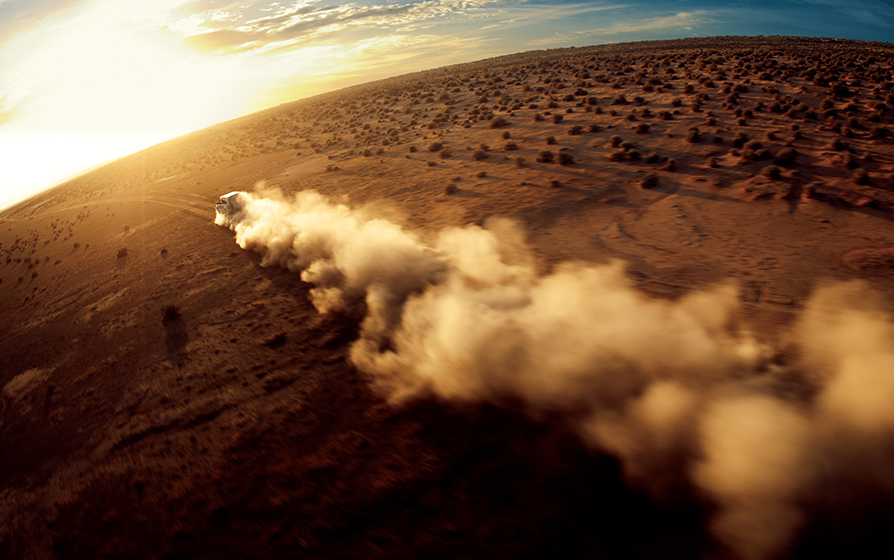
Overseas, the Pajero is valued as a vehicle that safely delivers loved ones to their destination.
That value evolved further in emerging markets. The Pajero Sport, derived from the Pajero lineage, gained broad acceptance across ASEAN countries, particularly Thailand. In some markets, people even referred to the Pajero Sport simply as “the Pajero.”
“Over there, you don't really have the kinds of leisure activities you find in developed countries. Instead, customers with a certain level of financial means purchase the vehicle as a dependable partner for everyday life. Roads may flood during heavy rainstorms, and there are unpaved roads everywhere. People chose it because they knew it would get them safely to their destination.”
The vehicle that expanded leisure opportunities in Japan evolved into a vehicle that supported daily life throughout the ASEAN region. Through these experiences, Uehara came to see the Pajero as a symbol of Mitsubishi Motors’ approach to manufacturing.
Creating new sources of enjoyment and value in developed markets, applying those technologies to improve everyday life in emerging markets, then using the knowledge gained there to take on the next challenge. This, according to Uehara, is that cycle representing the essence of Mitsubishi Motors, and the Pajero is where it all began.
A Vehicle to Change and Support People’s Lives
(Uehara: Note: I felt the original heading didn’t quite fit the text, so I came up with one on my own. If you have a better idea, please let me know.)
What did the Pajero mean to Uehara?
“It’s a little embarrassing to say, but to put it simply, it opened up the way I looked at things. It took me to a world I hadn’t known during my student days, it allowed me to meet so many new people, and it taught me the excitement of working in product planning. Each of these experiences enriched my life.”
In many ways, his feelings mirror those of people around the world who encountered the Pajero. In Europe, it became a vehicle for enjoying life. In the United States, it became a vehicle that encouraged people to take the next step into the unknown. In Australia, it bridged the gap between work and leisure. In ASEAN countries, it became a trusted partner that supported everyday life.
While the value people found in the Pajero differed from country to country, the philosophy at its core never changed. That is, a vehicle capable of going anywhere, and a vehicle that anyone could use with confidence. With this combination, people were able to move from the idea of being able to go somewhere to the motivation to actually do it.
What the Pajero created was a value that broadened people's horizons and, even if only slightly, enriched their lives. That philosophy lives on today in the career of a single product planner and in the way Mitsubishi Motors builds its cars.
-

-
Profile: Minoru Uehara
Responsible for product planning for the partial redesign of the second-generation Pajero and the development of the third-generation Pajero. He later led product planning for several iconic Mitsubishi Motors models, including the Delica D:5.
From an early stage in his career, he focused not only on vehicles’ functionality but also on the value and experiences that they could provide, helping shape Mitsubishi Motors’ approach to product planning.
September 2026

