The Pajero Story: Product Planning (Part 1)
Four-wheel-drive vehicles were once machines built for highly specialized purposes. Yet little by little, the Pajero changed that perception. Mitsubishi Motors’ product planners were not focused solely on how far they could push performance. What they asked was, “Who would use that performance, and how?”
The goal was to make exceptional off-road driving available not only to a small group of enthusiasts, but to a much broader range of people in their everyday lives. That philosophy expanded people’s horizons and reshaped the way they interacted with their cars. The value born in Japan would eventually cross borders, taking on different meanings in countries and regions around the world.
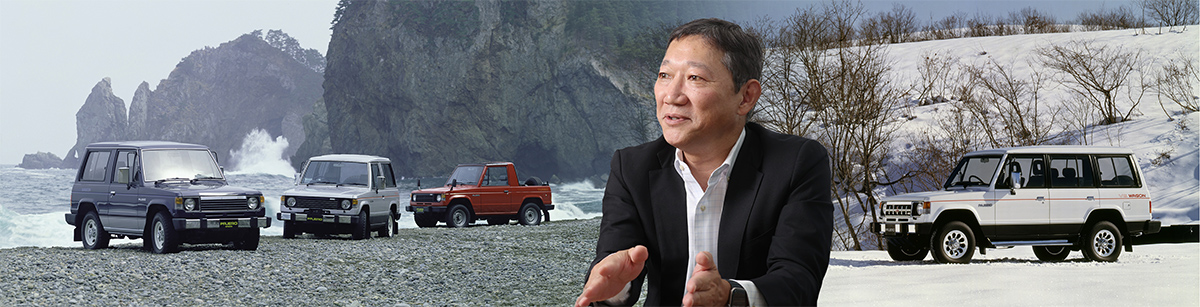
What exactly did the Pajero bring to the world? Through the recollections of Minoru Uehara, who was responsible for product planning, we look back on the vehicle’s history.(Read Part 2 here. )
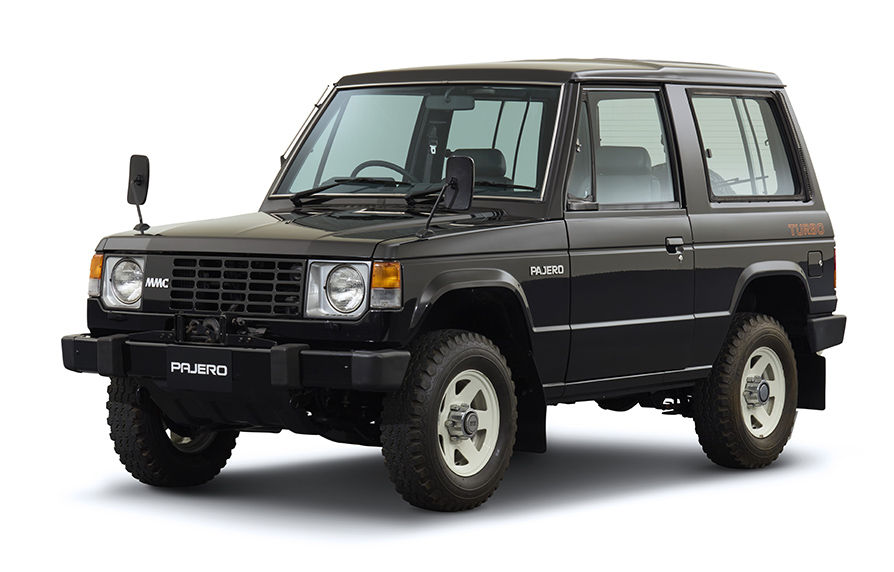
The first-generation Pajero was launched in 1982.
Making “Go Anywhere” Accessible to Everyone
From the late 1970s through the 1980s, lifestyles in Japan were beginning to change dramatically. As the two-day weekend became increasingly common, people found themselves with more free time. At the same time, the country’s expanding expressway network made it possible to travel farther than ever before. Long-distance trips, once something enjoyed by only a limited number of people, became a realistic option for many. Outdoor activities such as skiing and camping also started gaining popularity. Cars were evolving from a simple mode of transportation into tools that expanded people’s lifestyles. Looking back on that period, Minoru Uehara recalls:
“From the late 1970s into the early 1980s, the two-day weekend became more widespread in Japan, and leisure travel became part of everyday life. During that time, more and more people began to see four-wheel-drive vehicles as a good match for recreational activities.”
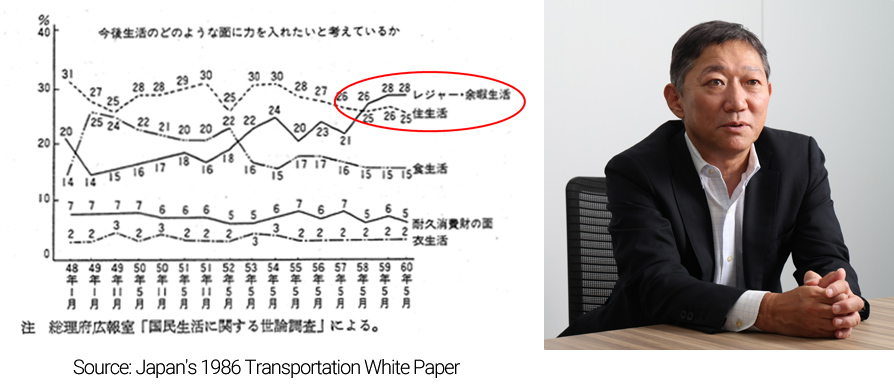
At the time, however, four-wheel-drive vehicles were still far from being something everyone could comfortably drive.
The Mitsubishi Jeep had been developed primarily for specialized applications such as forestry work and mountain operations. While it offered outstanding off-road capabilities, ease of handling and comfort were secondary considerations. For many people, it was an object of admiration, but not a practical choice for daily use.
It was against this backdrop that the idea for the Pajero took shape.
“The roots of the Pajero lie in the idea of preserving the Mitsubishi Jeep’s ability to go anywhere, while also making it a vehicle that ordinary people could drive and enjoy.”
Those words capture the philosophy that would guide product planning for the Pajero from the very beginning. The aim was to preserve the essence of a four-wheel-drive vehicle while making its value accessible to a much wider audience.
“We improved aspects such as its forbidding appearance, cumbersome controls, vibration, noise, and cramped rear seats to enhance comfort and ease of use. At the same time, there was a firm commitment within Mitsubishi Motors never to compromise the vehicle’s core identity as a true four-wheel-drive vehicle.”
The challenge was to create a vehicle that anyone could drive with confidence, without sacrificing off-road performance and durability. Rather than broadening its appeal by scaling back performance, the Pajero was developed into a vehicle that offered serious off-road credentials in a package accessible to everyday drivers. That thinking is what made it unique.
When the first-generation Pajero debuted in 1982, it was introduced as “a companion for freely exploring the great outdoors,” presenting a revolutionary new concept: the recreational vehicle (RV). Built on a robust ladder-frame chassis that delivered genuine off-road performance, it also pursued passenger-car levels of comfort and handling. What emerged was not simply another specialized four-wheel-drive vehicle. Rather, it was a vehicle that bridged city life and the outdoors, everyday routines and extraordinary adventures. The Pajero was introduced to the world as a vehicle that expanded people’s horizons and proposed entirely new ways of living.
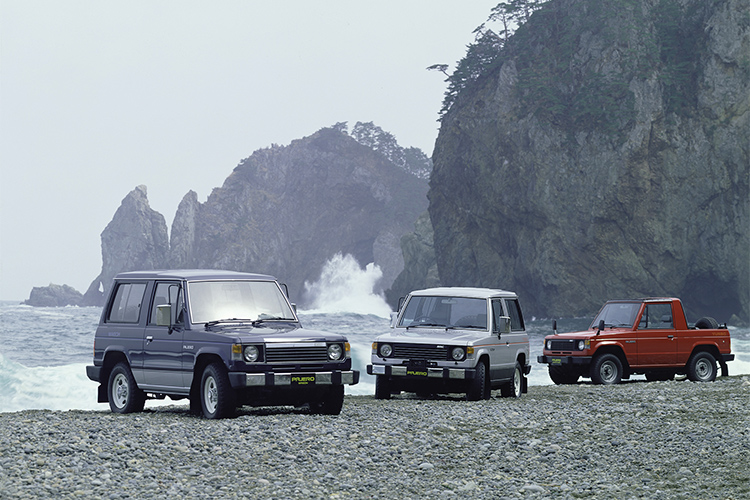
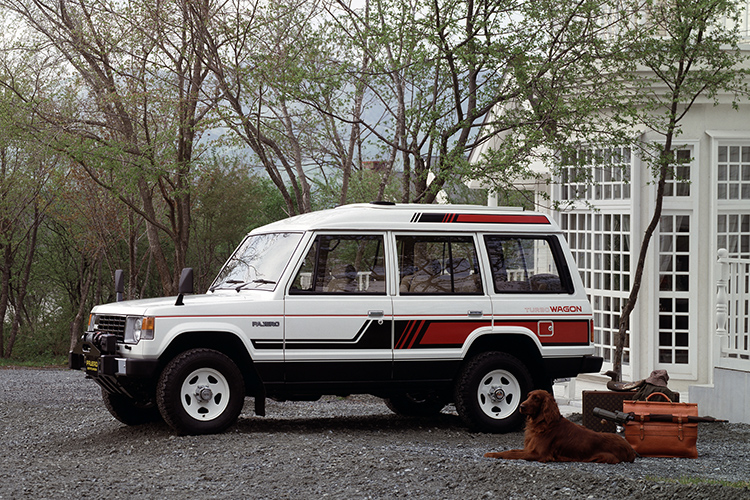
The first-generation Pajero aimed to make 4WD driving accessible to everyone.
Not Just Selling Cars, but Sharing Ways of Using Them
It was not just advertising campaigns or catalog descriptions that made this concept resonate with people. The true appeal of the Pajero became apparent the moment people sat behind the wheel. Uehara still vividly remembers his first experience driving one.
“I expected it to be a large, unwieldy vehicle. But once I got behind the wheel, the visibility was excellent, the controls were straightforward, and it felt as easy to drive as a regular passenger car. What struck me most was that it wasn’t a ‘special’ vehicle at all. It was just one that anyone could drive.”
The assumption that four-wheel-drive vehicles were difficult and intimidating gradually gave way to a newfound sense of confidence that “maybe I can drive one, too.” That ease of handling lowered the psychological barriers surrounding four-wheel-drive ownership and attracted an entirely new group of users.
The trend accelerated further with the introduction of “Super Select 4WD” on the second-generation Pajero.
“By incorporating a center differential, Super Select 4WD made it possible to drive in 4WD even on dry paved roads. Drivers could also switch between 2WD and 4WD while driving simply by operating a lever, making it easy to select the safer 4WD mode on slippery rain-soaked or snow-covered roads. It was a groundbreaking system that required no specialized knowledge. I believe the Pajero played a major role in lowering the barriers to four-wheel-drive vehicles.”
Here, too, the goal was not simply to add more features. It was to transform specialized technology into value that anyone could use. This approach would become a major reason why the Pajero was embraced not only in Japan but later around the world as well.
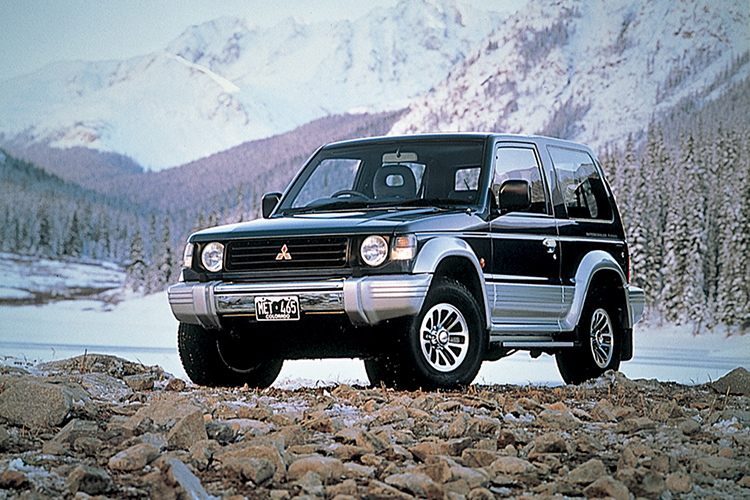
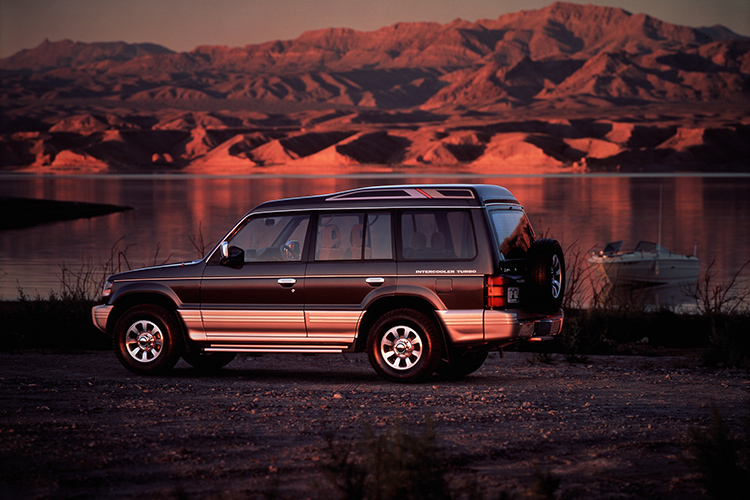
The second-generation Pajero: Safer and easier 4WD driving.
Mitsubishi Motors was also looking beyond mobility itself. The company was interested not only in where vehicles could take people, but also in the experiences that awaited them there.
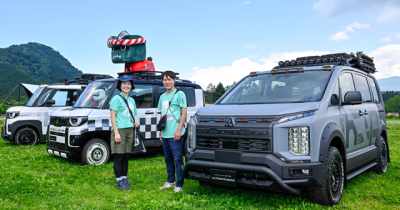
Back then, camping and outdoor recreation were still unfamiliar pursuits for many people. Although they might have been interested, they did not know how to get started. They didn’t have the gear or the experience, and many felt anxious just about venturing out into nature. Helping people take that first step became the inspiration behind Star Camp, which was launched in 1991. Participants were recruited through Mitsubishi Motors dealerships, and the initiative aimed to teach them how to enjoy the outdoors.
”In those days, there were still very few campgrounds accessible by car, so we would lease a piece of land and even set up facilities such as restrooms ourselves. Many participants thought camping looked fun but had never tried it before. If they didn't know how to pitch a tent, we taught them. If a vehicle got stuck, we helped push it out. By providing that kind of support, we were able to help people discover the joy of spending time in nature. In a way, it felt like we were selling a culture together with the vehicle.”
People rarely act simply because something looks fun. As long as they are unsure whether they can do it themselves, taking the first step into a new world can be difficult. Star Camp provided a place where those anxieties could be removed. As such, the Pajero was not simply a vehicle capable of traversing any terrain. It became a catalyst that encouraged people to embrace new experiences.
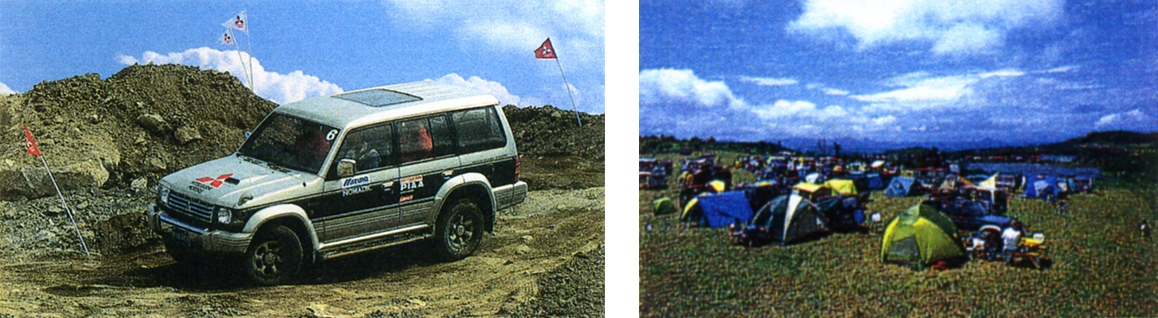
Star Camp, launched in 1991
Uehara offers one particularly memorable observation when describing the value that Pajero represented.
“There were other four-wheel-drive vehicles available at the time, but the Pajero seemed different. Perhaps German four-wheel drives represented ‘wealth,’ while the Pajero represented ‘richness in life.’”
The appeal of the Pajero was never about owning something expensive, but rather about going out with family and friends on days off, discovering new scenery, and enjoying new experiences. What the Pajero offered was a way of life. It evolved from a vehicle chosen for its function into one chosen for the values and lifestyle it represented. In this way, it helped popularize a new idea: not simply what kind of vehicle you drive, but what kind of life you want to enjoy through it.
The concept of ”richness in life“ that took shape in Japan would eventually travel across the world, taking on different forms and meanings in different countries. That is where the next chapter of the Pajero story, to be continued in Part 2, begins.
-

-
Profile: Minoru Uehara
Responsible for product planning for the partial redesign of the second-generation Pajero and the third-generation Pajero. He later led product planning for several iconic Mitsubishi Motors models, including the Delica D:5.
From an early stage in his career, he focused not only on vehicle functionality but also on the value and experiences that they could provide, helping shape Mitsubishi Motors' approach to product planning.
August 2026

