Doi Inthanon and Doi Ang Khang—Mountain Roads That Proved “Practical Modes”
HEV Development Story (Part 2)

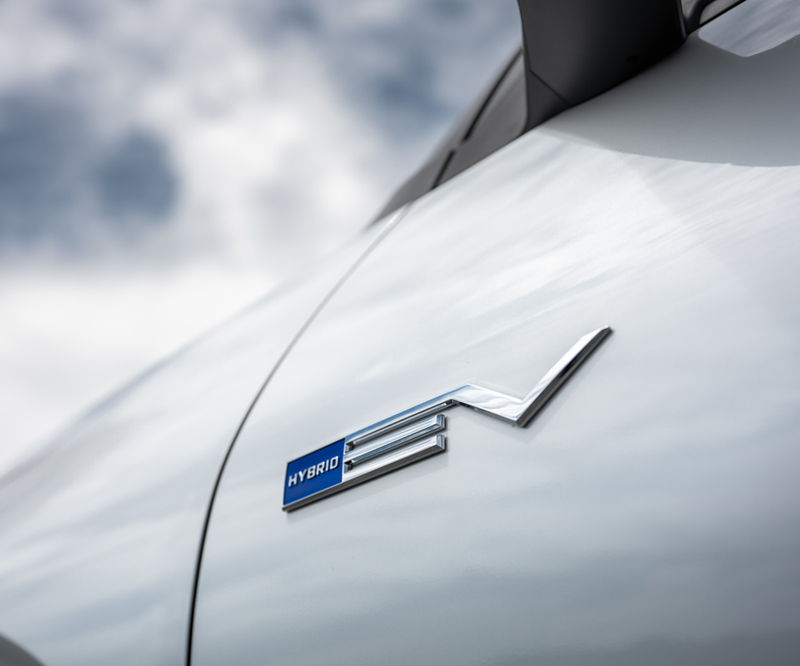
Under an unprecedentedly tight schedule, and while directly confronting the unique, harsh road environments of ASEAN, the development team continued to refine how far they could elevate a new hybrid system that delivers “EV-like” driving with limited electric energy. Alongside digital development, repeated real-world driving tests were conducted to enhance the system’s completeness. The breakthrough came in the mountainous regions of northern Thailand—Doi Inthanon and Doi Ang Khang. Against a backdrop of steep inclines and highly variable road conditions, the XFORCE HEV’s drive modes were subjected to rigorous real-world evaluation and progressively refined to deliver optimal performance and usability.
Instructions from the Summit: “Tune It in 30 Minutes”
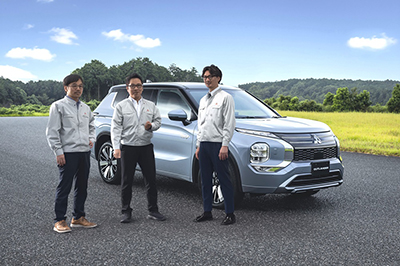
One day, Toshifumi Mizui, head of electric powertrain development at the development center in Japan, suddenly received a call from Makoto Kamihira, who was on a business trip in Thailand. Kamihira, who led the overall development, was at Doi Inthanon—the highest peak in Thailand at 2,565 meters—conducting a real-world test with Thanitsorn Sinphattanakorn (nicknamed “Shine”), who was responsible for real-world driving tests at Mitsubishi Motors (Thailand) Co., Ltd. (MMTh), and had just climbed a steep slope to the summit parking area.
“I want to drive quietly in EV mode here at the summit, with the engine stopped. I’ll send you the driving data—can you tune it so the engine can remain off within 30 minutes?” Kamihira said. While Mizui was asking a few follow-up questions, another issue arose: the engine stopped starting altogether. Centered around Mizui, the development team immediately analyzed the transmitted data and completed adjustments in just 15 minutes.
“This ability to work in real time between Japan and Thailand is also a result of digital development,” the team says with confidence.
Putting Drive Modes to the Test in Mountain Terrain
Mizui recalls that development of drive modes—especially in mountainous regions—left a strong impression.
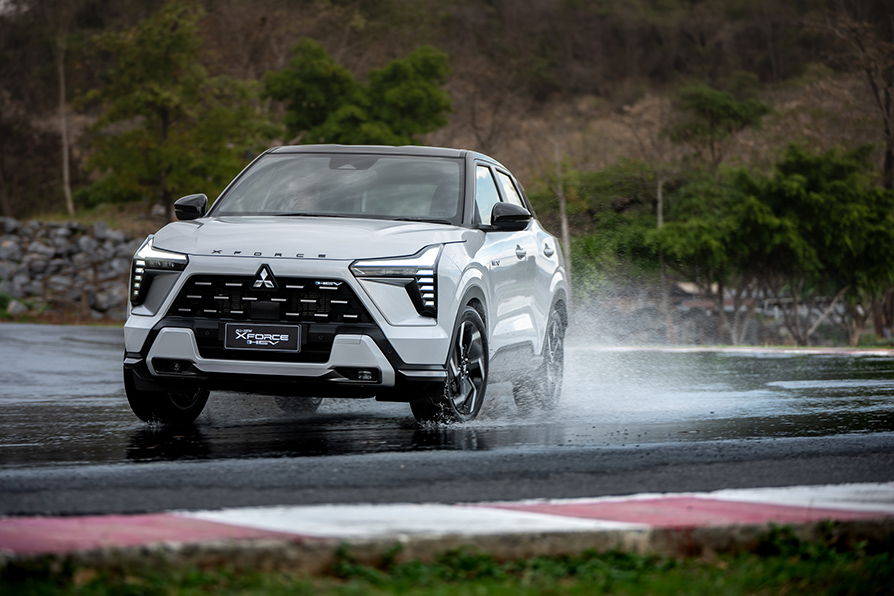
A crucial factor in creating a vehicle suited to Thailand and ASEAN road conditions was optimizing drive modes. While the team had already developed control algorithms at test courses in Okazaki and Tokachi, as well as Hakone (which simulates Thai mountain roads), final tuning required real-world testing. For this, Shine’s expertise—deeply familiar with Thai driving conditions—was indispensable.
“Road conditions in Thailand can change very quickly,” Shine explains, emphasizing the need to refine drive modes to handle this constantly shifting environment, where surfaces can change from pavement to gravel, or from dry to muddy, in just minutes.
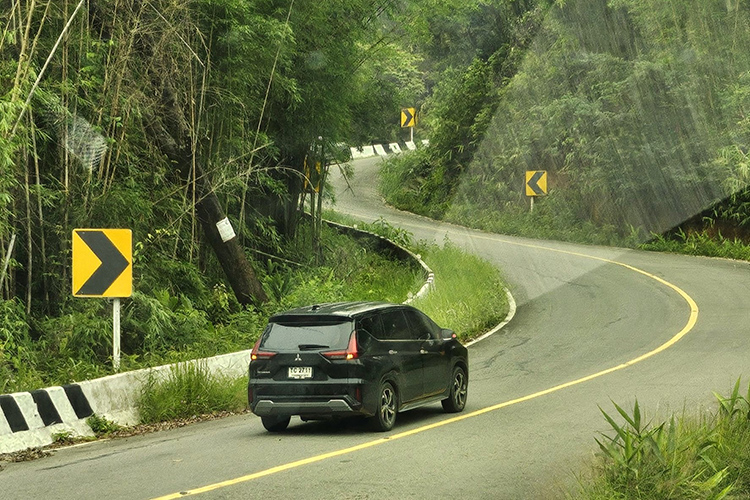
The testing grounds were Doi Inthanon and the long, winding and steep roads of Doi Ang Khang’s mountain range. Local staff, including Shine, recommended these areas as “the most demanding courses for HEVs.” In these harsh environments, drive mode control technologies were rigorously refined.
“A Truly Useful Drive Mode” Spotted in the Mountains
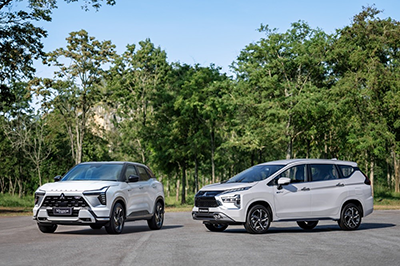
The Xforce HEV features five drive modes: NORMAL, TARMAC, WET, MUD, and GRAVEL. However, simply having different names is meaningless. What the development team focused on was enabling the vehicle itself to adapt its behavior to various road conditions, ensuring safe and confident driving for anyone.
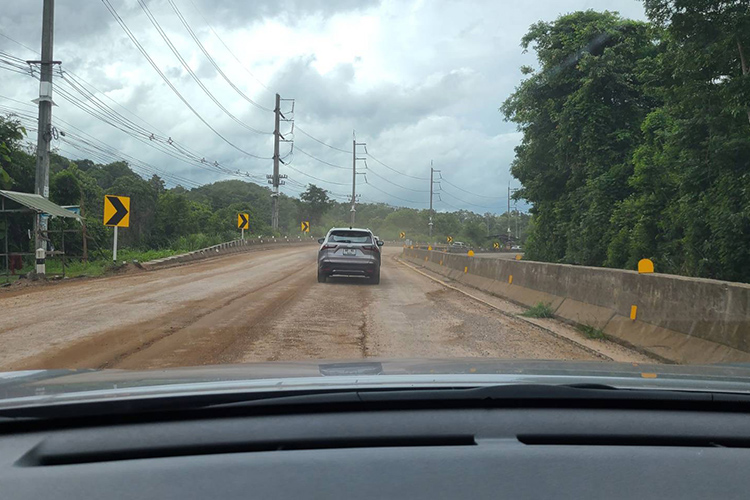
Mizui recalls an experience: “While driving through a mountain range in TARMAC*1 mode, we were saying how enjoyable it was—then suddenly the road turned into gravel. All the asphalt had been stripped away for construction, and it went on for quite a while. I thought, ‘If a heavy rain hits here, it will instantly become muddy and slippery.’ It was frightening, but such situations are common in Thailand.”
He continues: “We tested WET*2 mode and GRAVEL*3 mode. When you sit in the passenger seat at a Japanese test course, you might think ‘this is fine,’ but on Thailand’s harsh roads, the vehicle didn’t slip at all. Because it was thoroughly developed in Thailand’s mountainous areas, it achieved outstanding stability. That’s when I felt confident that this would truly provide peace of mind for customers.”
- TARMAC mode: A drive mode designed to maximize performance on paved roads
- WET mode: A mode suitable for driving on wet, slippery paved roads, such as in rainy conditions
- GRAVEL mode: A mode designed for driving on unpaved roads, such as gravel roads
These real-world experiences were immediately fed back into control development, refining the drive modes of the Xforce HEV into practical driving support tools.
The Real Value of Drive Modes: Safety Performance
Kamihira emphasizes that the real value of drive modes lies in safety performance.
“People tend to focus on the driving performance of drive modes, but on slippery surfaces, braking control is even more important than traction. Since our hybrid vehicles are based on motor-driven performance, and motors respond far faster than engines, this directly leads to significant improvements in safety.”
Even if the tires lose grip, motor control can respond and stabilize the vehicle in less than one-third the time compared to an engine-driven vehicle—equivalent to a difference of more than ten meters at 50 km/h. “This difference in the time it takes to restore grip is enormous, regardless of whether the driver is experienced or not.”
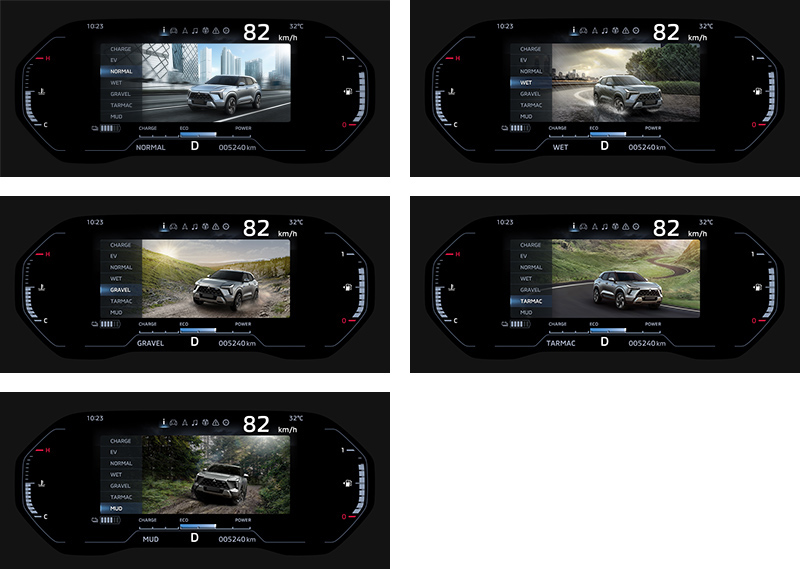
Drive modes refined on the proving ground in Okazaki and Tokachi, as well as in the mountainous regions of Thailand
Though front-wheel drive, the vehicle pushes the limits of both traction and braking performance, enabling handling of rough roads with its drive modes. “A senior colleague who helped build our four-wheel-drive legacy jokingly said, ‘If a front-wheel-drive car can perform this well, what’s left for four-wheel drives?’” Kamihira laughs.
The resulting drive modes are not merely variations in name, but practical tools that support confident HEV driving across Thailand’s ever-changing road conditions—from pavement to gravel or mud. Refined under ASEAN’s harsh environments, this development philosophy is taking Mitsubishi Motors’ electrified vehicles to the next level.
-
-
Makoto Kamihira
Leads HEV/PHEV development. Previously worked on the Outlander PHEV, Eclipse Cross PHEV, Xpander HEV, Xforce HEV, and Lancer Evolution X.
-

-
Toshifumi Mizui
Responsible for vehicle driving system development. Led real-world quality validation testing in Thailand and demonstrated HEV system reliability through data analysis. Also served as a liaison between departments, providing technical briefings to MMTh sales teams and technical support for media test-drive events.
-

-
Thanitsorn Sinphattanakorn (“Shine”)
Responsible for vehicle dynamic performance evaluation. Provided early feedback on Thai driving conditions and market demands, and supported local quality testing and product promotion to the media.
Related Content
The Story of Next-Generation Electric Vehicle Development
July 2026

