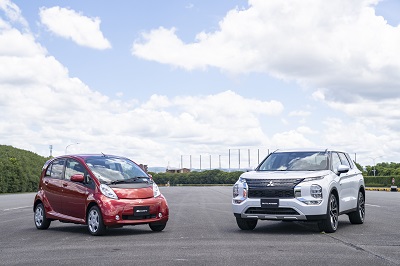
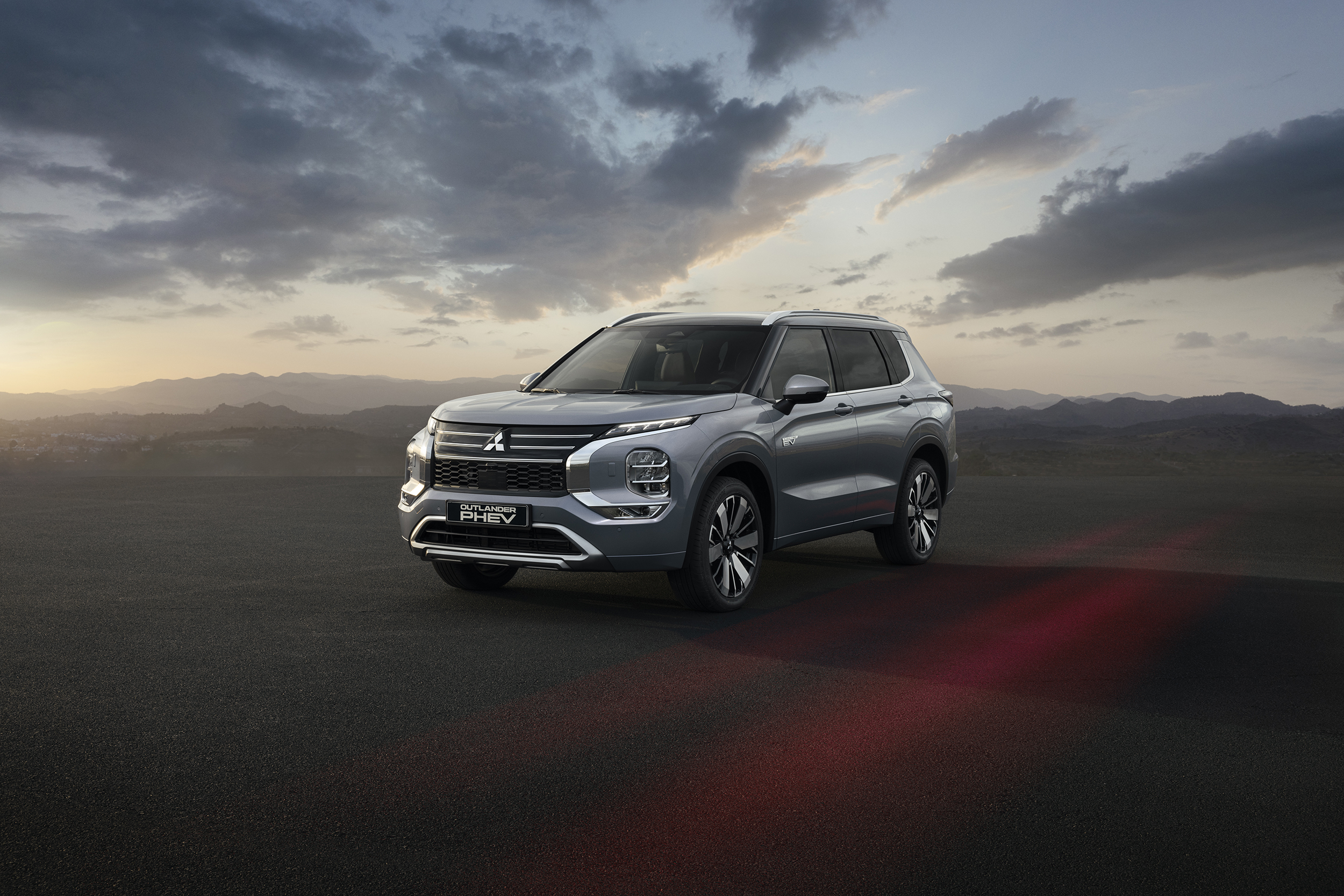
Mitsubishi Motors is the pioneer who invented the i-MiEV, the world’s first mass-produced EV. Leveraging that experience, Mitsubishi Motors released the Outlander PHEV in 2013. This new EV offered the uniquely pleasant driving that only electric motors can provide, along with the freedom to drive without concern about battery range. Even though it had an internal combustion engine, it was released as a Mitsubishi Motors -style plug-in hybrid (PHEV) that stayed true to our commitment to make electricity-powered driving our focus.
The automotive industry is currently undergoing a once-in-a-century transformation; and while the global shift to EVs may have stalled, the value of hybrid electric vehicles (HEVs) is being reevaluated, with PHEVs in particular receiving attention.
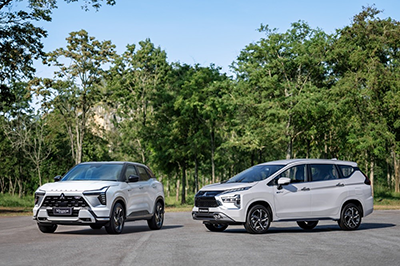
This is the situation in which Mitsubishi Motors released the new Outlander PHEV in global markets. With our re-entry into the European market in spring 2025 in mind, we have developed a new battery from scratch and worked as a team to implement continuous improvements. As a result of these efforts, the Outlander has received high praise in the challenging European market, which demands powerful acceleration for high-speed driving on the Autobahn and other highways combined with comfort. Furthermore, both the Xpander HEV, which was Mitsubishi Motors’ first full HEV, and the Xforce HEV, which introduced new advances in our HEV technology, have made their presence felt in the ASEAN region and the Thai market in particular, which is a key market for Mitsubishi Motors.
The Outlander PHEV, the Xpander HEV, and the Xforce HEV have all been made possible by Mitsubishi Motors’ advances in EV technology. Let’s look at the commitment that went into developing those vehicles.
1. Technology refined through collaboration and an EV-centric vision: The philosophy that underpins Mitsubishi Motors’ PHEV development
Back when Mitsubishi Motors developed and commercialized the i-MiEV, the world’s first mass-produced EV, the company’s mainstay models were SUVs like the Pajero and the Outlander. Although we keenly sensed the potential in EVs, lithium-ion batteries for automobiles were expensive and bulky at the time, making them unsuitable for SUVs.
That’s what led our development team to consider a new type of electric vehicle: the PHEV. PHEVs utilize a hybrid system that includes both an internal combustion engine and electric motors. This system includes a high-capacity battery that can be charged by an external power source. Compared to conventional HEVs, PHEVs offer a longer driving range under electric power alone, enabling lower emissions and better fuel economy. However, the fact that HEVs contain both gasoline and electric motors means that the system is large and heavy, and thus it is common practice to reduce the battery capacity. For that reason, HEVs have a shorter driving range under electric power, and once the battery runs out, the internal combustion engine becomes the main source of motive power. The electric motor is mainly used for starting, for assisting with low-speed driving, and for providing regenerative braking during deceleration.
However, Mitsubishi Motors has restored the emphasis on electric driving with its PHEVs. That’s because Mitsubishi Motors understands better than anyone that the powerfully smooth acceleration and quietness that are unique to EVs create a truly enjoyable driving experience. However, the compact electric motor developed to power the i-MiEV, a kei-class vehicle, could not power large SUVs. Accordingly, we decided to develop an SUV model that would combine the advantages of internal combustion engines and EVs by including electric motors at the front and rear for propulsion as well as a high-capacity battery modified for PHEV use. By adopting 4WD and implementing Mitsubishi Motors’ four-wheel control system that was refined in the Pajero, we were able to develop an unprecedented SUV PHEV.
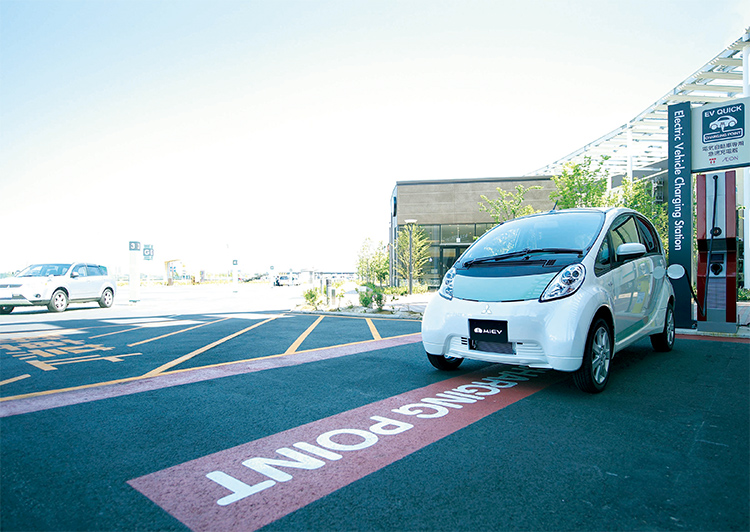
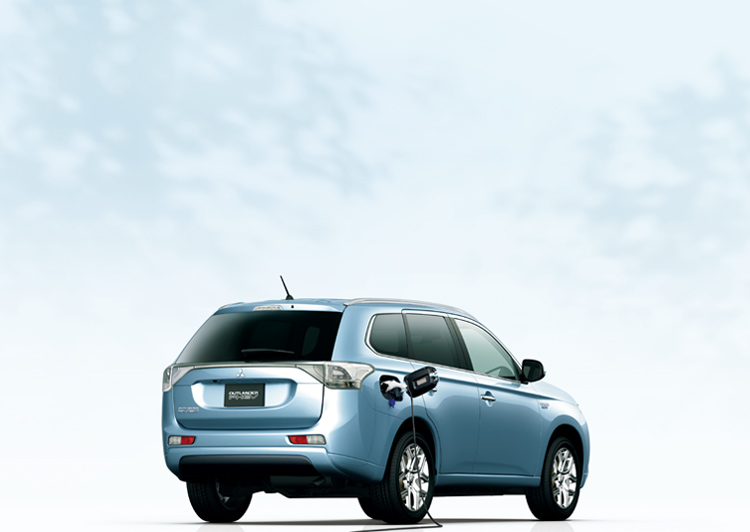
i-MiEV and Outlander PHEV
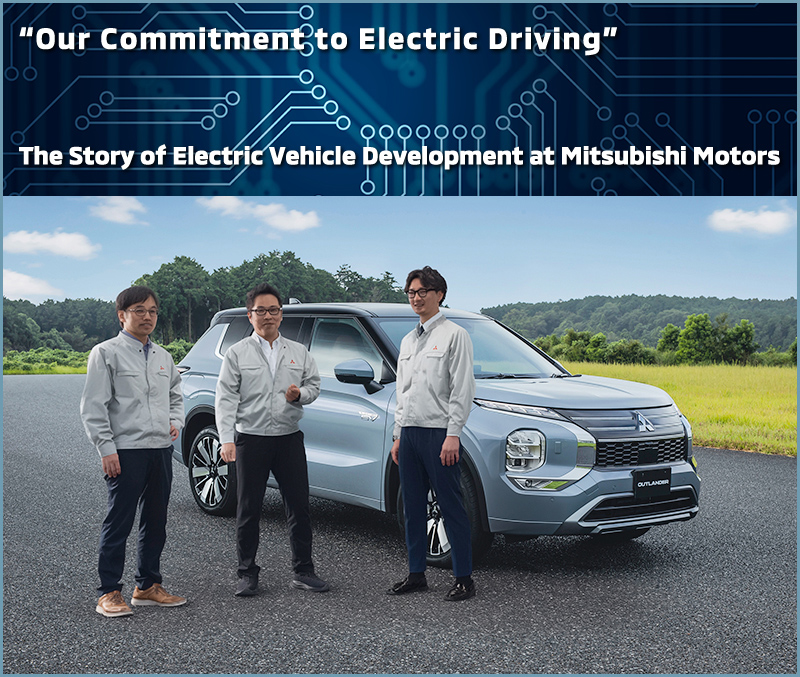
Makoto Kamihira, the head of HEV/PHEV development promotion who oversaw development of the first-generation Outlander PHEV and Eclipse Cross PHEV as well as serving as development manager for the improved Outlander PHEV that launched in 2024, says,
“The Outlander PHEV has not had a transmission since its initial release in 2013. This is because it was designed on the premise that it would be powered by electric motors. The basic concept underlying Mitsubishi Motors’ PHEVs is that they are EVs with an internal combustion engine, which is why the vehicle’s core components are the battery and electric motors. The internal combustion engine is only there to charge the battery and provide assistance during high-speed driving.”
This design approach, which achieves a quiet, smooth driving that is seamless and responsive to the driver’s intent, is at the heart of Mitsubishi Motors -style PHEVs. The first-generation Outlander PHEV prioritized comfort, and the subsequent Eclipse Cross PHEV added sportiness to comfort. As a result, those vehicles received high praise in Europe for their driving experience.
The second-generation Outlander PHEV that launched in 2021 delivered even more powerful road performance as well as superior handling capabilities thanks to S-AWC, but it also revealed new challenges.
The battery couldn’t keep up with the performance of the electric motors, which prevented it from showing off its true capabilities in Europe. In Europe, on sections of the Autobahn (the German highway system) without speed limits, vehicles frequently experience rapid acceleration and deceleration, which can cause heat to build up inside the battery. This had the effect of limiting the driving and electric motor performance of EVs, meaning that they could not demonstrate their full potential.
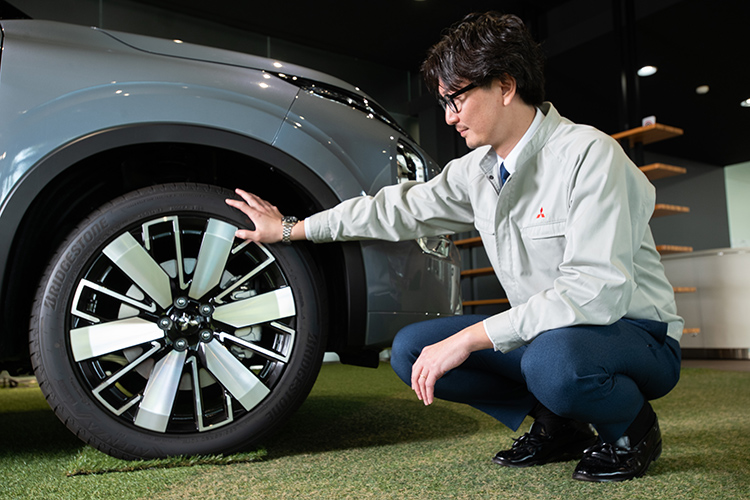
Kamihira decided to fundamentally rethink the battery’s energy and heat management together with the development team in spite of a short development cycle. As Ryu Tanimoto, who was responsible for project promotion at the time, recalls,
“Driving on the Autobahn really highlighted the fact that we needed a battery capable of consistently delivering on electric motor performance in any driving scenario.
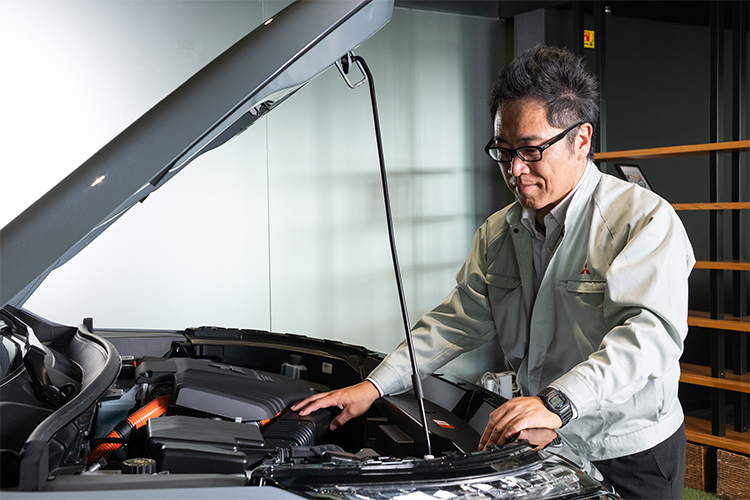
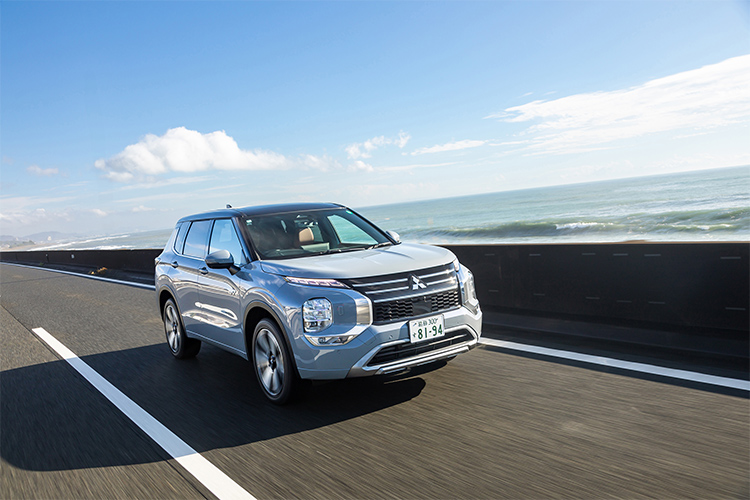
On European highways, it cannot fully demonstrate its inherent capabilities
2. The development of PHEV batteries – Aiming for performance that can handle Europe’s Autobahn
Here’s how Hokuto Yokotsuji, who was tasked with EV battery performance design, describes the challenges of PHEVs.
“The biggest challenge was figuring out how to manage the heat produced while rapidly drawing large amounts of power from a battery with limited capacity.”
Previously, the same EV batteries were used throughout the alliance, but for PHEVs, the performance required in three key areas – output, heat, and capacity – differed from the demands of EVs. Proprietary development was essential in order to satisfy those requirements. Accordingly, the company reevaluated everything from materials to battery structure and, in collaboration with new suppliers, adopted materials with low internal resistance.
The cooling method in particular required innovation. Traditional “module-side cooling” was limited in its efficiency because it transferred heat from the center of the cell to the outside. The development team switched its approach to one of directly cooling the cell base. An aluminum cooling plate was installed inside a gap of just 10 mm, and a zigzagging flow path was designed to circulate the refrigerant more efficiently. By adopting air conditioning coolant, the team was able to achieve efficiency levels that were 1.5 to 2 times higher than conventional cooling. By maintaining an optimal temperature at all times, battery performance could now be maximized.
Furthermore, the battery control algorithm was redesigned to achieve the precise control required for PHEV batteries. Strength and seal integrity were ensured by integrating the base plate of the battery case into the external structure.
The battery is so important for PHEVs that it can be considered the “heart” of the vehicle. The installation of this newly developed battery was nothing short of revolutionary, akin to a heart transplant.
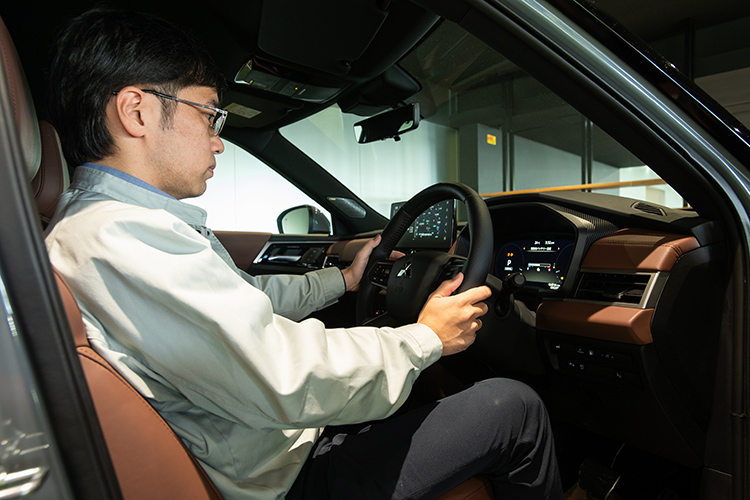
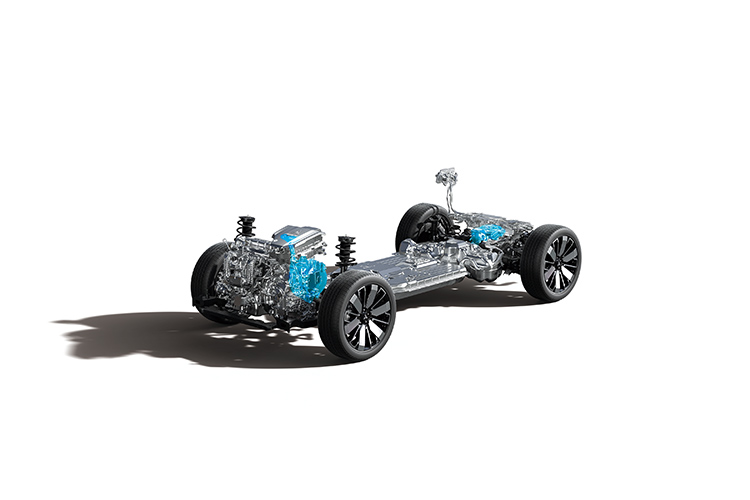
Developed specifically for PHEVs, enabling maximum battery performance
3. The true value of a PHEV lies in its quality – how well it accelerates, corners, and brakes
Kamihira continues on a confident note: “Our PHEVs deliver consistent performance regardless of whether they are in EV mode or HEV mode. That kind of PHEV is rare in the market today.
Moreover, the performance of a PHEV is not merely the sum of its parts. It requires seamless integration of the battery, electric motors, internal combustion engine, and control systems, as well as meticulous tuning of the cornering technology implemented through S-AWC and the braking performance for effortless control of the heavy body. Only then does it become an electric vehicle embodying the quality of Mitsubishi Motors.”
Tanimoto agrees: “The driver must not feel any disruption when the vehicle switches to the internal combustion engine during acceleration. It was very difficult to make those adjustments.”
Instead of competing with premium European brands on vehicle power, Mitsubishi Motors focused on delivering the smoothest, most high-quality driving.
“For Mitsubishi Motors, one of the requirements for our PHEVs is that the driving is always smooth. We aimed for consistent acceleration like an airplane taking off, with instant throttle response and linear acceleration without any shift shock.” (Tanimoto)
Even when the vehicle switches to the internal combustion engine while driving, the sense of disruption is minimized by a sophisticated control system. Powerful yet quiet, and easy for anyone to handle with confidence – that is precisely the quality defined by Mitsubishi Motors.
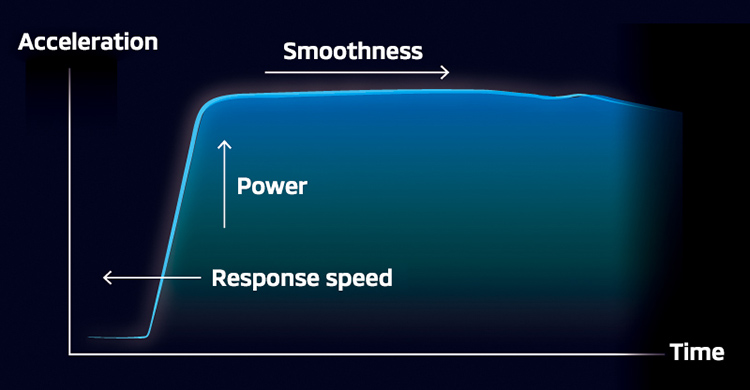
One indicator of the "EV-like feel" is the sensation of acceleration
4. Why Mitsubishi Motors achieved PHEV innovation in so little time – Direction and team cohesion
Kamihira says, “Because were making a system modification during a minor change, the development schedule was extremely tight. In order to proceed with development without regression in the shortest time possible, it was crucial for everyone to share a common understanding of ‘what we were aiming for’.” After the direction was clarified, multiple cross-functional teams were formed to bridge organizational boundaries, and extensive collaboration both vertically and horizontally took place. The development target was simply “to increase electric motor performance through battery innovation and to combine that with control systems in the pursuit of comfort through highly reliable systems.” Everyone brought their own personal perspectives as well as those of family members and customers, providing a shared standard that the team was able to fall back on while proceeding with development.
This culture had been cultivated through the Lancer Evolution X, whose development was overseen by Kamihira. The team adopted a mindset of breaking down departmental barriers, ensuring shared objectives and close collaboration among all project members, and making prompt decisions and judgments. While the individual components may not be particularly noteworthy in terms of performance or cost, the team aims for high performance by thoroughly pursuing optimal overall balance – which is a mindset carried forward from earlier projects.
We make reliable cars that get you to and from your destination safely, and which you can feel proud to own. Because we had aligned our efforts on the basis of this mindset, the new Outlander PHEV became a vehicle we were proud to introduce to the world.
-
-
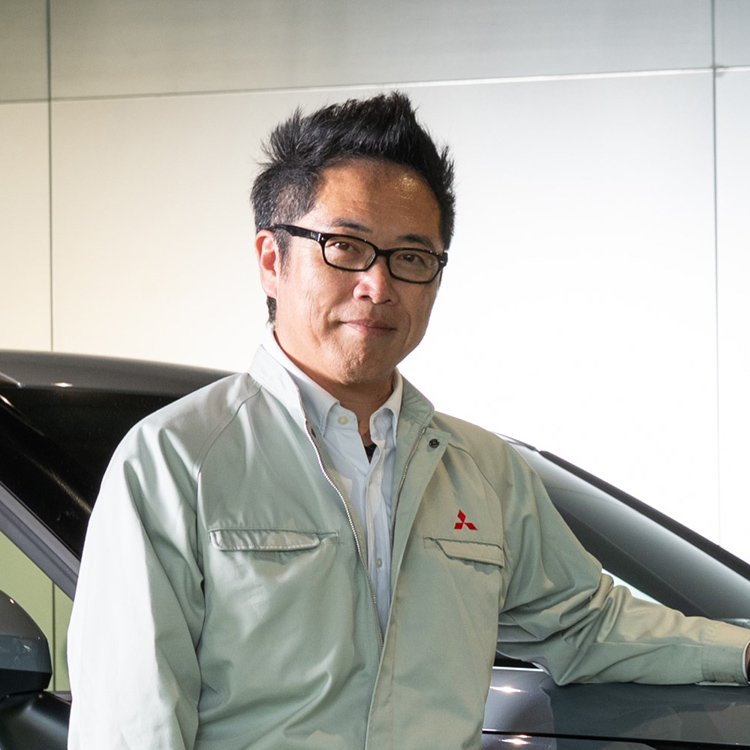
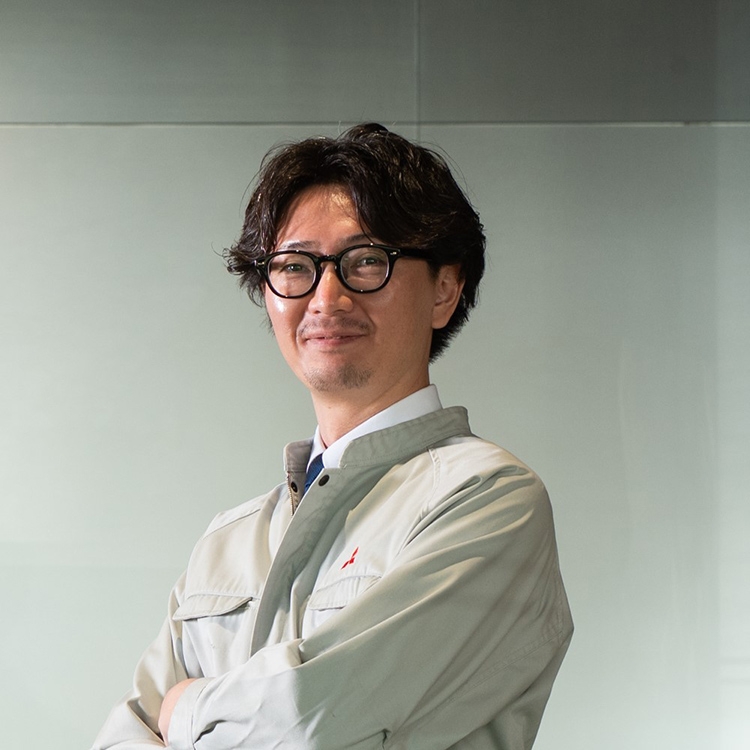
Makoto Kamihira
Leads HEV/PHEV development as development chief. Vehicles he has previously overseen include the Outlander PHEV, Eclipse Cross PHEV, Xpander HEV, Xforce HEV, and Lancer Evolution X.
-
-
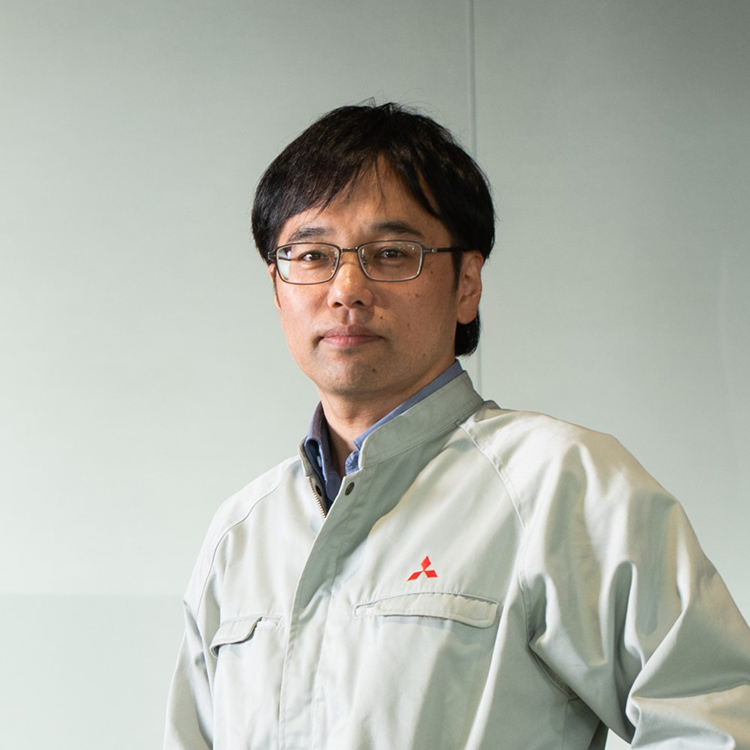
Ryu Tanimoto
As head of vehicle development promotion, Tanimoto is responsible for ensuring smooth project management in order to achieve objectives, as well as promoting efforts to troubleshoot issues that arise on a day-to-day basis and advancing the development of PHEV systems.
-
-
Hokuto Yokotsuji
Yokotsuji oversees battery performance design. He previously worked in materials development at a battery supplier, but in 2015, after being impressed by the former Outlander PHEV, he decided to change jobs. Since joining Mitsubishi Motors, he has been in charge of battery control and performance.
Related Content
The Story of Next-Generation Electric Vehicle Development