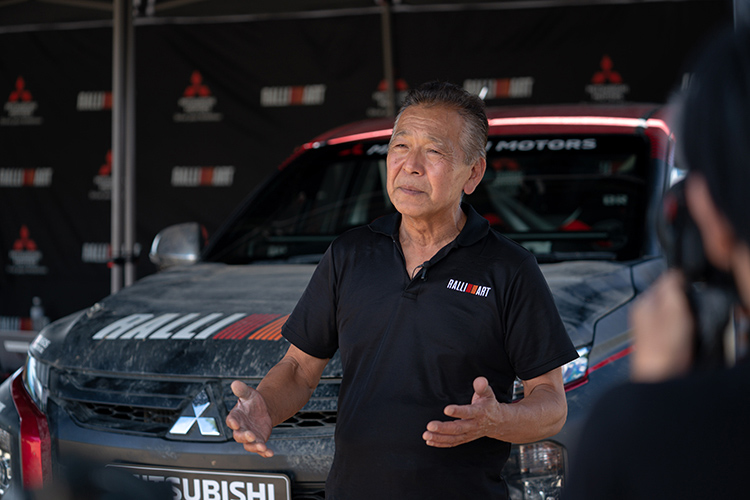
Rally driver
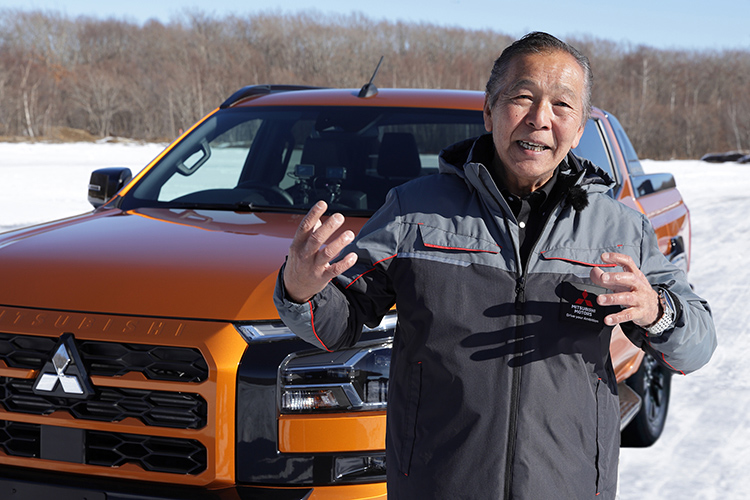
Hiroshi Masuoka
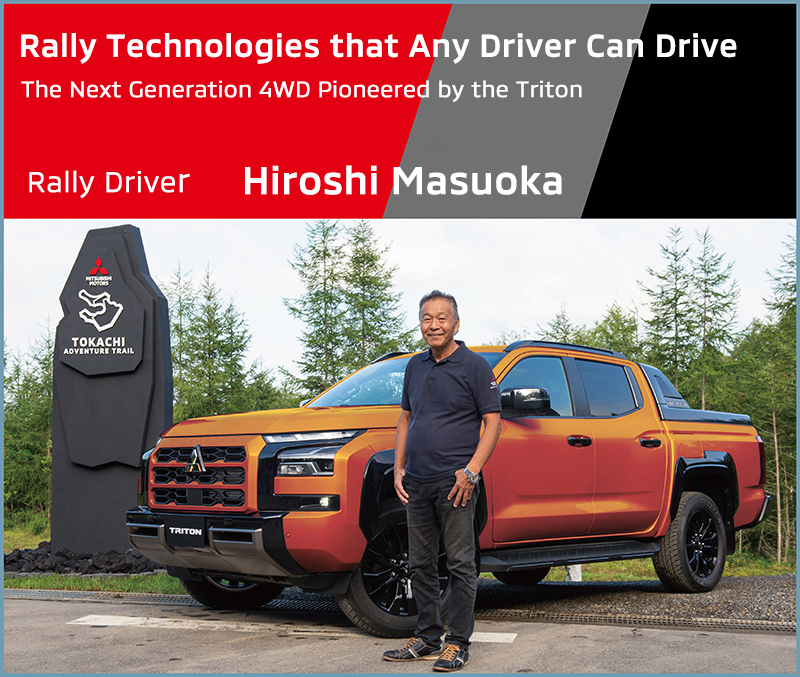
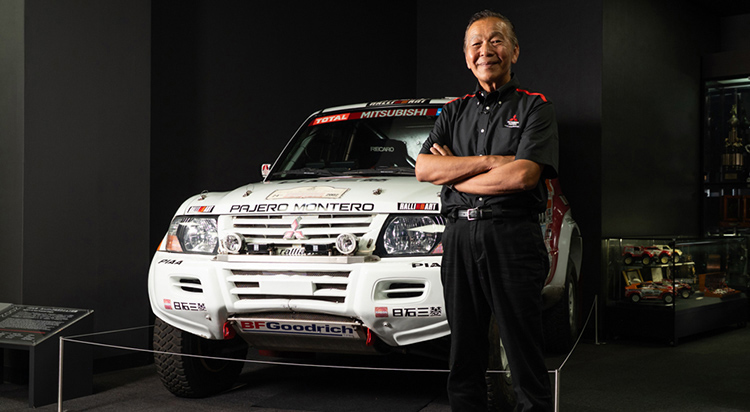
The Triton has inherited the technologies and philosophy that were built and established with the Pajero. Featuring a new form of control made possible by the reliability honed in the Asia Cross Country Rally (AXCR) and integration of Active Yaw Control (AYC) with Super Select 4WD-II (SS4-II), its “conversational driving” that speaks to everyone is pioneering the future of safe, reassuring, and comfortable four-wheel drive.
Triton takes on the AXCR, with superior durability and handling as its underlying strengths
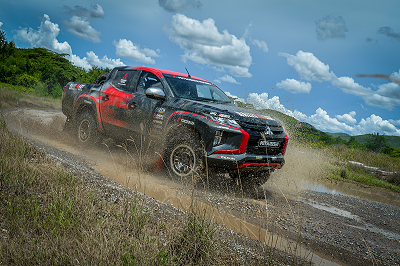
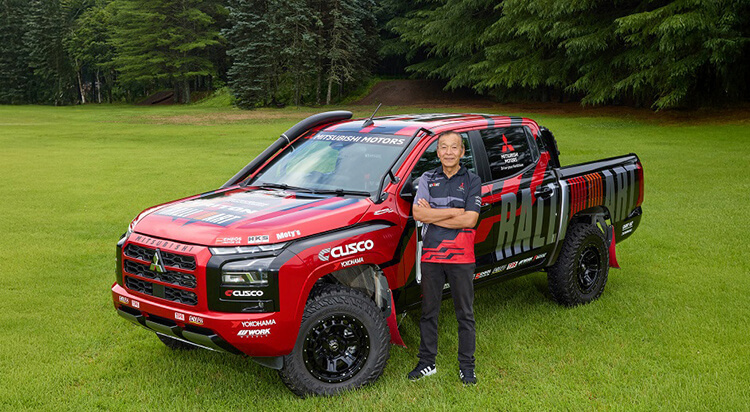
Four-wheel drive technologies honed in the Dakar Rally have now been passed down to a new setting— AXCR. The inheritor taking on this new challenge is the Triton. AXCR is a cross country rally taking place in Southeast Asia and centered in Thailand, covering various types of terrain including swaths of jungle, red soil surfaces, and tough, narrow roads through forests. Masuoka commented on the grueling nature of the event, “AXCR goes through the jungle. It has slippery red soil surfaces and narrow passages between trees. It even has some areas that are impossible to traverse without folding back your side view mirrors.”
Maneuvering over the complicated, ever-changing road surfaces of Southeast Asia requires more than just power or ground clearance. It requires superior handling achieved through precise four-wheel control that manages driving force, braking force, and cornering according to constantly changing conditions.
Even when taking a break from rally racing, Mitsubishi Motors worked on refining its four-wheel control technology and further evolving SS4-II. The full value of those was also on display in 2022 with the Triton in AXCR, where Mitsubishi Motors achieved the incredible feat of an overall victory in its first year competing.
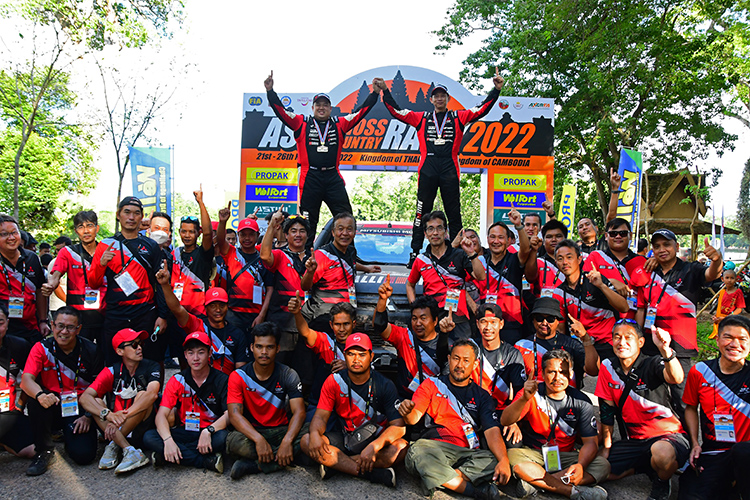
Taking the Overall Victory the First Year Competing in AXCR 2022
Since the full-time 4WD that transitioned away from the viscous coupling unit (VCU) in favor of torque-sensing limited slip differential (LSD) also has precision control, it handles very well on rough roads. “Its road handling feels locked-in. It just keeps powering forward on any type of road,” Masuoka proudly recalls.
“You drive at high speed then immediately hit the brakes, turn, then accelerate. Rally races repeat that over and over. Especially for that reason, I think the keys to lowering your time are how well the engine responds to accelerator operation, ease in handling a wide range of speeds, and properties that facilitate smoother transitions from low to high speeds. I said, ‘Less power is fine, I want to be able to use a wider range of engine speeds.’ The engine in the Triton is the one that satisfied this desire.”
Vehicle stability is important in races such as AXCR that cover hundreds of kilometers each day. It helps to mitigate driver fatigue.
Masuoka confides, “All four wheels have a firm grasp of the road, which makes acceleration smoother. The driver can feel reassured hitting the accelerator because it has that level of control.”
“Masuoka driving” lives on in the drive modes, making high performance accessible to everyone
AXCR rally cars are not equipped with AYC, but it is available in commercial models. AYC enables the vehicle to corner effortlessly even on narrow roads by optimally controlling the distribution of torque between the left and right front wheels, making it possible to accelerate while maintaining the vehicle’s posture even in settings where slippage seems likely. Combined with the SS4-II, it offers an even higher level of safety and precision driving.
This performance can now be easily harnessed by anyone thanks to the various drive modes offered in the Triton. As opposed to simply switching between modes of driving, it consolidates knowledge in understanding the driver’s intentions to deploy the optimal control for various road surfaces and environments. The settings designed for various road characteristics, from Normal Mode to Snow, Gravel, Mud, and Rock, have been infused with expertise accumulated through rally racing along with Masuoka’s philosophy emphasizing “conversation” between driver and vehicle.
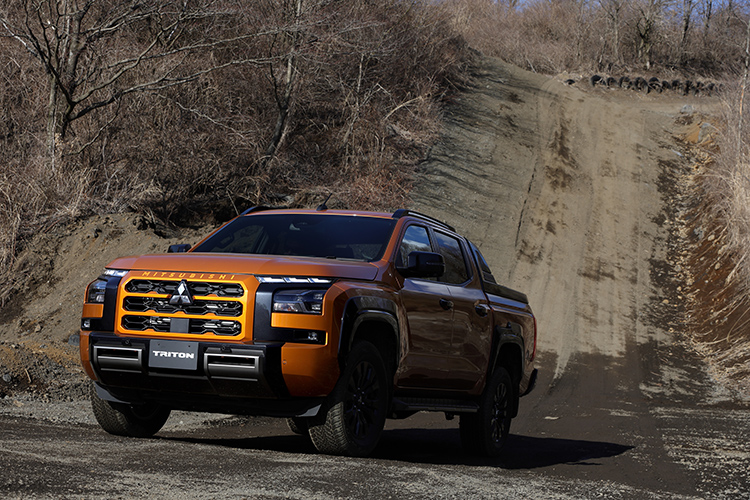
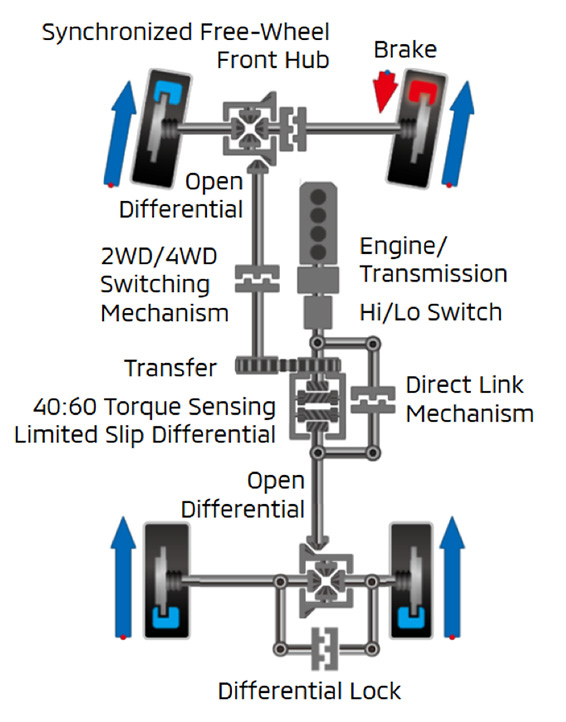
AYC and the drive modes are now included in SS4-II,
which transitioned away from viscous coupling unit (VCU) in favor of torque-sensing center differential.
“On slippery, snowy roads, it keeps the tires from spinning out by controlling output relative to the driver’s acceleration. Then on muddy roads, it effectively distributes torque to ensure traction, improving the vehicle’s ability to keep from getting stuck. We designed the drive modes to minimize driver anxiety and sustain safe yet powerful road performance in any driving situation.”
Another point of emphasis was the intuitiveness of the interface. It was designed to be able to visually understand which mode to choose and which type of roads the modes are suited for based on the conceptual images. Even inexperienced drivers can select modes without any confusion.
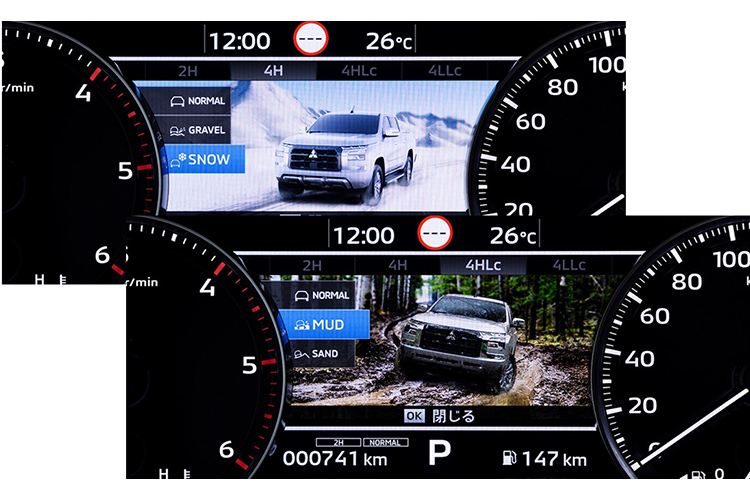
Equipped with seven intuitive drive modes for safety and reassurance on any road surface
Not just “pro spec” — reassuring 4WD for anyone who gets behind the wheel
Cars must perform in extreme conditions in rally races. That is particularly why the vehicles themselves have to be reliable in addition to having strong road performance.
“We consider rally racing to be the ‘ultimate testing ground.’ The team as a whole, including engineers, mechanics, and others in addition to drivers, utilizes the expertise gained at rallies in developing commercial models. Expertise and technologies accumulated from our many years of rally racing experience have been consolidated into the Triton. It is definitely a highly perfected vehicle.”
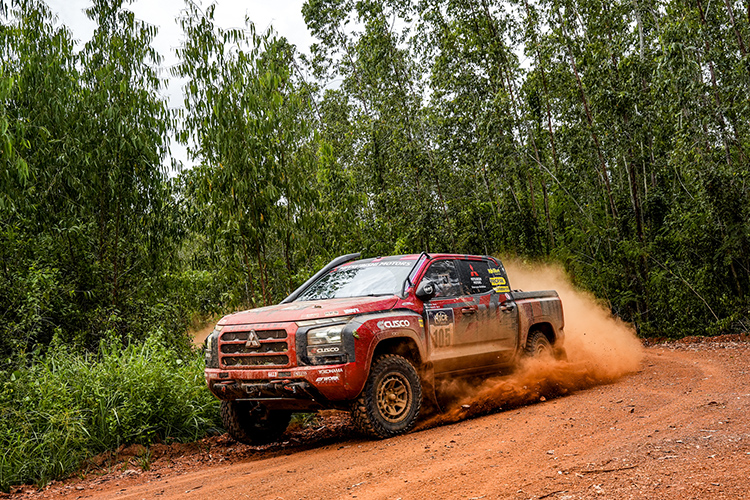
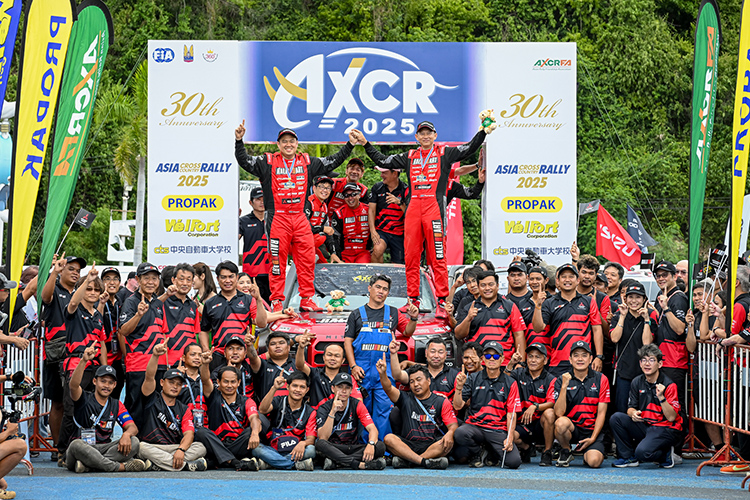
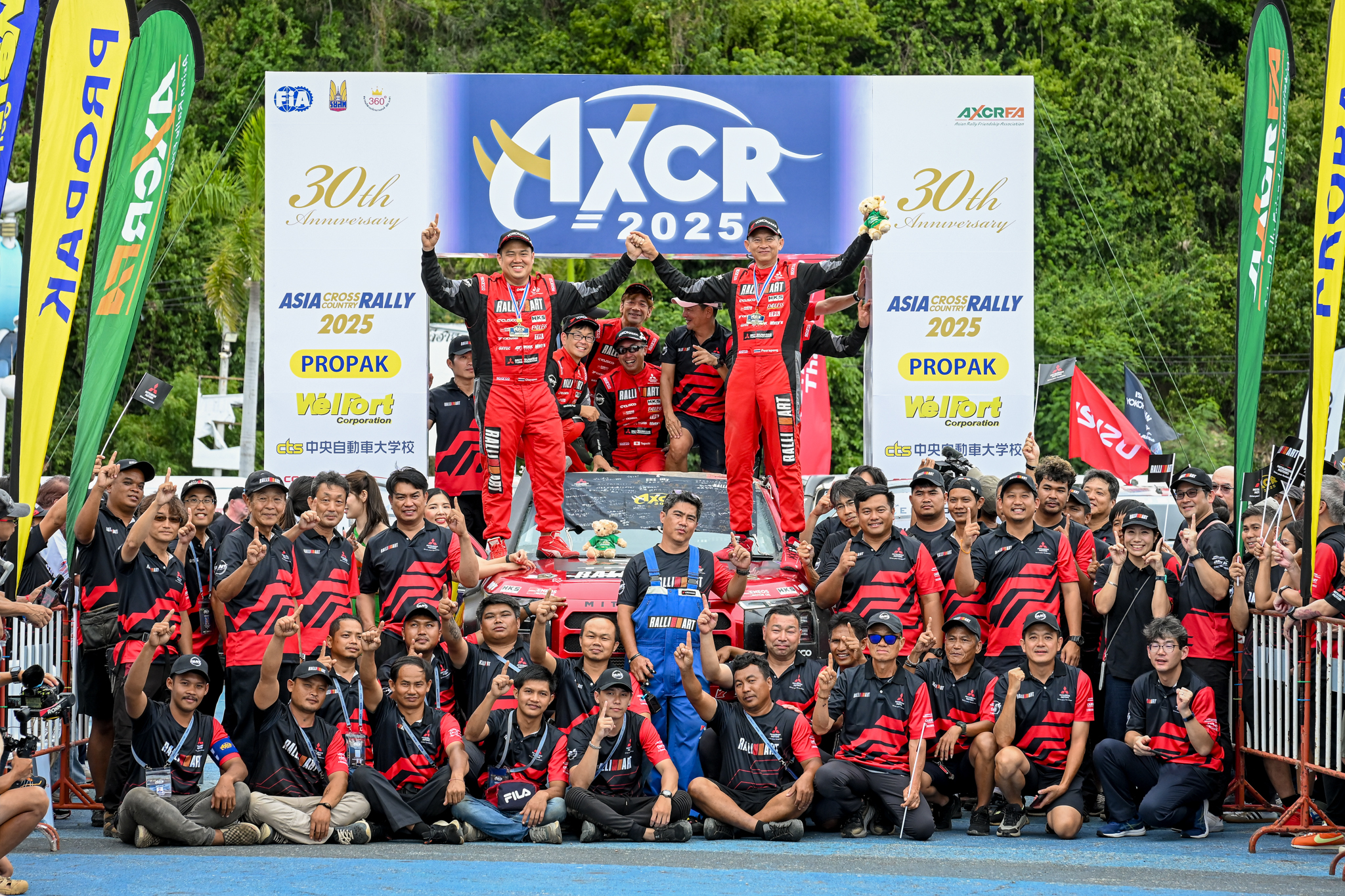
The Triton driven by Team Mitsubishi Ralliart, with two-time AXCR overall winner Masuoka as team director
To Mitsubishi Motors, cars are more than just a means of transportation. They expand our horizons, opening up more potential for adventure, and are intimately intertwined with our enjoyment of life. For that reason, we have held fast to the philosophy of “forged in the extreme, utilized in the everyday.”
Masuoka shares his commitment. “We will keep refining our four-wheel control so that Mitsubishi four-wheel drive cars continue living up to people’s expectations and delivering the joy of driving all around the world.” Currently, there are five or six types of four-wheel drive systems used in Mitsubishi Motors cars. Some models have the high-level road handling of the Triton, while others like the Outlander PHEV achieve smooth control while utilizing electric motors.
Electrification and eco-friendliness are new issues that we must also address in four-wheel drive cars going forward. However, our essential nature of driving enjoyment and reliable road handling will not change. People and cars will continue to be interdependent in every era, and on any road. For that reason, Mitsubishi Motors four-wheel control continues to evolve, even at this very moment.
-
-
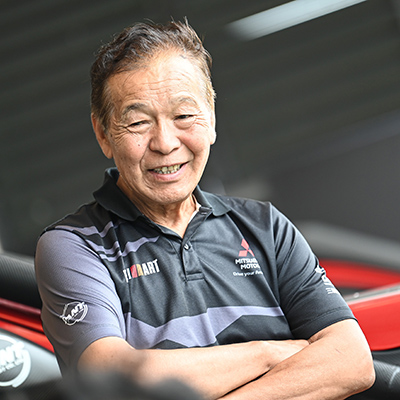
Hiroshi Masuoka
Rally driver Masuoka was the overall champion in 2002 and 2003 at the Paris–Dakar Rally, the world’s most grueling motorsport event. He has also competed in the Pikes Peak International Hill Climb in Colorado, USA with an electric race car, placing second in the Electric category in 2012 and 2013. During the Pikes Peak International Hill Climb held in June 2014, he achieved the outstanding result of second in the Electric Modified category (third overall) and contributed to the Mitsubishi Motors team’s 1–2 finish. Masuoka currently serves as Team Director for Team Mitsubishi Ralliart, which competes in the Asia Cross Country Rally. He led the teams that won the overall championship in 2022 and 2025.
Related Content
January 2026

