Forged in Extremes
Triton: Technology and People Sharpened by Rallying
Once completed as a production vehicle, the Triton was immediately sent into one of the toughest environments imaginable: the Asia Cross Country Rally (AXCR). What was put to the test there was not just the vehicle’s performance, but also the capabilities of the engineers tasked with finding solutions under highly demanding conditions.(Read Part 1 here.)
- Sold as the L200 in some countries and regions.
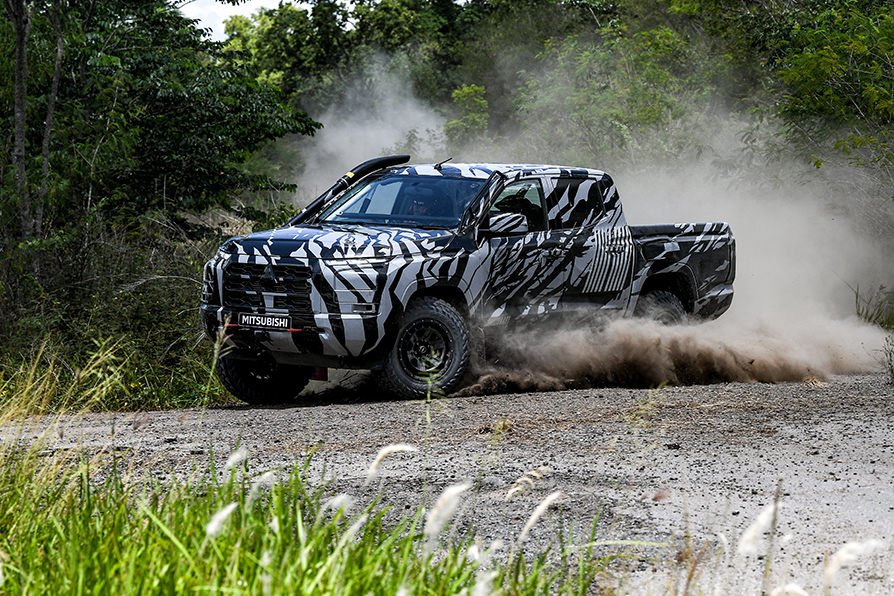
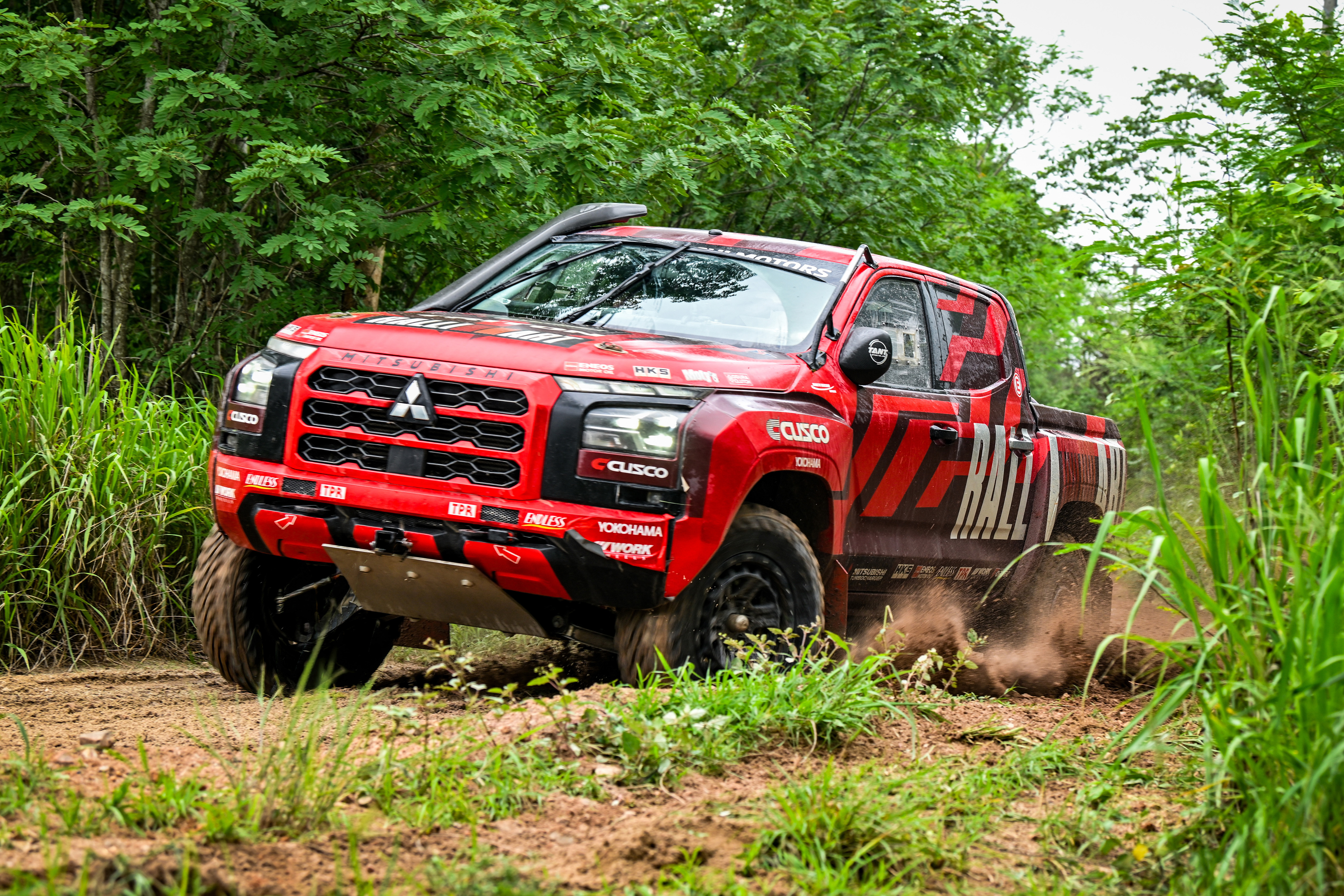
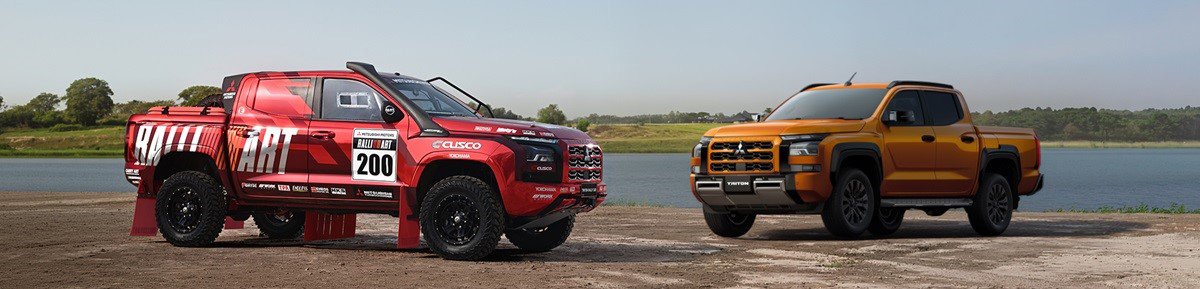
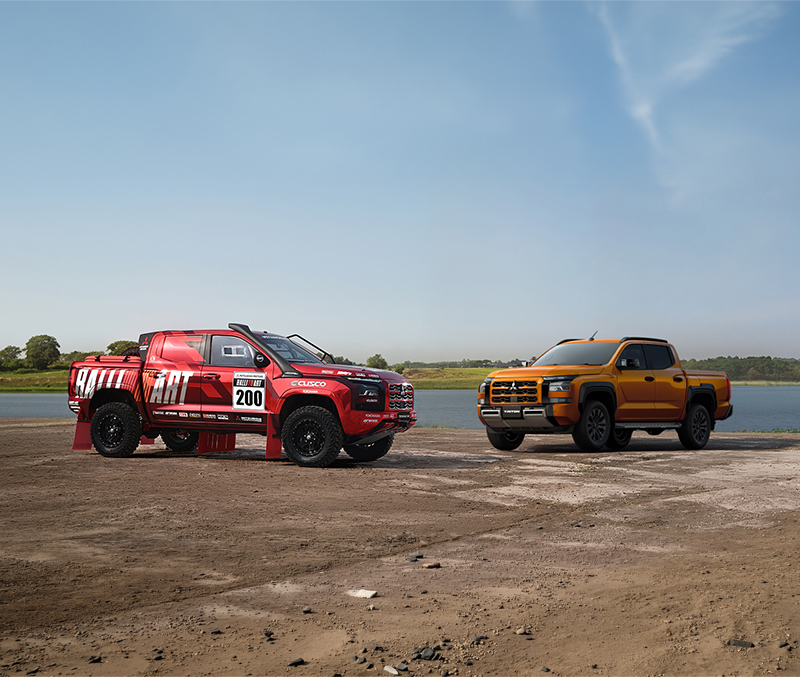
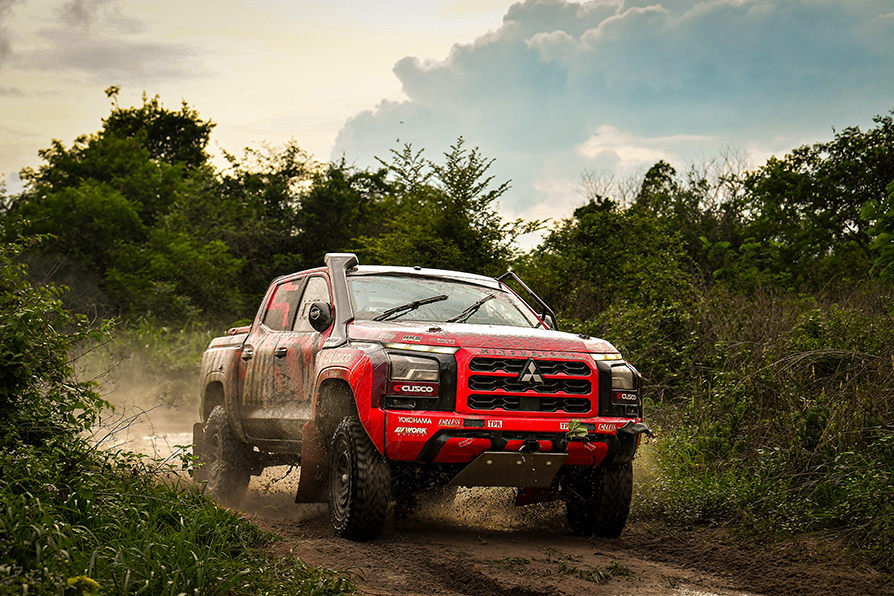
The all-new Triton rally car, introduced in 2023
The Same Vehicle, Facing an Entirely Different Definition of Success
When the all-new Triton debuted in 2023, it was quickly sent onto a second stage without extensive modifications from its production-car specification: the AXCR, one of the largest cross-country rally events in Asia.
For Mitsubishi Motors, rallying is far more than a motorsports activity. Established in 1996, the AXCR is widely regarded as the most demanding cross-country rally in the Asia. Mitsubishi Motors launched its full-scale participation in 2022. Hiroshi Masuoka, Team Director of Team MITSUBISHI RALLIART, explains:
“The rally experience Mitsubishi Motors has accumulated over the years has been fed back into a wide range of vehicles, contributing to strengths that define Mitsubishi vehicles today, including four-wheel-drive technology, chassis and body durability, off-road capability, and safety performance.”
Experiencing firsthand how vehicles behave under extreme conditions while gathering valuable data — this is what makes rallying the “ultimate testing ground” for Mitsubishi Motors.
In 2023, the new Triton was converted to rally spec immediately after its release and entered into the AXCR. Noriyoshi Aiba of the Development Management Department, responsible for competition vehicle development, recalls the vehicle’s performance:
“Due to development schedule constraints in 2023, modifications to the vehicle were largely limited to areas such as the suspension, brakes, tires, wheels, and differential. Although we fell short of the overall championship, we did set the fastest time in some special stages (SS), all three of our entered vehicles finished the race, and we won the Team Award, which is determined by the combined times of the top two cars. This ultimately proved the high potential of the Triton even in its production-spec configuration.
The strong fundamentals refined during production vehicle development proved capable of serving as the foundation of a competitive rally car, even under the immense stresses of AXCR competition.
One key factor behind competitive performance was something shared with production vehicle development: reducing driver fatigue. Ensuring that drivers could maintain precise control over long distances and remain effective until the very end of a stage became a critical advantage.
The “Triton” had a smaller engine displacement, putting it at a disadvantage when comparing engine specifications alone. To address this, the competition vehicle development team focused on improving off-road performance.
Aiba explains: “Even on gravel, the difference in engine displacement tends to be more noticeable on flat, straight sections. Improving off-road capability became a key focus, as it would allow us to gain time through low- and medium-speed corners where the surface is uneven.”
Notably, the 2023 rally vehicle retained the production model’s suspension layout. The exceptional handling stability developed during the production program itself became one of the Triton’s greatest strengths.
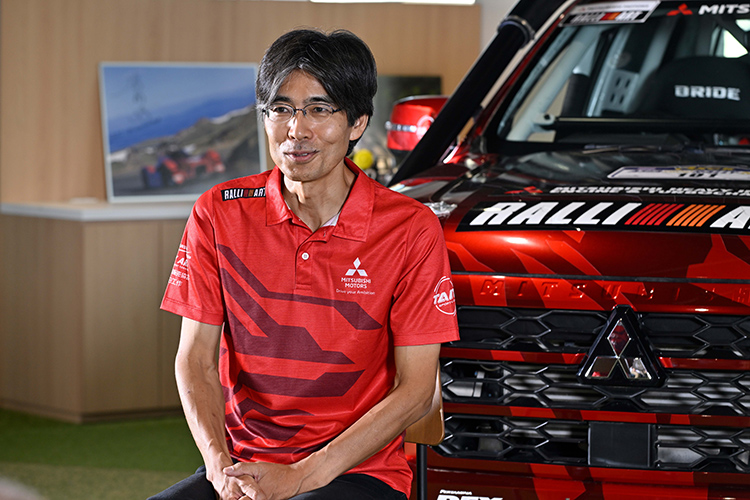
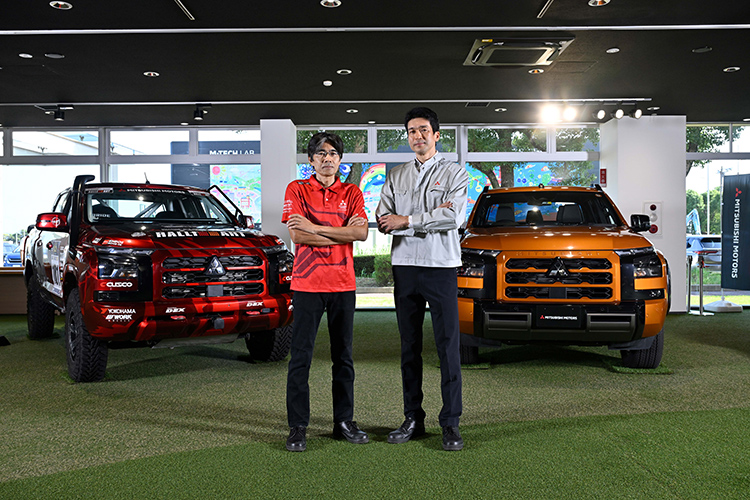
The core strengths of the production Triton are carried over into the rally car.
At the same time, rally engineering often requires a different mindset from production vehicle development.
“Mileage and service life are important indicators of durability. In AXCR, driving conditions vary tremendously, and the stress on the vehicle can be extremely high. Put simply, components only need to continue functioning until the rally ends. That is a fundamentally different way of thinking from production vehicle development.”
When components fail during durability testing, the damaged parts are often sent to specialists in materials engineering. By analyzing fracture surfaces and identifying how failures progressed, engineers gain valuable insights that feed directly into future vehicle development.
Hideki Sato, who led development of the production model, describes the relationship between mass-production engineering and rally activities:
“The engineers responsible for production vehicle design are often consulted by the rally team while continuing their regular development work. Being relied upon as professionals is highly motivating, and those experiences contribute directly to rally car engineering. I think that’s extremely valuable.”
Many production vehicle engineers support the rally program while handling their regular duties. This compact organizational structure, typical of Mitsubishi Motors, helps connect the two fields.
Heartbreak in 2024, Triumph in 2025
The path to victory was far from smooth. At the end of Leg 4 of the 2024 AXCR, the team of Chayapon Yotha and Peerapong Sombatwong was leading the overall standings. Victory for the new Triton seemed within reach. Yet with only two kilometers remaining before the end of Leg 5, engine trouble struck, forcing a heartbreaking retirement. To make matters worse, it happened on Chayapon's birthday.
Aiba still remembers the moment vividly. “When Chayapon returned after the vehicle was towed back, he was in such shock that it was difficult to even talk to him.”
The team entered 2025 carrying the disappointment of the previous year. Time and budget remained limited, and conditions were far from ideal. But the team refused to stand still. Drawing on their collective experience and ingenuity, they addressed every challenge one by one.
Then came the final day. Holding an advantage of only seven and a half minutes over second place, Chayapon and Peerapong completed the final special stage and secured overall victory. It marked their second AXCR overall win, following their triumph in 2022 with the previous-generation Triton. By remarkable coincidence, it was once again Chayapon’s birthday.
Turning one year’s disappointment into the next year’s strength. Identifying the cause of failures, eliminating them one by one, and returning stronger than before. The process closely mirrored the journey of the engineering team that had developed an entirely new frame from scratch for the first time in nearly 20 years.
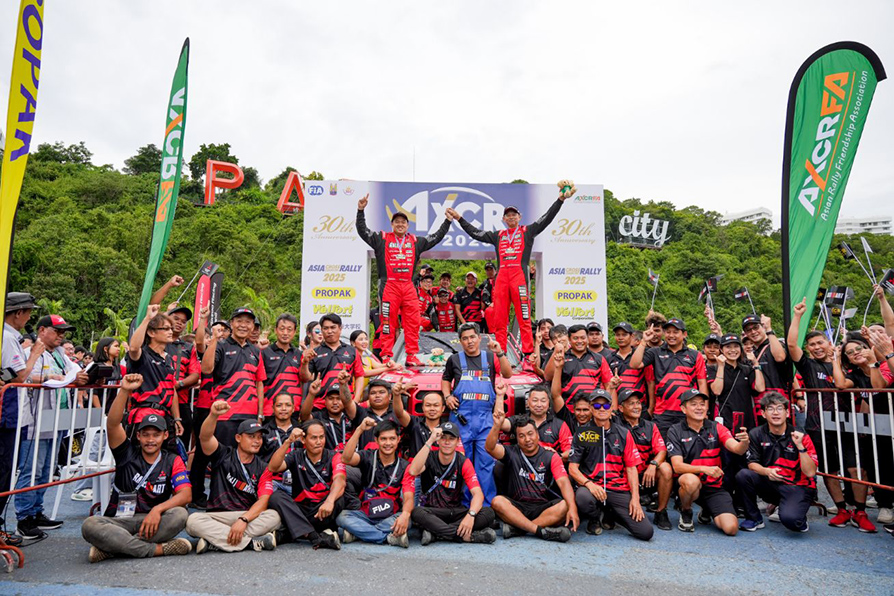
A Long-Awaited First Victory with the All-New Triton
One Development DNA, Shared Across Two Fields
Production vehicles are designed to meet the diverse needs of customers around the world. Rally cars, meanwhile, are designed for a single objective: reaching the finish line under the harshest possible conditions. However, while the goals may differ, the determination to find the right answers is strikingly similar.
On one side stand the production vehicle engineers, who created a completely new frame despite having no colleagues who had participated in the previous frame development two decades earlier. On the other stand the rally team, which achieved victory through close collaboration with production engineering . What united both groups was a willingness to find solutions where no blueprint existed.
Masuoka reflects on the significance of rally activities: “The rally experience Mitsubishi Motors has accumulated over the years has been fed back into a wide range of vehicles, contributing to the strengths that define Mitsubishi vehicles: advanced four-wheel-drive technology, durable chassis and body structures, outstanding off-road capability, and dependable safety performance. These experiences have become invaluable assets, not only for the people involved but also for the company itself. Perhaps this continuing legacy is what we call Mitsubishi Motors’ development DNA.”
Among Mitsubishi Motors engineers, one shared belief has remained constant: they do not want to build the same things as everyone else.
The cornering performance and stability of the Lancer Evolution, and the all-weather, all-terrain capability of the Pajero, are products of the distinct character cultivated by Mitsubishi Motors.
The engineers’ work does not end with simply drawing what they are told to draw. Instead, they continuously ask themselves how things can be improved, pursuing better solutions through their own creativity and determination. The same spirit drives rally engineers, who continue refining vehicle performance even under severe constraints.
Aiming for Back-to-Back AXCR Victories in 2026
Aiba reflects on working with Tant Sport, the local team in Thailand: “Different approaches can sometimes lead to conflicting opinions. Naturally, our ways of thinking and our work cultures are not always the same. But our destination is shared. Respecting one another and working together is what ultimately enables success.”
The 2025 victory was made possible by a team united across Japan and Thailand, all working toward the same goal. The passion of the engineers who tackled the first all-new frame development in nearly two decades and the determination of the rally team that transformed heartbreak into victory were both driven by the same desire: to make things better. When something breaks, they identify the cause. They fix it. Then they improve it further.
That relentless process led to the birth of the all-new Triton, and its capabilities were ultimately proven in the AXCR, one of the toughest stages in motorsport. The development DNA behind that achievement will continue shaping Mitsubishi Motors’ vehicle production for years to come.
-
-
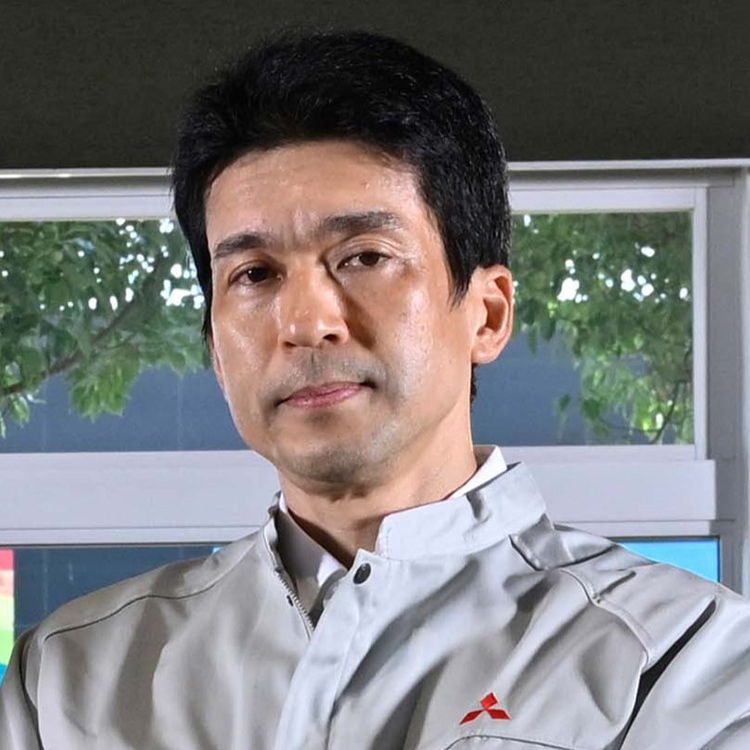
Hideki Sato
Oversees overall vehicle development for Mitsubishi Motors’ Body-on-frame lineup.
Since 2018, he has been responsible for the Triton program and currently leads global pickup truck product development as Chief Vehicle Engineer (CVE).
-
-
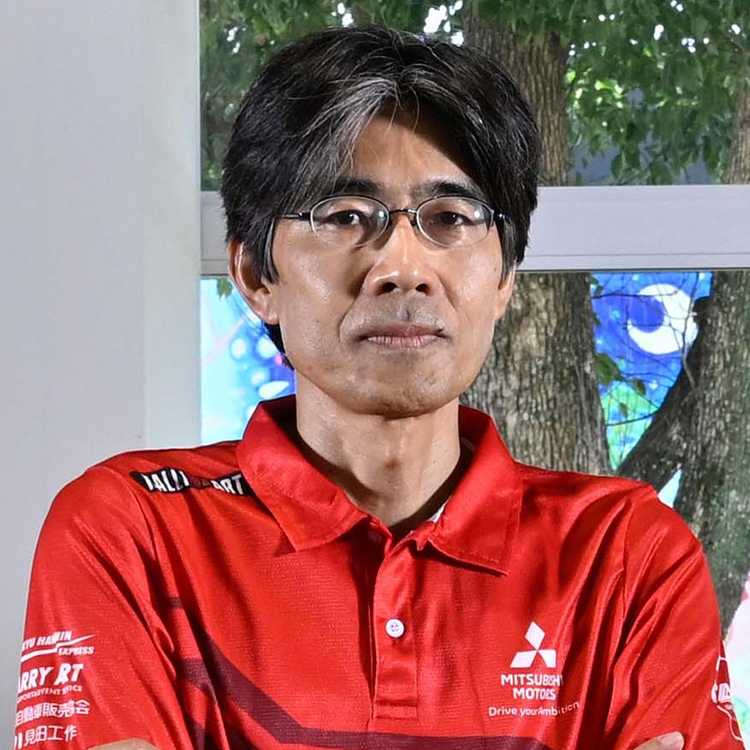
Noriyoshi Aiba
Responsible for body development of Mitsubishi Motors’ AXCR competition vehicles.
During Mitsubishi Motors’ participation in the Dakar Rally, he was responsible for the body development of the competition-spec Pajero.
Aug 2026

