The Triton and AXCR: A Development DNA Story Two Decades in the Making
What a Pickup Truck Carries
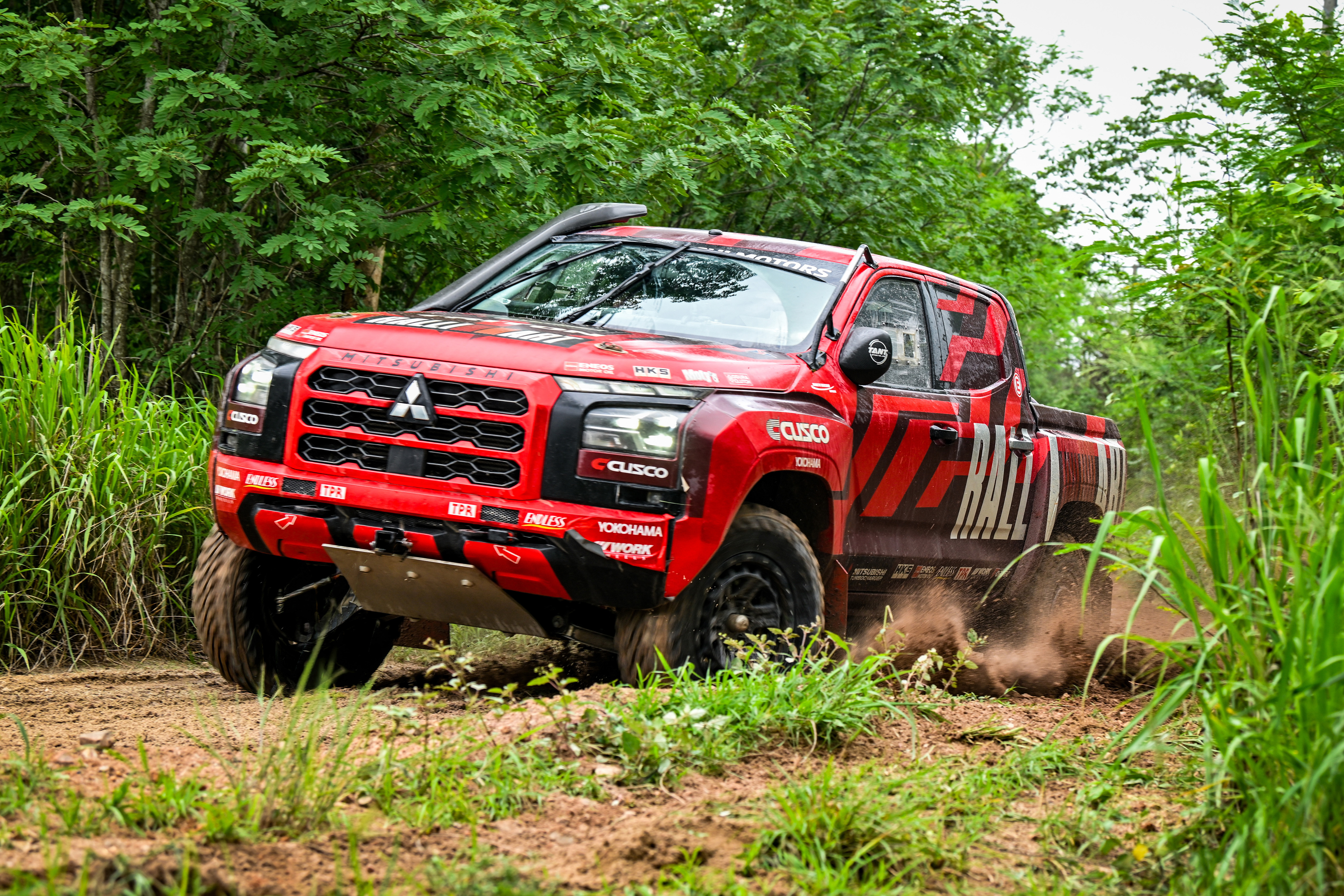
The newly developed Triton*, launched in 2023, was built on an all-new ladder frame, redesigned from the ground up for the first time in nearly 20 years. That vehicle would soon face one of the toughest proving grounds imaginable: the Asia Cross Country Rally (AXCR), where competitors tackle steep mountain terrain, narrow jungle tracks, muddy roads created by tropical downpours, and river crossings in the hot and humid climate of Southeast Asia. After the disappointment of a retirement for ace crew Chayapon Yotha and Peerapong Sombatwong in 2024, the team finally reached the summit in 2025. Looking back on that journey reveals the development DNA that connects Mitsubishi Motors’ mass-production engineering and rally competition.(Read Part 2 here.)
- Sold as the L200 in some countries and regions.
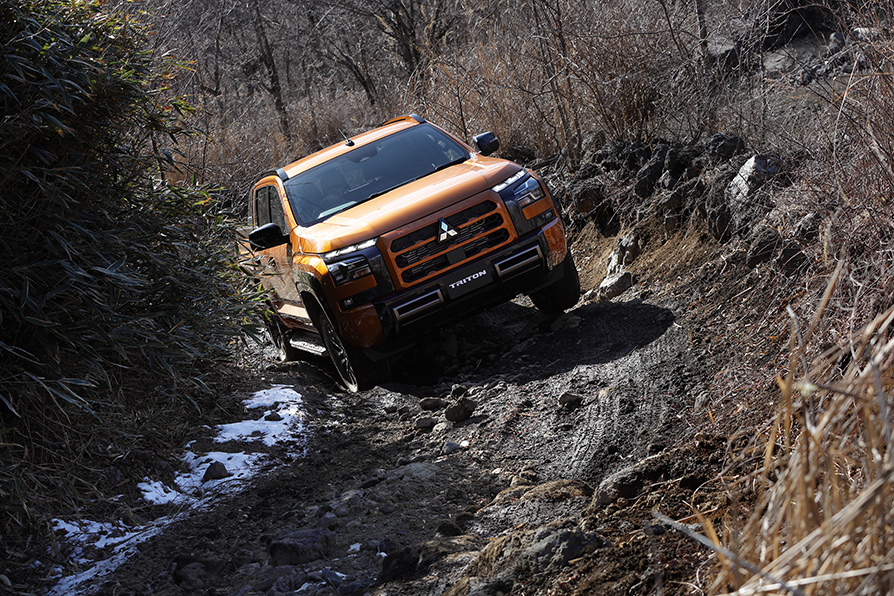
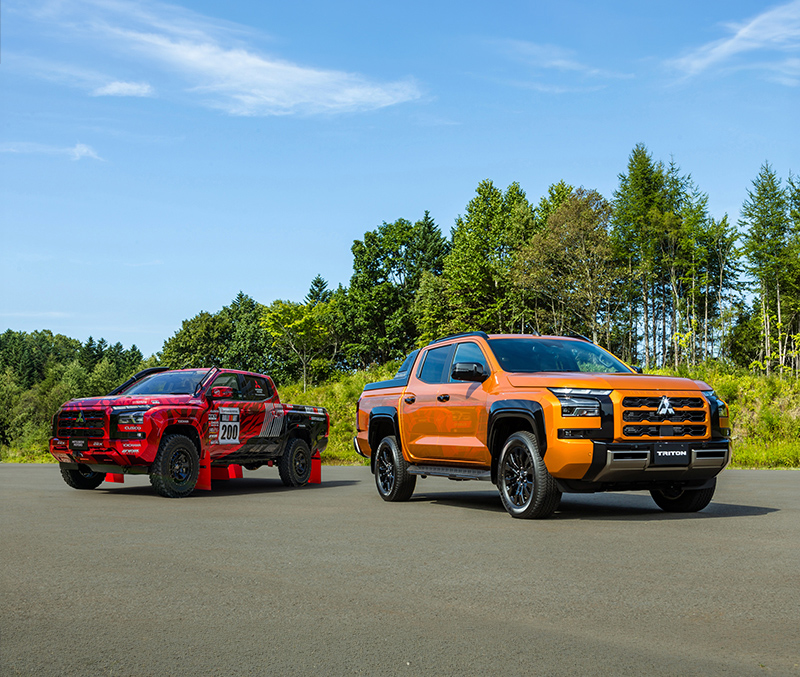
The Triton, equipped with the all-new frame, was launched in 2023.
Development of the Frame Began with Almost No Prior Know-How
How familiar are you with pickup trucks? Equipped with a cargo bed, these vehicles carry materials and tools at construction sites, farms, and mines, helping to support industries around the world. A sturdy body, the ability to navigate rough terrain, and the power to tow heavy loads and trailers — the performance requirements for commercial vehicles like these are extremely demanding.
At the same time, they serve as everyday transportation, taking families to campgrounds on weekends and making journey homes through snowy roads. One day the bed may be loaded with tools; the next, the rear seats may be occupied by children. A pickup must combine the durability of a hardworking commercial vehicle with the comfort and practicality required for everyday life, reliably transporting people and cargo to their destination whatever the road or weather conditions. This philosophy also echoes the vehicle development approach Mitsubishi Motors has pursued for decades through SUVs such as the Pajero/Montero. Since the debut of the Forte/L200 in 1978, Mitsubishi Motors pickups have sold more than 5.85 million units in approximately 150 countries around the world. Among these, the Triton stands as one of the company’s flagship global strategic models.
To carry that legacy into the next era, the project team made a bold decision: redesign the ladder frame — the backbone that supports both the cargo bed and passenger cabin — from scratch for the first time in nearly two decades.
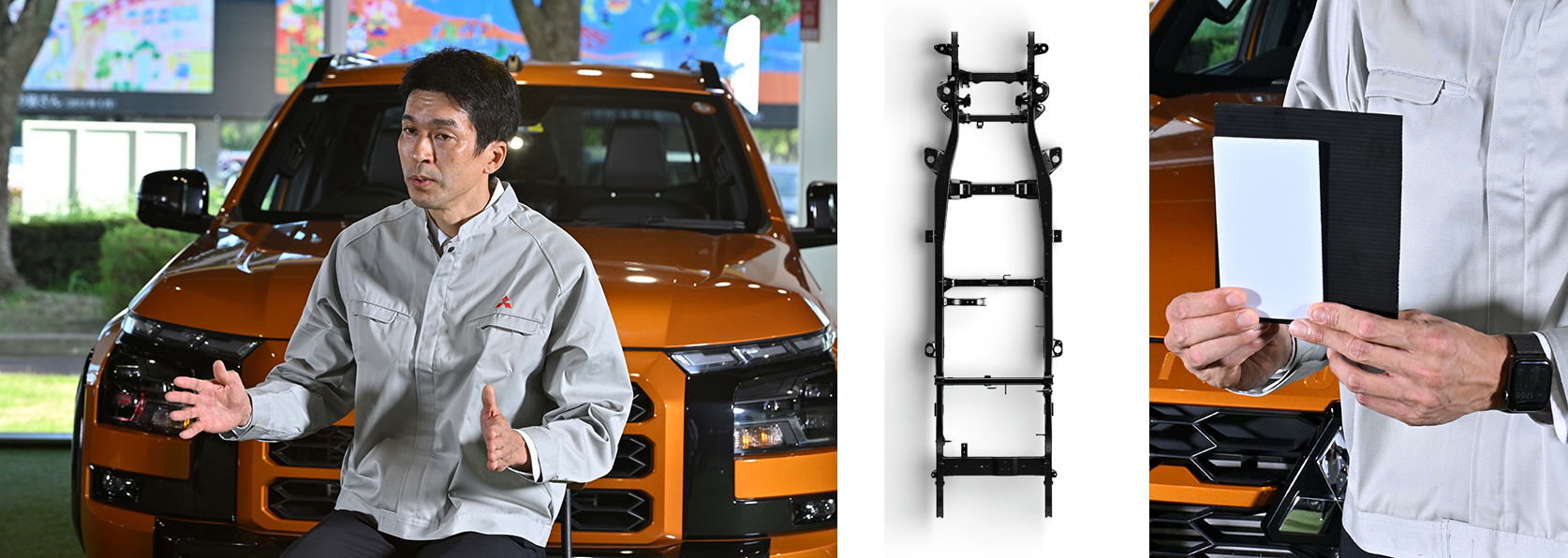
Previous-generation frame cross-section (white) vs. all-new frame cross-section (black)
Hideki Sato, who oversaw the program at the Project Development Management Department, recalls:
“We knew it would be difficult to achieve significantly higher safety performance and body rigidity using the previous-generation frame. Since it was also time to completely revamp the platform, the project ended up involving a nearly complete redesign of almost everything, including a new engine.”
However, because nearly 20 years had passed since the last full redesign, there were no engineers left at the company who had been involved in the frame development at that time. Even the first prototype frame, created through extensive CAE analysis, was judged during testing to be in a condition that “could hardly function as a vehicle.” From there, the team undertook a series of painstaking improvements: revising the cross-sectional shapes, changing materials, and systematically eliminating each area prone to cracking, one by one.
The finished frame increased cross-sectional area by 65 percent compared with its predecessor, while improving bending rigidity by 60 percent and torsional rigidity by 40 percent. At the same time, weight gain was kept to a minimum through a roughly 50 percent increase in the use of high-strength lightweight steel.
The team also took on an unprecedented challenge by reducing the number of rear leaf springs from the standard five to three. The result was improved ride comfort through reduced friction resistance and a weight reduction of approximately 13 kilograms per vehicle. Meanwhile, the newly developed engine delivers a maximum output of 150 kW.
“By adopting a two-stage turbo system, we achieved smooth acceleration from low speeds through the mid- and high-range, in a way that feels natural to the driver. The system makes balanced use of both the smaller and larger turbochargers.”
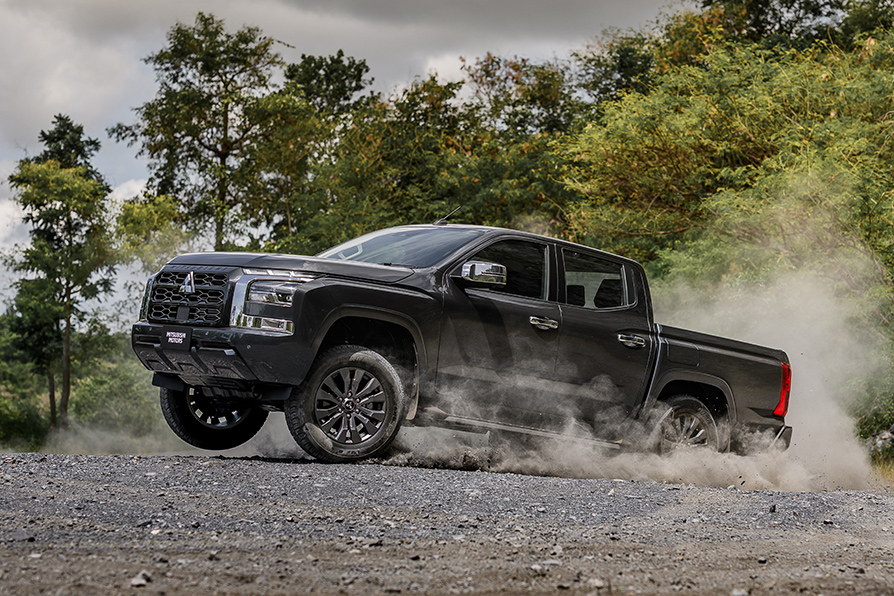
For the four-wheel-drive system, Mitsubishi Motors adopted Super Select 4WD-II, inherited from the Pajero/Montero, and combined it with Super-All Wheel Control (S-AWC), technology derived from the Lancer Evolution. It marked the first application of S-AWC to a body-on-frame vehicle.
“For example, when customers in Japan drive into the mountains in winter, they may be travelling on roads that are clear in sunny areas but turn snowy the moment they pass into the shade. If 4H (full-time four-wheel drive) is selected, there is no need to panic. The system automatically distributes drive force according to changing road conditions.”
Another priority for Sato was reducing driver fatigue. The goal was to create a vehicle that remains comfortable and easy to drive over long distances. To ensure drivers of different body types around the world — from someone around 150 centimeters tall to much larger individuals — could operate the vehicle with equal confidence, the team paid close attention to details such as seat adjustment ranges and visibility of the hood’s leading edge.
On July 26, 2023, the all-new Triton made its world premiere in Bangkok, Thailand. The model, the first full redesign in approximately nine years, was announced for Japan in December of the same year and returned to the Japanese market in February 2024 after a 12-year absence. It also received the Design Car of the Year award in the 2024-2025 Japan Car of the Year competition.
However, the all-new Triton’s stage was never limited to the commercial marketplace. Just weeks after its debut, it was thrust straight into the AXCR.
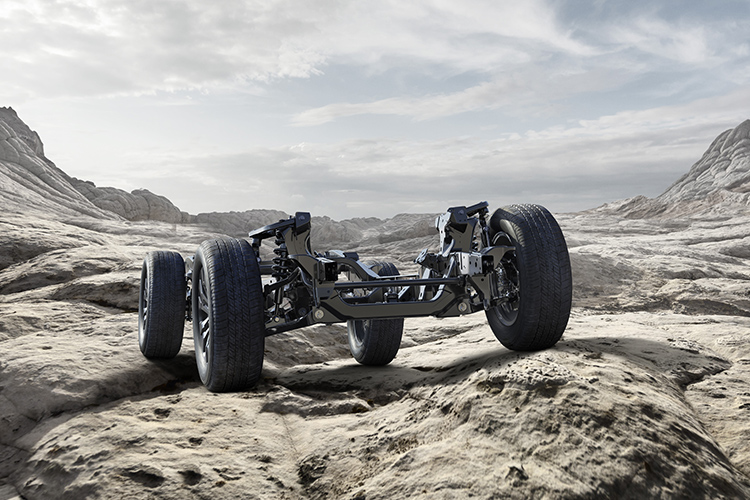
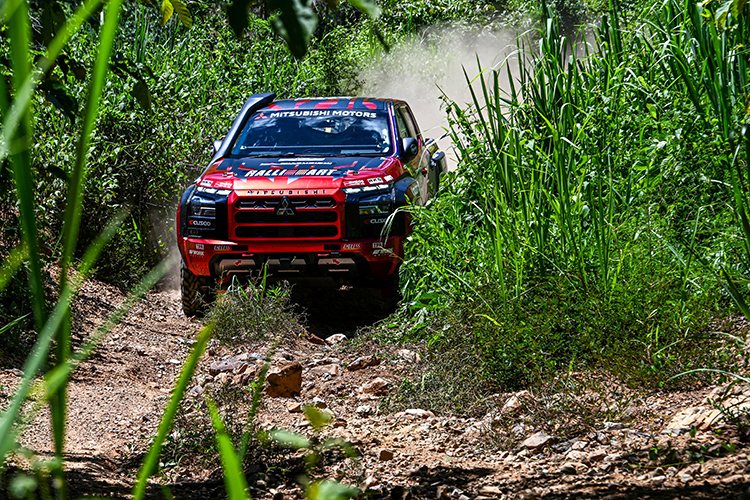
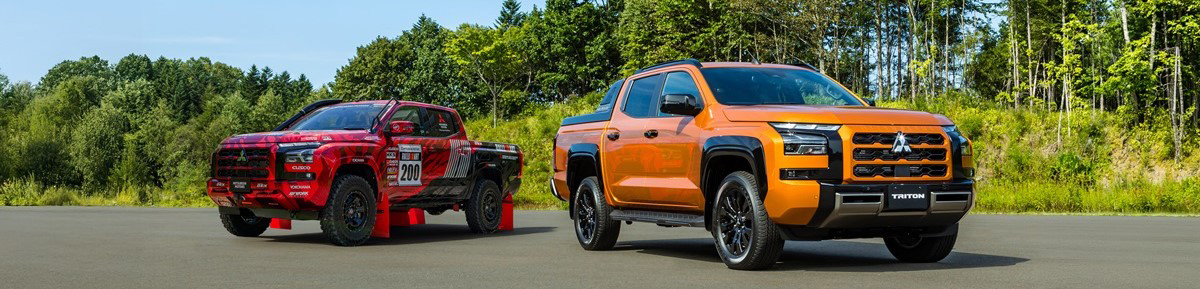
The rally car inherits the core performance characteristics of the production model.
-
-
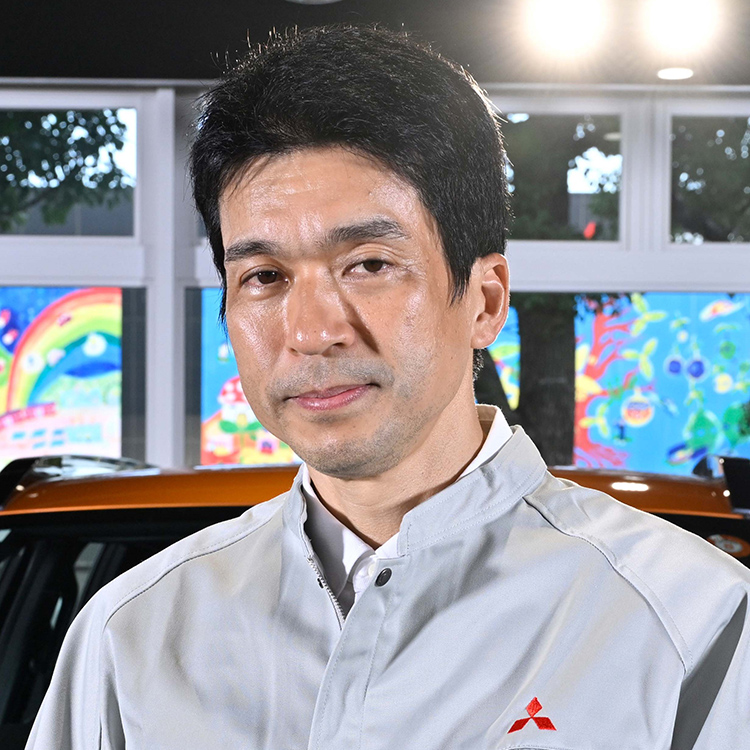
Hideki Sato
Oversees overall vehicle development for Mitsubishi Motors’ Body-on-frame lineup.
Since 2018, he has been responsible for the Triton program and currently leads global pickup truck product development as Chief Vehicle Engineer (CVE).
Aug 2026

