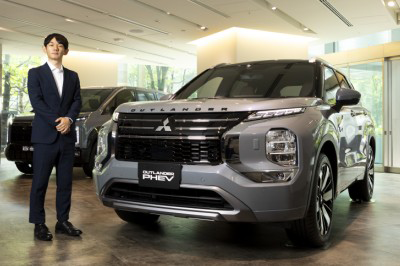
15 Years of Disaster Relief with Mitsubishi
Motors' PHEVs
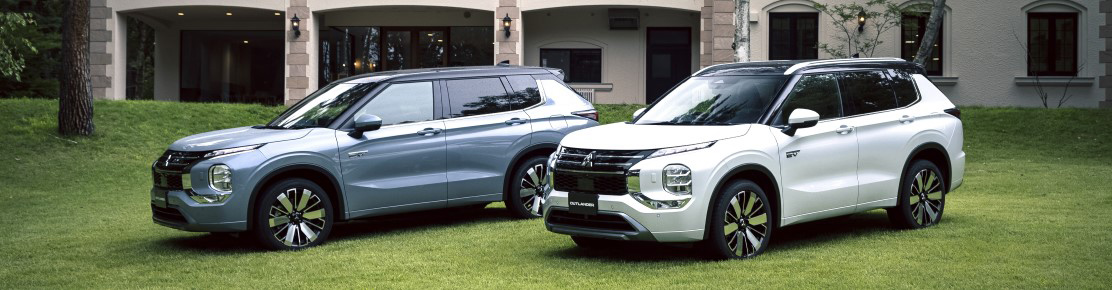
Providing light to evacuation shelters during power outages, supporting the operation of medical clinics, and contributing to community disaster preparedness—Mitsubishi Motors' PHEVs have played a role that goes far beyond a standard vehicle for travel and transport in disaster-affected areas.
In Part 2, we spoke with Takeshi Ota of the Domestic Regional Operations Department, who is responsible for municipal sales and planning, about the capabilities demonstrated by PHEVs through actual cases such as the severe snowfall in Sado City, and the growing potential for their use in disaster preparedness and healthcare.
The Value Proven by PHEVs:
Lessons from Sado City
In December 2022, Sado City experienced widespread power outages caused by heavy, wet snowfall.
During the emergency, PHEVs dispatched under a Disaster Cooperation Agreement were used to provide electricity at evacuation shelters and medical clinics, bringing a vital sense of reassurance to the city.
Between December 18 and 19, heavy snowfall caused trees and bamboo to collapse, resulting in power outages across 138 districts.
At its peak, 7,800 households lost power in a single day, while a total of 17,200 households were affected.
Additional snowfall on December 23 and 24 further complicated recovery efforts, and in some areas electricity was not restored until December 29.
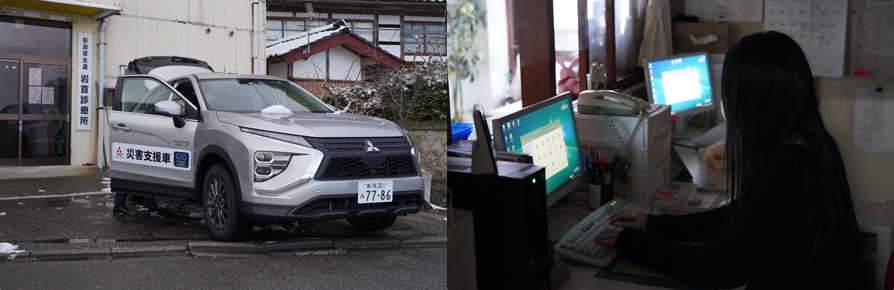
During this period, the PHEVs dispatched under the Disaster Cooperation Agreement provided power to both evacuation shelters and medical clinics.
At shelters, they were used to supply electricity for lighting and heating.
Meanwhile, at clinics, electronic medical records and accounting systems could not function without electricity. As power outages continued, the vehicles supplied electricity to computers and other equipment, helping sustain local healthcare services.
Officials also noted another important advantage.
The generators initially used at some locations presented challenges such as noise and the need for refueling. PHEVs, by contrast, operated quietly and were capable of supplying power for extended periods.
According to a representative of Sado City:
"Sado City also operates battery electric vehicles, but even fully charged, they can only run for less than half the time of a PHEV.
For disasters involving extended power outages, we feel that deploying PHEVs is extremely effective."
Many of the shelters and clinics that received support were located in mountainous areas, where roads kept accumulating snow immediately after clearing.
Because the vehicles were SUV-type PHEVs, they were able to travel reliably in challenging conditions.
Local users later commented that this was one of the reasons they felt,
"We're glad this vehicle was here."
Following this experience, Sado City installed Vehicle-to-Home (V2H) systems at district evacuation shelters, enabling electrified vehicles to provide power to entire facilities when needed.
Why PHEVs?
The Strength of a “Battery on Wheels” Proven in the Field
According to Ota, Mitsubishi Motors' PHEVs possess four major strengths that make them particularly valuable during disasters.
The first is their ability to provide up to 1,500 watts of electricity through a simple operation.
The Outlander PHEV comes equipped with standard AC outlets. By simply pressing a button next to the steering wheel, anyone can easily run household appliances directly from the vehicle.
"In disaster-affected areas, some people may have little experience operating vehicles.
Because the system can be activated in much the same way as starting the vehicle and power can be supplied by pressing a single button, people can often use it without detailed explanation.
Many users tell us how much they appreciate that simplicity, and I believe that ease of use is one of its greatest strengths.
In summer, it can power electric fans, portable air conditioners, or compact refrigerators.
In winter, it can run electric heaters or electric kettles.
With 1,500 watts available, a wide range of appliances can be used depending on the situation."
The second strength is the ability to provide power to an entire home when connected to Vehicle-to-Home (V2H) equipment.
With a fully charged battery and a full tank of fuel, the vehicle is estimated to supply enough electricity for an average household for up to approximately 11 days.
The third strength is its spacious cargo space.
Its spacious luggage compartment allows the vehicle to transport a wide range of supplies during emergencies.
The fourth is Mitsubishi Motors' renowned four-wheel-drive (4WD) capability.
"Even when roads are severely damaged by an earthquake, Mitsubishi Motors' 4WD technology enables people and supplies to be delivered where they are needed.
That's something we're extremely proud of."
Why PHEVs?
The Reassurance Only a PHEV Can Provide
Among all of these strengths, the one Ota emphasizes most is the unique sense of reassurance that a PHEV offers, something that a battery electric vehicle alone cannot provide.
"With an electric vehicle, running out of charge can mean that the vehicle needs to be towed.
Users also have to be mindful of how much electricity remains while using it.
A Mitsubishi Motors PHEV is different. As long as fuel can be secured, electricity can continue to be generated.
The battery alone provides ample power, with the engine standing by to generate more electricity.
When it comes to disaster response, I believe it is the ideal vehicle."
The value of this capability was recognized once again following the 2026 Kumamoto Earthquake.
The earthquake, which recorded a maximum seismic intensity of upper 5 in Kumamoto City, immediately prompted Ota to ask himself a simple question:
"What does that community need right now?"
Within days of the disaster, an Outlander PHEV and a Delica D:5 were delivered to Kumamoto City by West Japan Mitsubishi Motors Sales Co., Ltd.
The vehicles were utilized not only for power supply, but also to support people sheltering in their vehicles.
At a time when no one knew when electricity would be restored, Mitsubishi Motors vehicles continued supporting affected communities in multiple ways, serving both as mobile power sources and as temporary living spaces.
Expanding Support into Healthcare and Making
Preparedness Personal
Mitsubishi Motors' PHEVs are also beginning to play a new role in healthcare.
Together with Kawasaki City in Kanagawa Prefecture, Mitsubishi Motors conducted a demonstration project using a PHEV to charge dedicated external batteries for ventilators.
"If a power outage occurs during a disaster, it can become a life-threatening issue for people who rely on ventilators.
Together with officials from the local welfare department who recognized this challenge, we conducted a demonstration project and had opportunities to explain its value directly to families."
Through this initiative, Ota has seen how the capabilities of PHEVs can be connected to the disaster-preparedness challenges faced by municipalities.
Rather than ending the relationship after signing a Disaster Cooperation Agreement, Mitsubishi Motors continues working with Kawasaki City to explore practical applications for electrified vehicles.
Similar efforts are expanding elsewhere.
An agreement signed with Osaka City also anticipates the use of PHEVs to provide electricity for medical devices during emergencies.
For Ota, discussions with municipalities have broadened his understanding of what disaster support can mean.
Rather than thinking only about the ability to provide electricity, municipalities are increasingly asking a deeper question:
Who needs that electricity, and what do they need it for?
"Many municipalities feel strongly about finding solutions to support medical equipment.
When we discuss these demonstration projects, we often hear comments such as, 'Perhaps our municipality should try that as well.'"
Powering disaster-affected areas means providing light, charging smartphones to access vital information, and keeping people connected.
And in some situations, it may even support life-saving medical care.
Whenever Ota visits municipalities, he emphasizes one key point in particular.
The importance of not just mutual aid, but individual preparedness as well.
"After explaining that Disaster Cooperation Agreements represent a form of mutual aid, I also encourage municipalities to consider the importance of individual preparedness.
Having that perspective can make a significant difference when an emergency occurs."
By replacing some official vehicles with electrified cars capable of handling everyday use, they can instantly double as mobile power sources when a disaster strikes.
Unlike batteries stored away in warehouses, these vehicles are driven regularly and maintained through routine inspections, reducing the risk that they will be unavailable when needed most.
As Ota explains:
"Because they are used in everyday operations and maintained through regular vehicle inspections, there is little risk of a vehicle being inoperable due to poor maintenance when a disaster strikes."
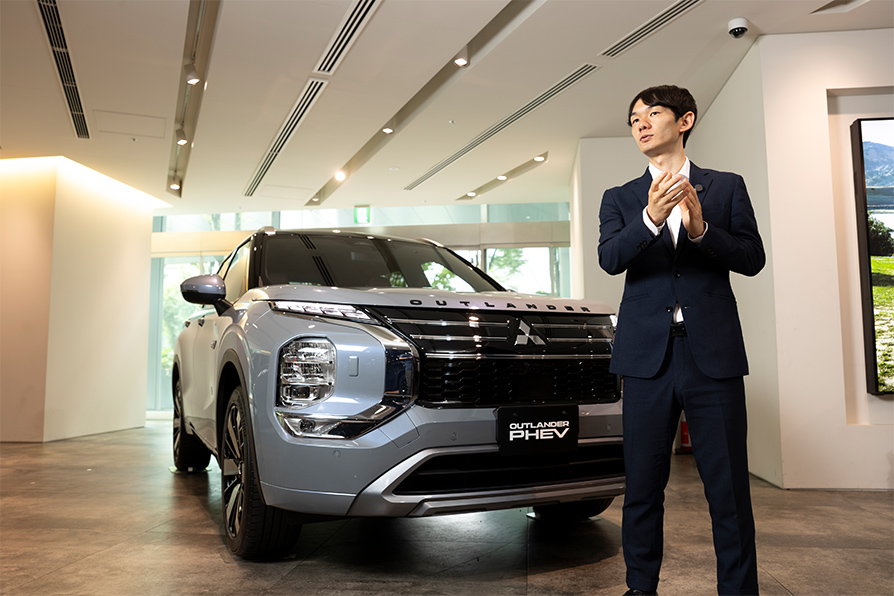
Preparedness Begins with Everyday Life
When asked what makes his work rewarding, Ota answers without hesitation.
"Earthquakes can happen anywhere, and no one knows when they will occur.
Knowing that the vehicles we deliver help support people's lives and provide reassurance in affected communities is one of the most rewarding aspects of this work.
It makes me happy to think that a single vehicle can make a difference for someone."
Disaster-response activities have also led many people to develop an interest in Mitsubishi Motors' PHEVs themselves.
Ota says that he occasionally meets municipal officials who already own PHEVs personally.
"We often hear that they regularly make use of the vehicles' power-supply capabilities in their daily lives."
He adds that these initiatives have encouraged even more people to take an interest in the vehicles.
At the same time, Mitsubishi Motors continues working to help communities understand the role PHEVs can play before a disaster occurs.
At local disaster-preparedness events, Ota and his colleagues bring PHEVs on-site and demonstrate how household appliances can be powered directly from the vehicle, showing residents what is possible.
"We tell people, 'This is the kind of power supply capability these vehicles can provide.'"
By seeing the technology in action, residents gain a better understanding of how electrified vehicles can support daily life as well as emergencies.
Since the Great East Japan Earthquake in 2011, Mitsubishi Motors has continued dispatching electrified vehicles to disaster-affected areas.
Driven by a desire to quickly deliver Mitsubishi Motors' unique PHEVs, which can both supply and generate electricity, the company has continued refining its support activities through years of experience, experimentation, and learning.
Those efforts have grown into a nationwide network of mutual support involving 273 municipalities across Japan. Yet for Mitsubishi Motors, this work is never finished.
There is no finish line. Just daily preparation before disaster strikes, and delivering support when it does, with the company committed to continuing these efforts across the country.
*1
- Power supply may stop or output may decrease if power consumption exceeds 1500W.
- Do not use multi-plug outlets (octopus wiring) for the accessory outlet.
- Some appliances cannot be used even if their rated power consumption is 1500W or less.
- When using the AC power supply, if the drive battery gets low, the engine will start automatically to charge it. If the engine starts while the vehicle is stopped, it may violate idling-stop regulations, so please exercise caution.
- Please check the instruction manual and precautions provided with the electrical appliance before use.
*2
- When fully charged, it can supply about 1 day’s worth of power for an average household. Combined with engine power generation via battery charge mode, a full tank of gas can supply up to about 11 days of power for the New Outlander PHEV and up to about 10 days for the Eclipse Cross PHEV.
- The suppliable power is based on company calculations (calculated assuming an average household power consumption of about 10kWh/day; does not include conversion efficiency of V2H devices, etc.)
- A V2H device is required for connection to a home. For inquiries regarding V2H devices, please contact our dealership staff or the respective V2H device manufacturer.
- When connected to a V2H device, power generation via engine startup is not possible. For details, please ask V2H device manufacturer or sales staff.
*3
- Interior with 2nd and 3rd-row seats folded down.

