
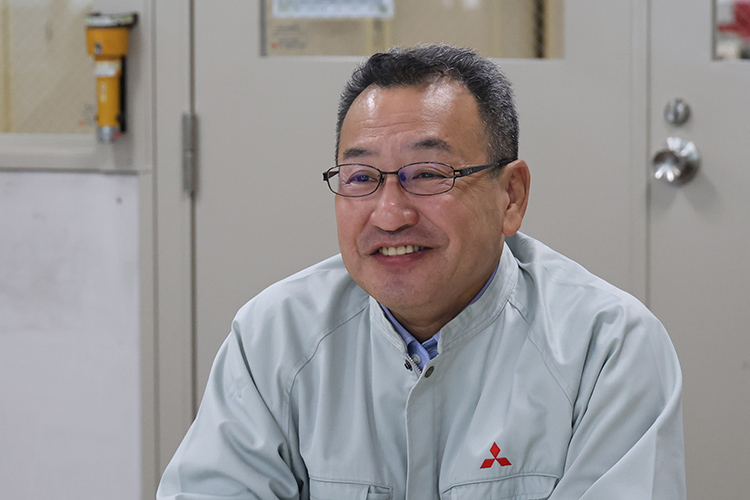
How are Mitsubishi Motors vehicles made? Behind every model is a series of processes from research to planning, design, engineering, prototyping, testing, procurement, production, distribution, and sales - each overseen by professionals with highly advanced technical expertise. In this series, we feature individuals from Mitsubishi Motors worksites. In this episode, we turn our spotlight on the Vehicle Performance Planning and Testing Department, the team responsible for carrying out final adjustments during the development phase before a vehicle enters mass production. Within the department, the team in charge of handling stability and ride comfort performs the final adjustments, fine-tuning the vehicles so that they are easy to drive and comfortable to ride in. We speak with Yoichi Torii, a seasoned professional known for his unique expression, "internalize the ride feel " as he works to perfect what a car feels like behind the wheel.
Creating "Carpet Ride" Comfort in the New Delica Mini
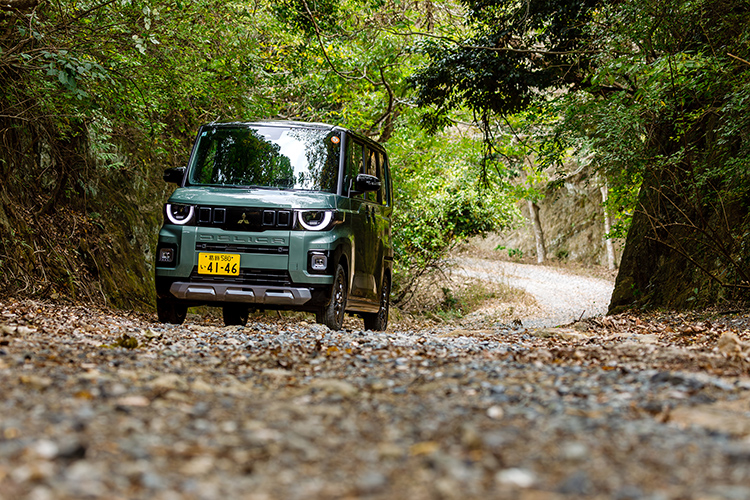
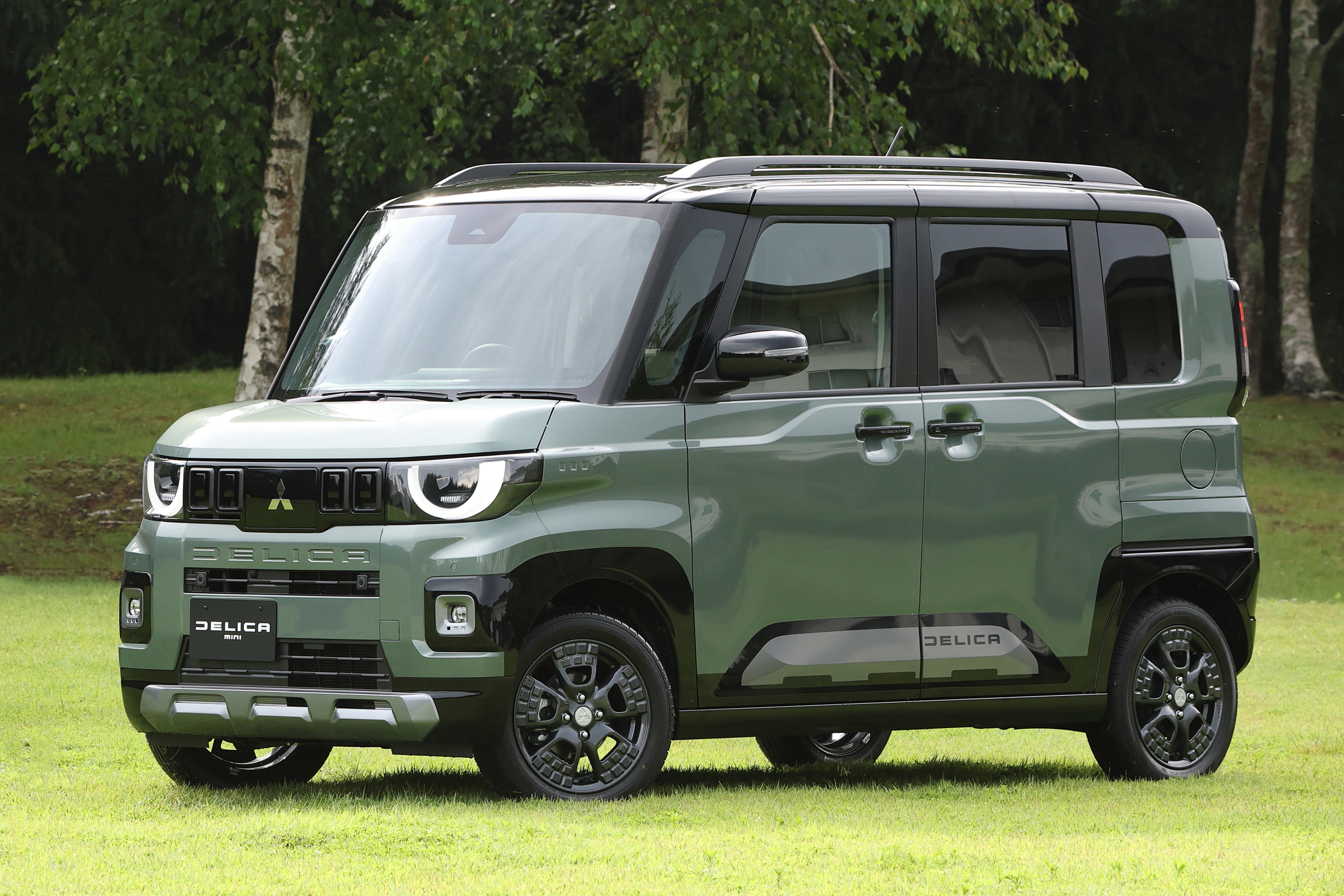
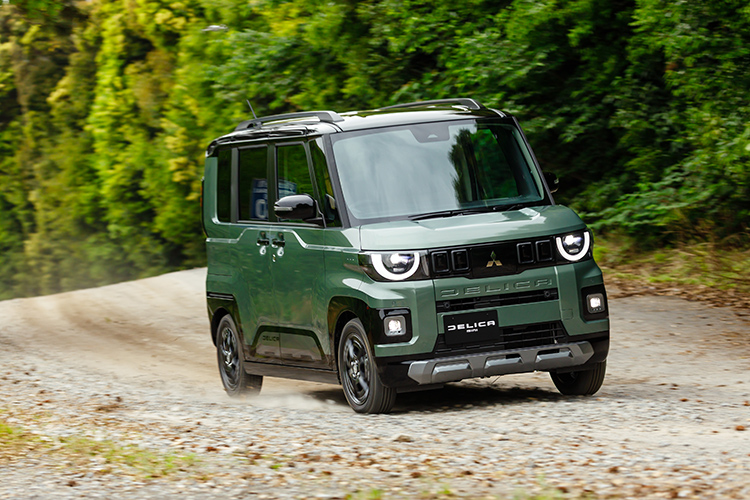
The fully redesigned Delica Mini launched in October 2025. For the 4WD trim, it was Torii who put the finishing touches on ride comfort. "The previous model was already well received - so much so that you can't help but wonder whether we really needed to go that far for a kei-car*," Torii recalls. "But senior management asked us to raise the bar - to build something that could power through our cross‑country test courses, designed to simulate unpaved roads. I was responsible for the previous model as well, and the planning team told me they wanted customers to be surprised. They didn’t want people asking, 'So what changed?'"
It was, by any measure, a daunting request. Yet after much deliberation, Torii formed a clear image.
"I wanted to aim for what I call a 'carpet ride' - a ride that feels like you’re driving on a carpet. Normally, when you drive, impacts from the road come through as sharp thumps or jolts. What I wanted was something softer and more buoyant - almost as if you were riding on a magic carpet - so it would glide along even on uneven surfaces. This was the goal for the new Delica Mini."
The key to ride comfort lies in the shock absorbers, which dampen vibrations in the vehicle body. Shock absorbers absorb impacts from the road to improve steering stability and ride comfort. By changing the combination of internal components in the shock absorbers, engineers can make subtle adjustments to the ride feel. For the new Delica Mini, the team decided to use new materials inside the shock absorbers to achieve this magic carpet-like sensation. Developing the new setup required close collaboration with parts suppliers.
"We knew the level we wanted to reach and we had the determination, but there was no ready-made answer for how to get there," Torii says. "So we worked closely with our parts suppliers to explore different combinations of internal components in the shock absorbers. Together, we refined the sequence in which the components were assembled, tuning them so the vehicle's inherent strengths could truly come to life. In less experienced hands, it’s hard to bring out the material’s full potential. This is what makes it so challenging.“
*Kei-car is a vehicle category in Japan for microcars.
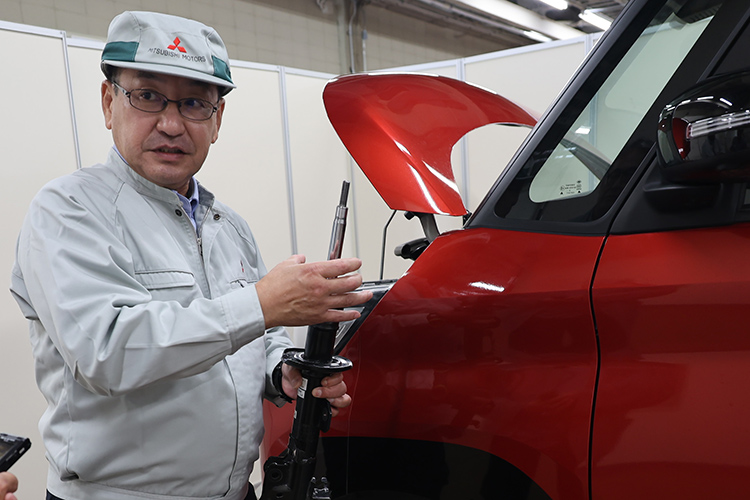
Torii speaks while holding a shock absorber
Adjusting the mix of components is a delicate process. Even minor changes can alter the ride feel. While damping changes can be measured numerically with test equipment, those numbers alone do not reveal the optimal solution. Ultimately, ride comfort is judged by how it feels to those inside the vehicle.
"The supplier handles the component changes, but it’s my job to evaluate the ride with those parts fitted and to clearly communicate what we have and what we’re aiming for," Torii explains. "If I can't do that, we won’t achieve the ride feel that we’re targeting. After driving, I may understand what kind of adjustment is needed, but unless I can accurately convey that sensation, our supplier can't make the necessary changes. Even when you change just one internal component and the measured damping values show little difference, the feel does change. The difference may be subtle, but our work relies on human judgment and perception - refined only through repeated practice and accumulated experience."
"The new model’s ride feel has changed dramatically," Torii continues. "On rough roads, the shock absorbers really show their strength, and I think our customers will be able to tell just how good it feels."
Of course, the new Delica Mini isn't only comfortable on rough roads. It’s also refined on smooth roads.
"Even paved roads can have dips or damaged sections, but in our vehicles, you can drive over those uneven surfaces and still stay comfortable. In some cases, you wouldn’t even realize there was a pothole unless it was pointed out. You may find yourself thinking, 'Was this road always this easy to drive on?' - That’s how comfortable it is."
The Final Gate in Vehicle Development
Torii joined Mitsubishi Motors in 1981. Since 1993, he has worked mainly on improving steering stability and ride comfort. Today, he remains with the Vehicle Performance Planning and Testing Department, where he contributes to vehicle development while mentoring and training the next generation. The department is a large organization of around 400 people, divided into seven sections. One of them is the Handling & Brake performance planning team that Torii leads, made up of about 30 engineers. The work carried out by his team plays a crucial role that directly influences what customers feel behind the wheel.
"Today, vehicle development can be carried out largely in a digital environment," Torii says. "But when you consider that customers are the ones who actually drive them, what matters is that they can experience and understand what makes a vehicle feel good on the road. Of course, we have evaluation teams that perform final assessments after development - but those evaluations are still part of the internal development process. Our role is to make the final refinements - to adjust ride comfort and other elements before the vehicle reaches our customers. This is the 'final gate' in vehicle development."
As mentioned earlier, Torii’s team fine-tunes the shock absorbers. They also work on tire development and power-steering tuning - among other areas that have an impact on how a vehicle feels to drive.
What Tire Development Involves
"The only parts of a car that make contact with the road are its four tires," Torii explains. "Each tire touches the surface over an area about the size of a postcard, so tires are critical when it comes to generating force. A vehicle generates noise as it drives, and the tires are one source of that sound. How much we can reduce that noise - as well as fuel economy - depends on which tires we choose. Early in development, we set target values for noise and fuel efficiency. From there, we work on tire specifications so we can meet our requirements for both quietness and fuel economy. We talk with tire manufacturers about whether performance can be tuned to the levels we need."
"Over time, customers replace worn tires. We aim to keep the ride feel consistent even after replacement, but changing tires can affect noise and fuel economy. Because the factory-fitted tires are selected to match our engineering targets, we recommend replacing them with the same specifications whenever possible."
Fine-Tuning Through On-Track Testing
"At the Research & Development Center in Okazaki, we have long-distance test courses," Torii says. "One is a standard course with smooth, well-maintained pavement. Another is designed to evaluate vehicle durability - what we call the cross‑country course. It has potholes, gravel, and plenty of patched sections. Our goal is to make the vehicle comfortable even in these conditions. Engineers from other manufacturers are often surprised and ask, 'You actually drive on roads like that?'"
"At the Tokachi Research Center in Hokkaido, we have a dedicated off-road course. We tested the new Delica Mini there as well. It handled everything with ease - including campgrounds and unpaved forest roads."
Torii describes himself, however, as an average driver.
"Within the company, we have several drivers with exceptional driving skills, but I consider myself fairly typical. Highly skilled drivers can sometimes compensate with their own technique, and that can mask how a vehicle behaves for our customers. Modern vehicles come with many safety systems that intervene when the car starts to slip, but skilled drivers may still recover through technique alone. When it comes to creating ride comfort that truly reflects the customer’s experience, I think it’s important that test results from an average driver like me are properly reflected in the vehicle." "There's also steering weight - how heavy or light the steering feels - but that is largely defined beforehand during performance planning," Torii adds. "If our team can properly tune the shock absorbers, the vehicle's inherent strengths naturally come through. Conversely, whether those strengths are brought out - or lost - depends on how the suspension’s damping system is set up."
As the 'final gate' in vehicle development, Torii keeps refining ride feel with the customer in mind. How does he pass on the refined feel for ride quality and the ability to articulate it clearly? In the next episode, we speak with Masaru Miyanishi of the same Vehicle Performance Planning and Testing Department, who has been mentored by Torii. Together, they explore Mitsubishi Motors’ unique training approach, and the ride feel that defines the brand.